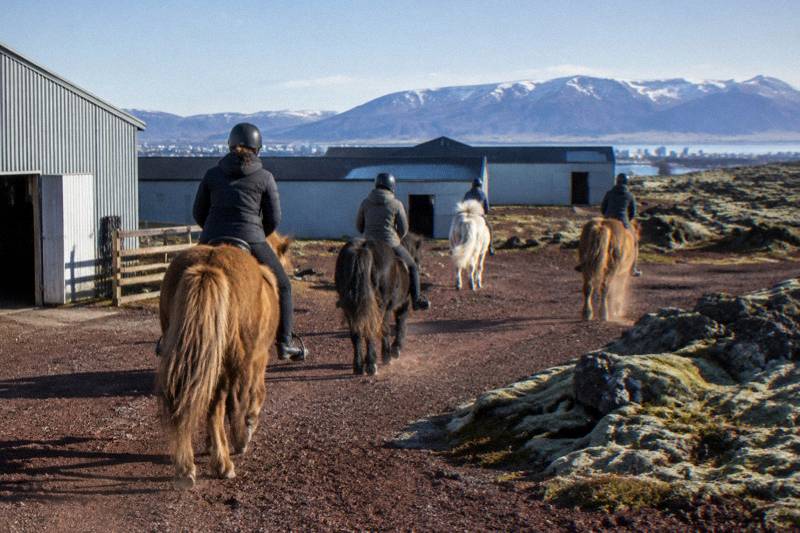
What Is So Special About Icelandic Horses?
Five gaits, a thousand years of isolation, forty-plus colours and a temperament that makes beginners feel at home: what makes the Icelandic horse a breed apart, and where to meet one.
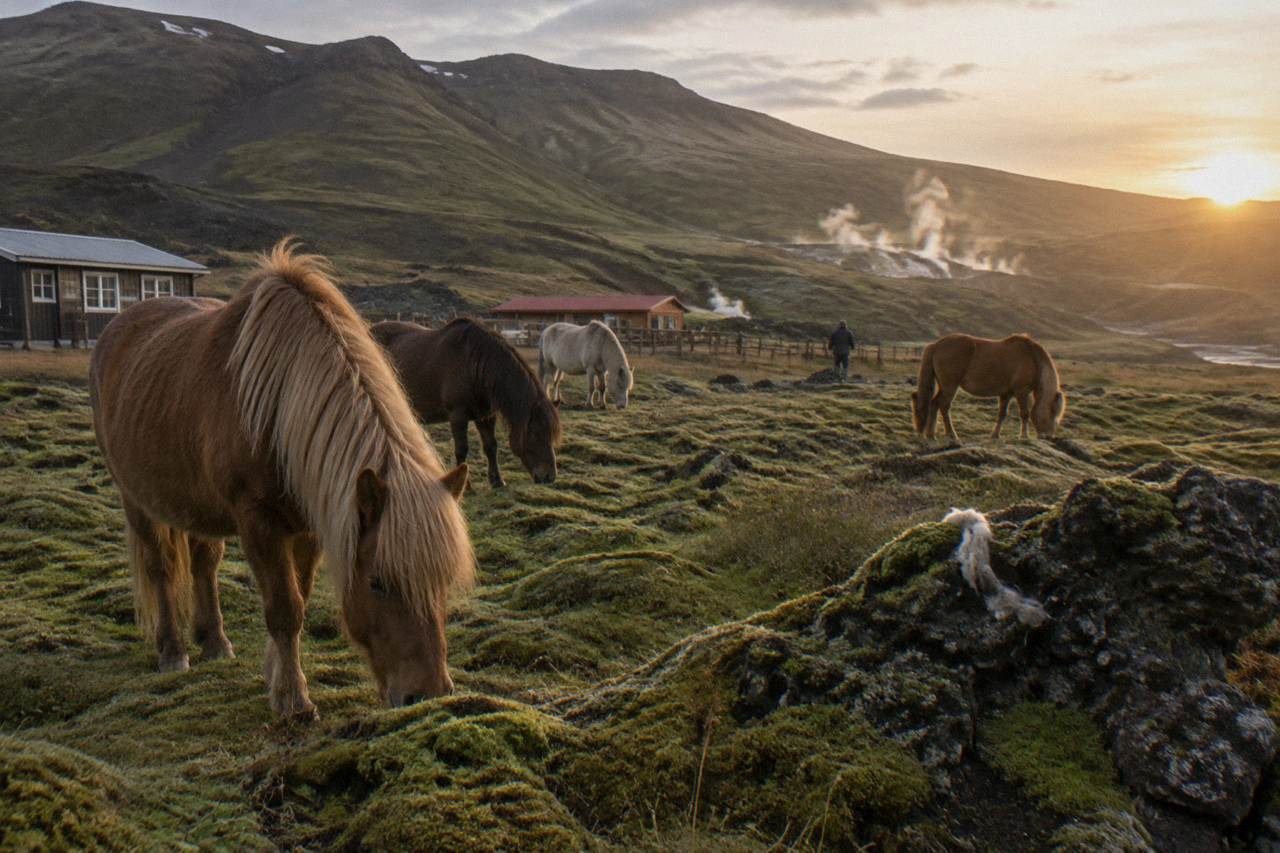
The Icelandic horse looks, at first glance, like a pony: stocky, shaggy, and standing on average about 142 cm at the withers. The breed registries insist otherwise, and they are right to. This is a horse with five gaits, more than forty recognised colours, and a bloodline closed by law since 1882. It has carried Icelanders over lava fields and glacial rivers for a thousand years, and the country still organises its summers around moving herds between highland pastures and home farms.
What Is So Special About Icelandic Horses?
The short answer is gaits, isolation and temperament. Most Icelandic horses are five-gaited, adding the smooth four-beat tölt and the fast flying pace to the usual walk, trot and canter. The breed has been isolated on the island for more than a thousand years without genetic input from other breeds, which shaped both its gaits and its unusually calm, people-oriented character.
That combination does not exist anywhere else in the horse world at this scale. The FEIF, the international federation for the breed, notes that the Icelandic horse descends from animals brought during the settlement period of 874 to 930 and has been "isolated on Iceland for more than 1000 years without any genetic input from other breeds." A closed population that size produces a remarkably uniform temperament: stable handlers across the country describe horses that walk up to strangers in the field, stand quiet for children, and take traffic, rivers and volcanic gravel in stride.
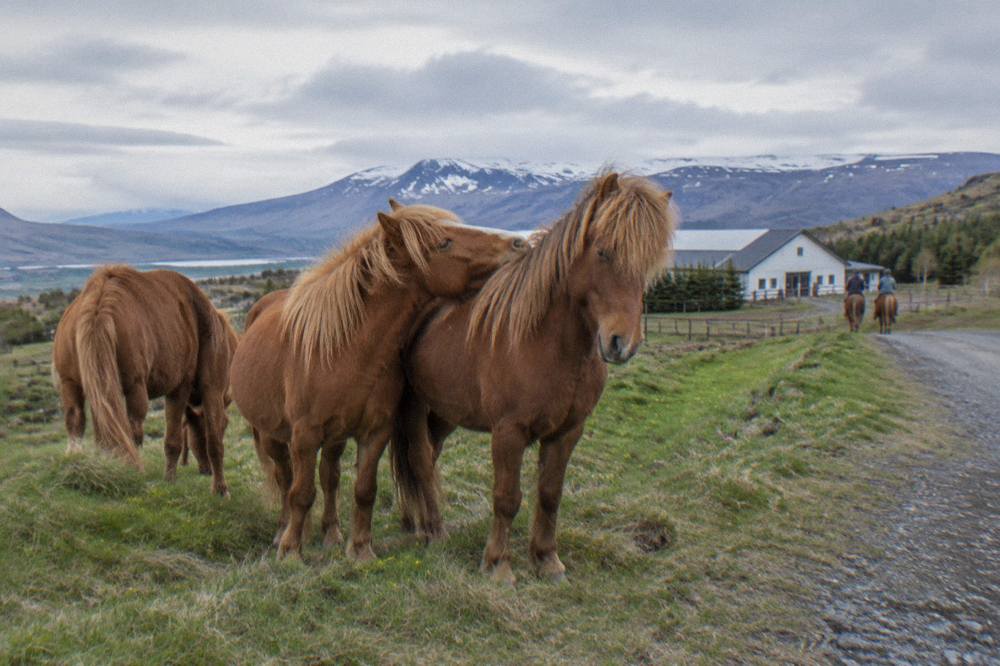
The isolation cuts both ways, and this is the part most visitors never hear about. Because no horse or other equine can enter Iceland at all, and because a horse that leaves can never come back, the whole national herd depends on keeping disease out. The Icelandic Food and Veterinary Authority asks every visitor to adopt strict biosecurity measures: used riding equipment and used riding gloves are strictly prohibited, and used riding clothes and boots must be washed or dry cleaned before you arrive. Every tour operator in the country supplies helmets and boots for exactly this reason.
The practical upshot for a traveller is pleasant. You show up at a stable in whatever you hiked in, borrow clean gear, and climb onto a horse that genuinely wants to be around people. The Eldhestar Siggi ride from Hveragerdi, about two hours in the saddle with pickup from Reykjavik, is built exactly for that first meeting: it is rated 4.5 across 47 reviews and priced from $135 per person. Curiosity about the animal, in most cases, turns into a booking.
Why Are Icelandic Horses So Special?
They are special because a closed population and a hard landscape bred a horse that is smooth, sure-footed and unflappable at once. The tölt gives riders a fast, comfortable gait with no jarring moment, the flying pace turns heads at every gathering, and the temperament lets a complete beginner ride the same trails as experienced horsemen. Few breeds combine all three.
Start with the gaits, because that is what the breed is best known for. Horses of Iceland, the breed's own association, describes the tölt as a four-beat lateral gait with no suspension phase, meaning there is never a moment when all four feet leave the ground and the rider gets dropped back into the saddle. A horse can tölt at the speed of a fast trot or a slow canter, and the rider just sits there. Riders who have only ever trotted describe the first tölt as the moment they understand the fuss.
Then add the landscape. Iceland has no natural predators, so the horses never evolved the explosive flightiness of a prey animal in open country. The Hestaland trail ride with a prep lesson, from $135 per person and rated 4.7 across 75 reviews, spends its first half hour teaching beginners the basics before heading out, precisely because the horses forgive a wobbly seat.
There is a social dimension too, and it surprises visitors who know horses only from riding schools abroad. In Iceland the breed is woven into the calendar: herds graze the highlands all summer, and each September the roundups bring them home in a tradition that predates the tourism industry by centuries. Farmers still ride out to collect them, and the same animals that carry a nervous first-timer on Monday spent the previous weekend being sorted in a corral by their owners. That everyday intimacy between people and horses, rather than any single physical trait, is what most riders say they remember about the country.
What Is The Tölt And Why Is It So Smooth?
The tölt is a four-beat lateral gait in which the horse always has at least one foot on the ground, so the rider never experiences the suspension and landing of a trot. It is the gait the breed is famous for, smooth enough that riders commonly carry a full cup of coffee without spilling. Most Icelandic horses tölt naturally from foalhood, and many tours let capable beginners try it.
The mechanics are simple to feel and hard to forget. In a trot, the horse moves diagonal pairs together, springs through a moment of suspension, and delivers a two-beat jolt to the rider. In the tölt, the feet land one at a time in an even lateral sequence, which converts the jolt into a glide. Horses of Iceland's gait page explains the difference precisely: the tölt has no suspension phase, while the flying pace, the breed's other extra gait, is a two-beat lateral gait with suspension, used in short races over 100 to 250 metres.
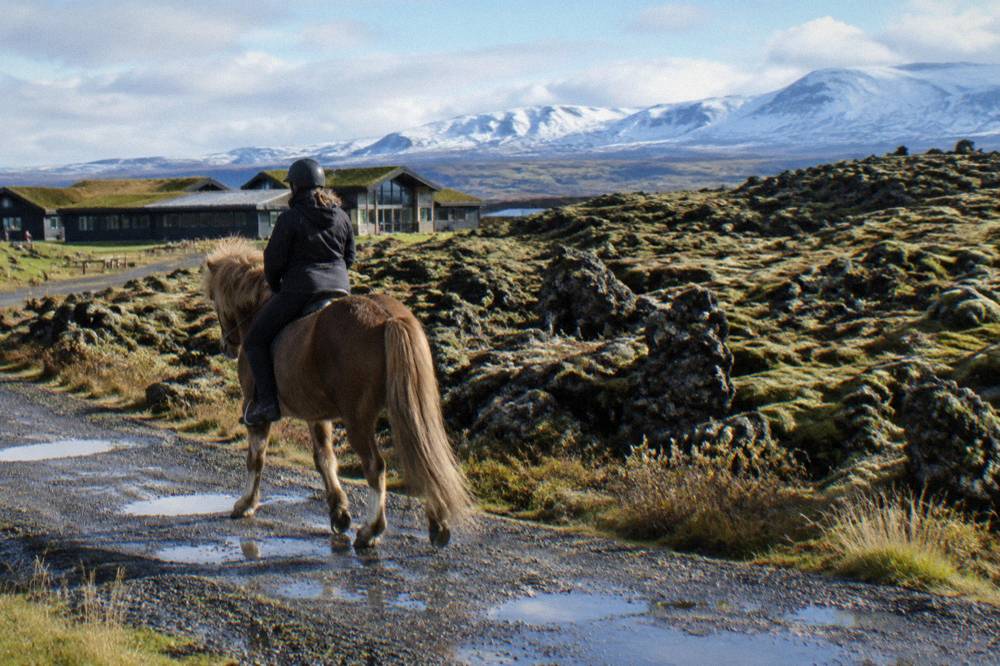
Not every horse has the full set. Some Icelandics are considered four-gaited and lack the flying pace, which is a normal breed variation rather than a flaw. Five-gaited horses that show all gaits cleanly are the ones you see at breed evaluations and the big summer shows. For a fuller breakdown of each gait and how a beginner should ask for the tölt, read our guide to the tölt gait.
| Gait | Beat pattern | What it does |
|---|---|---|
| Walk | Four-beat, even | The everyday gait, used on all beginner tours |
| Trot | Two-beat diagonal with suspension | Bouncy, the gait most riders know from home |
| Tölt | Four-beat lateral, no suspension | The breed's signature glide, smooth at trot or canter speed |
| Canter / gallop | Three-beat with a leading leg | The forward gait, used on faster stretches |
| Flying pace | Two-beat lateral with suspension | A racing gait over 100 to 250 metres, shown by five-gaited horses |
Tours across the roster are built around letting first-timers feel it. The Víðidalur volcanic landscape ride run by Islenski Hesturinn, The Icelandic Horse, lasts about two hours, costs from $191 per person, and carries a 5.0 rating across 22 reviews. The Vik Horse Adventure black sand ride on the south coast notes that its tours move mostly at walking speed with the chance to try the tölt for capable riders.
How Big Do Icelandic Horses Get?
They vary more than most breeds, from roughly 130 cm at the withers to over 150 cm, with the average horse in breeding evaluation standing at 142 cm. That is small for a horse and large for what people assume is a pony. The registries call them horses, and the naming is deliberate rather than a national quirk.
The size range comes straight from the breed association's breeding page, which records everything from animals barely 130 cm at the highest point of the withers to others exceeding 150 cm. The average of horses shown in breeding evaluation now sits at 142 cm. A 142 cm horse carries most adult riders comfortably, which is why the tour industry runs on them: the weight limits you see on Icelandic listings, typically 100 to 110 kg depending on the operator, are set by individual stables for horse welfare rather than by any weakness in the breed (see Worth It?).
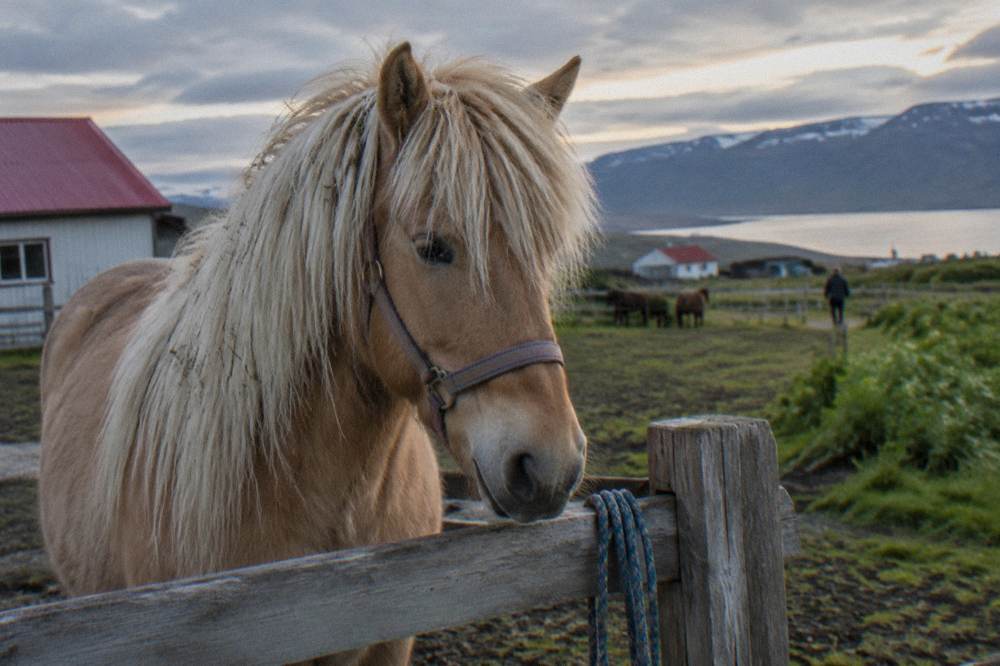
The horse-versus-pony question has a precise answer. Wikipedia's breed entry notes that most registries for the Icelandic refer to it as a horse, and that breeders and breed registries always refer to Icelandics as horses. The Laxnes farm FAQ jokes that the animal is "technically a pony" by height, but the naming convention belongs to the people who breed them, and they say horse. Height is a measurement; the naming is tradition, and the tradition won.
| Breed fact | Figure | Who records it |
|---|---|---|
| Height range | About 130 cm to over 150 cm at the withers | Horses of Iceland breeding records |
| Average height in breeding evaluation | 142 cm | Horses of Iceland breeding records |
| Recognised colours | Over 40, up to 100 variations | Horses of Iceland colour registry |
| Registered horses worldwide | Over 300,000, roughly 40% in Iceland | Horses of Iceland, 2024 figure |
| Descent | Settlement-era imports, 874 to 930 | FEIF breed history |
| Genetic isolation | More than 1,000 years, no outside input | FEIF breed history |
The height range partly reflects what breeders select for. Horses of Iceland's breeding page notes that Icelandic breeding evaluations score conformation and riding qualities, and judges look for a horse that is correctly built and well proportioned rather than simply tall or short. That is why the spread runs a full 20 cm: a small, well-muscled animal with good gaits can score as highly as a larger one, so height alone is not treated as a virtue in the evaluation ring.
The breed's isolation explains why the size stays consistent. With descent traced to settlement-era imports between 874 and 930, and more than 1,000 years of genetic isolation with no outside input, according to FEIF breed history, the population has kept a compact, sturdy build that suits Iceland's terrain. Over 300,000 horses are registered worldwide, roughly 40% of them in Iceland, so the breed's size profile is documented across a very large population rather than a small sample.
For riders, the practical takeaway is simple. The 142 cm average sits in the range many people would call pony-sized, but the weight limits on Icelandic tours, typically 100 to 110 kg depending on the operator, exist because these animals carry adults all day over lava fields and river crossings. Size and carrying ability are different questions, and the breed answers the second one well.
Why Can't Icelandic Horses Ever Leave And Come Back?
Iceland bans all horse imports to protect a national herd with no vaccinations and no exposure to common equine diseases, so once a horse is exported it can never return. The rule is enforced by the Icelandic Food and Veterinary Authority and the breed association states it plainly: no horse or other equine can enter the country at all. Export is a one-way trip.
The reasoning is disease. Icelandic horses are not vaccinated, which leaves them susceptible to infectious agents from abroad, in the authority's own words. Strangles, equine influenza and equine herpes virus type 1 have never reached the country. A single imported infection could move through an unvaccinated population faster than anywhere else in the horse world, so the border stays shut. The farmers' association records that very few, if any, horses were imported after the 13th century, and that in 1882 Icelanders passed a law prohibiting the importation of horses into Iceland.
| Biosecurity rule | What it means for a rider |
|---|---|
| Used saddles, bridles, whips, pads and rugs prohibited | Never bring leather tack to Iceland, even as a gift |
| Used riding gloves prohibited | Operators lend gloves, or bring new ones |
| Used clothes and boots must be washed or dry cleaned | Machine-wash everything you plan to ride in before you fly |
| Non-washable items need detergent rinse, drying, disinfectant spray and 5 days storage | Helmets and boots are easier to borrow at the stable |
| Exported horses can never return | Every Icelandic horse abroad is there permanently |
The export trade is real and one-directional. The Icelandic Food and Veterinary Authority records that hundreds of Icelandic horses are exported every year, mostly to countries within the EU, under a law that requires exported horses to be between four months and fifteen years old. Those horses build the sport of Icelandic riding across Europe and North America, and none of them will ever see Iceland again. For the full story of the border rule, read why Icelandic horses can never return to Iceland.
What Colors Do Icelandic Horses Come In?
The breed registry recognises more than forty colours with up to a hundred variations, from silver dapple and skewbald to blue dun and palomino. That colour spread is a side effect of the same isolation that produced the gaits: with no outside blood introduced, the full range of old Norse colour genetics survived and multiplied in the Icelandic population.
The variety is visible from any roadside in the country. A single herd coming down from the highlands in the September roundups can contain a silver-maned skewbald, a mouse-grey dun with a black stripe along the spine, a red chestnut with a flaxen mane, and a blue-eyed palomino, all registered under different colour names. The breed association's colour page is the source for the count, and it is one of the reasons photographers fill the fences at every gathering of horses event: no two fields look the same.
Colour has a practical edge for tour operators too. On group rides, a guide can pick your horse out of a string of twelve across a lava field, which matters when the light is flat and everyone is wearing the same borrowed rain overall. Riders booking the Sólhestar Red Lava ride from Reykjavik, from $140 per person and rated 4.8 across 2,789 reviews, regularly photograph a line of distinctly coloured horses against red volcanic rock.
Where Can You Meet Icelandic Horses On A Ride?
Every region of Iceland runs riding tours on the breed, from 50-minute starter rides to 11-hour day tours, with prices from $86 to $307 per person across the roster. The closest stables to Reykjavik sit 15 to 45 minutes from the city, and the same horses carry beginners and returning riders year-round. Meeting the breed is a half-day commitment, not an expedition.
The choice is mostly about landscape. Around the capital, the Íshestar lava field ride, from $129 per person and rated 4.8 across 1,989 reviews, crosses old lava fields near Hafnarfjörður, and the Laxnes farm ride, from $166 per person and rated 4.8 across 901 reviews, works the hills above Mosfellsbær with a 120 kg weight limit, the most generous on the roster. On the south coast, the one-hour Vik black sand ride, from $126 per person and rated 4.8 across 571 reviews, puts the breed on the beach it was bred to handle. The team behind Iceland Horse Tours compared all of these listings side by side so you can match a ride to your schedule rather than scrolling through operators one at a time.
| Ride | Operator | Duration | Price | Rating |
|---|---|---|---|---|
| Siggi ride, pickup | Eldhestar Volcano Horses | About 2 hours | From $135 | 4.5 across 47 reviews |
| Trail ride with prep lesson | Hestaland | 1.5 to 2.5 hours | From $135 | 4.7 across 75 reviews |
| Víðidalur volcanic landscape ride | Islenski Hesturinn | About 2 hours | From $191 | 5.0 across 22 reviews |
| Lava field ride, pickup | Íshestar Riding Tours | 2 to 4.5 hours | From $129 | 4.8 across 1,989 reviews |
| Laxnes farm ride, pickup | Laxnes Horse Farm | About 3.5 hours | From $166 | 4.8 across 901 reviews |
| Vik black sand ride | Vik Horse Adventure | About 1 hour | From $126 | 4.8 across 571 reviews |
For a first meeting with the breed, the Hestaland trail ride with a prep lesson is hard to beat on structure: the lesson before the ride means a nervous beginner gets a fenced paddock session before the trail, and the tour is priced from $135 per person. Check the operator's live listing for current departure times, since the riding season shifts with daylight.
Common Questions About Icelandic Horses
what is so special about icelandic horses?
Five gaits including the smooth tölt, more than forty colours, a calm people-oriented temperament, and a bloodline isolated on the island for over a thousand years. The registries call it a horse, not a pony, and the average horse in breeding evaluation stands 142 cm at the withers.
what's so special about icelandic horses?
The same three things: the tölt, the temperament and the closed population. The breed association records over 300,000 registered Icelandic horses worldwide, roughly 40% of them in Iceland, and every one of them descends from settlement-era stock with no outside blood since.
Why are Icelandic horses so special?
Because Iceland's isolation and lack of predators bred a horse that is smooth, sure-footed and unbothered by traffic, rivers and volcanic ground all at once. A complete beginner can ride the same trails as a lifelong horseman, which is why the tour industry runs almost entirely on the breed.
Are Icelandic horses good for beginners?
Yes, and most tours are built around that. Operators supply helmets, boots and rain gear, many rides start with a paddock lesson, and the horses stand quiet for nervous riders. Weight limits of 100 to 110 kg apply at most stables, with Laxnes allowing up to 120 kg.
Can I bring my own riding gear to Iceland?
Not used gear. The Icelandic Food and Veterinary Authority prohibits used riding equipment and used riding gloves outright, and requires used riding clothes and boots to be machine washed or dry cleaned before entry. Stables lend clean helmets, boots and overalls, so most riders bring nothing but their own base layers.
Do Icelandic horses ever leave Iceland?
Yes, hundreds are exported each year, mostly to EU countries, but the border is one-way. No horse or other equine can enter Iceland, so an exported Icelandic horse can never come back, a rule that protects an unvaccinated national herd from diseases that have never reached the country.