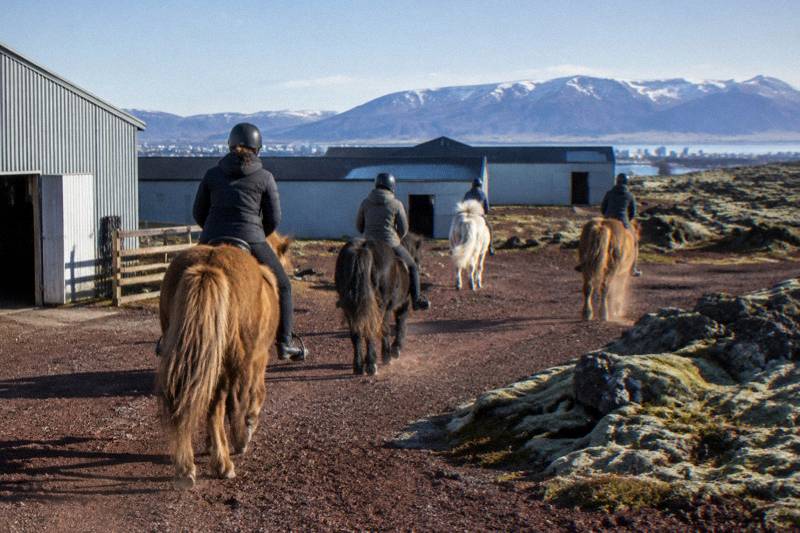
Can You Pet The Icelandic Horses?
Yes, most stables welcome petting under staff direction. This guide covers where to meet Icelandic horses, feeding rules, stable etiquette and the biosecurity rules that shape every farm visit.
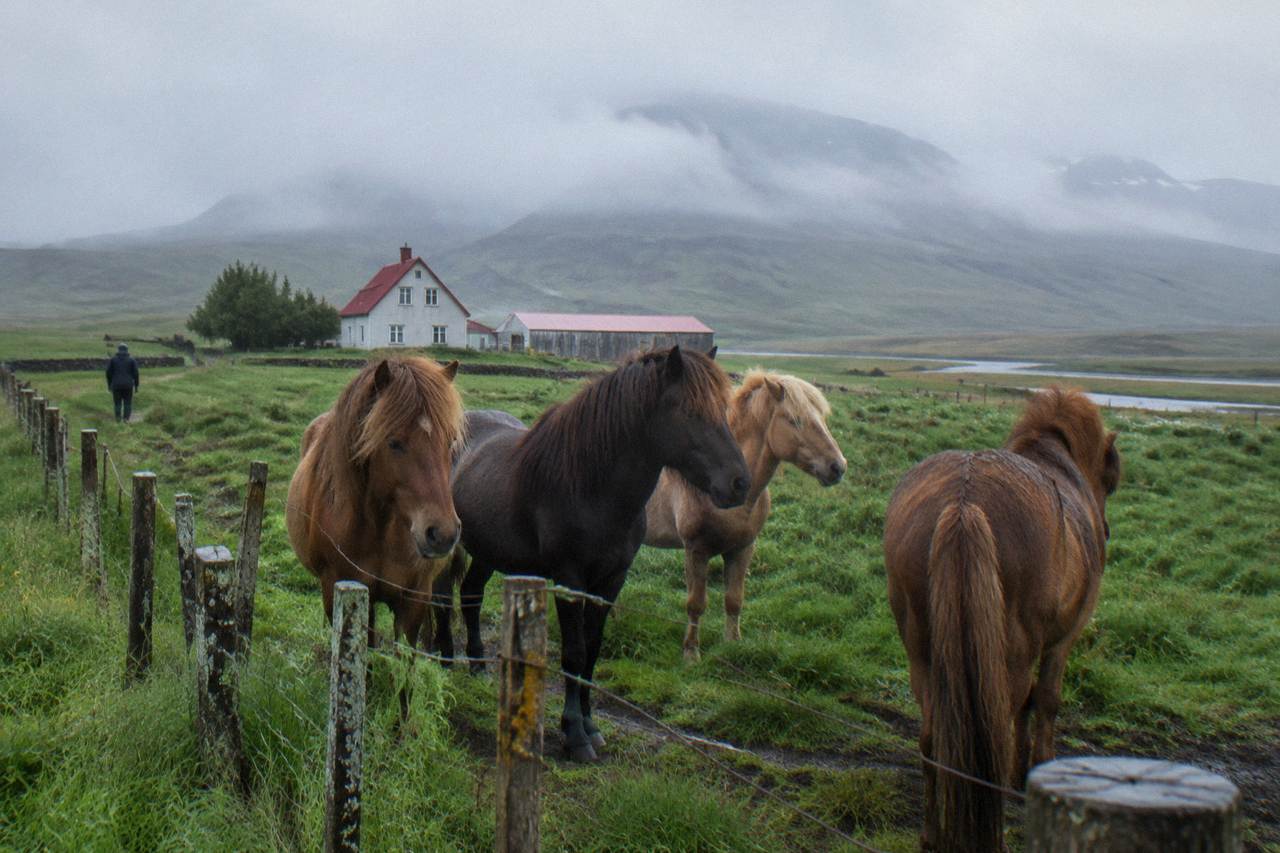
Can You Pet The Icelandic Horses?
Yes, in most settings you can. Riding stables across Iceland welcome hands-on contact with their horses, and petting is a normal part of meeting your mount before a ride. Roadside horses are different: they belong to farms, and the respectful rule is to look and photograph without feeding or chasing them. Your clothes matter as well, because Iceland's biosecurity rules are strict and they apply to every visitor who walks into a stable yard.
The short answer sits inside a much longer story about isolation. The international federation FEIF records the breed as descended from horses brought during the settlement period of 874 to 930 and kept isolated for more than a thousand years without genetic input from other breeds. That closed history is also why the registries insist on calling these animals horses, never ponies, even though the average height in breeding evaluation is 142 cm to the withers and individuals range from about 130 cm to over 150 cm. Horses of Iceland puts the registered worldwide population at over 300,000, roughly 40% of them inside Iceland, spread across a landscape where horses graze behind fences in nearly every farmed valley.
The breed is five-gaited, which is the detail most visitors have heard about. Horses of Iceland describes tolt as a four-beat lateral gait with no suspension phase, which is the reason it feels so smooth under a saddle, and flying pace as a two-beat lateral gait with a suspension phase, raced in short bursts over 100 to 250 meters. Some horses are four-gaited and lack the pace entirely. None of that matters much to a first-time visitor standing at a pasture fence. What matters there is simpler: these are working farm horses, handled by people every day of their lives.
| What the registries record | The figure |
|---|---|
| Naming | Most registries for the Icelandic refer to it as a horse, not a pony |
| Height at withers | About 130 cm to over 150 cm; average 142 cm in breeding evaluation |
| Colours | Over 40 colours, up to 100 variations |
| Gaits | Walk, trot, canter and gallop, plus tolt and flying pace; some horses are four-gaited |
| Registered population | Over 300,000 worldwide, roughly 40% in Iceland |
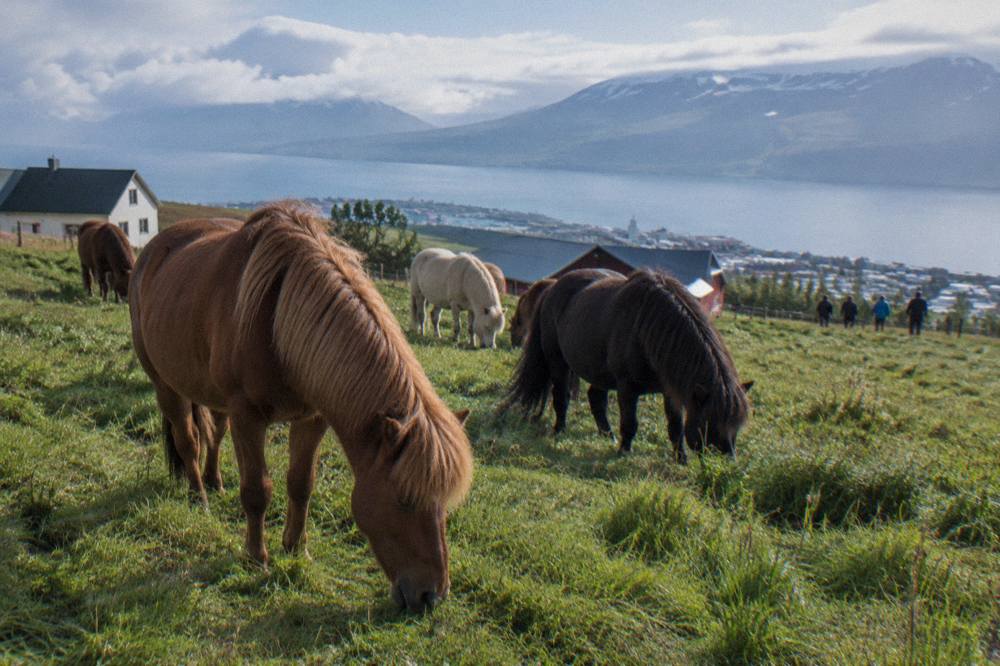
The strongest signal about how these horses take to strangers is what the stables do with them daily. Sólhestar describes its guests as ranging from first-timers to seasoned equestrians. Viking Horses calls its volcano tour beginner friendly. Laxnes states plainly that its tours suit all levels. Stables do not put nervous beginners on horses that resent being touched, and the ground portion of every tour, the check-in, the gear fitting and the introduction to your horse, is where the petting naturally happens. When we compared the listings for Iceland Horse Tours, that pattern held across all thirty rides on the roster.
The price of that ground time is folded into the ride price. The Íshestar lava field ride runs from $129 per person for roughly 2 to 4.5 hours and carries a 4.8 rating across 1,989 reviews. The Laxnes farm ride with pickup starts at $166, rated 4.8 across 901 reviews. The Sólhestar red lava ride is from $140, rated 4.8 across 2,789 reviews, and every one of these begins with helmets, borrowed overalls or rain gear, and a horse standing quietly beside you while the staff talk you through the plan.
Where You Can Meet Icelandic Horses Without Riding
You do not need a saddle to meet the breed. Horses graze behind fences along the Ring Road and in every farmed valley, several stables sit within an hour of Reykjavik, and every riding tour begins on the ground with the horse in front of you. A booked ride is simply the most reliable route to contact: it is structured, supervised and included in the price you already paid.
Roadside pastures are the free version, and they are everywhere. Drive any stretch of the Ring Road and you will pass bands of horses grazing close to the fence line, often with foals at foot, and many of them will amble over to watch you back. The respectful default at a roadside fence is simple: enjoy the approach, take the photograph, leave every gate exactly as you found it, and offer nothing at all. These horses belong to farms, and their feed, their handling and their health are somebody's daily responsibility.
If you want contact on a farm rather than from a fence, the stables around the capital make it easy. Eldhestar's farm at Hveragerði sits about 30 minutes' drive from Reykjavik and runs riding tours all year round. Laxnes Horse Farm is about a 20-minute drive from the city centre, with pickup offered from central Reykjavik and nearby hotels where its timetable allows. These are working stables rather than petting zoos, so the dependable way past the fence is a booked ride, which is worth knowing before you show up hoping to wander the yard.
The countryside option that pairs a real farm visit with a real ride is the Sturlureykir Viking Ride at Reykholt. It runs 1.5 to 2.5 hours from $129 per person with a 100 kg rider weight limit, and its rating is on the listing rather than in our figures. The ride leaves from the family's own horse farm, so the horses you meet in the yard are the horses the farm keeps, and the time before mounting is spent alongside them with the staff close by. If that mix of farm access and riding sounds right, the Sturlureykir Viking Ride at Reykholt has the full details, and you can Check availability on the live listing.
For visitors whose real question is whether a first ride is manageable, the beginner-friendly rides near Reykjavik cover the same stables from that angle, and the same yards where petting is routine are the ones that take nervous first-timers every single day.
What Stable Etiquette Asks Of Visitors
Etiquette on an Icelandic stable is plain farm sense. Approach from the side in a calm voice, let the horse come to you, keep fingers together when offering a hand, and never feed anything without the handler's say-so. Stay with your group, leave every gate as you found it, and follow the staff on weight, age and gear questions, because those rules exist for the horse's welfare first.
The approach itself is the part most visitors get slightly wrong. Horses read movement and sound long before you are within touching distance, so the calm version is to walk slowly, speak normally and let the horse close the last stretch on its own terms. An open hand, fingers together, held flat and low gives the horse something to sniff without any risk to your fingers. Sudden reaching, patting the nose from the front or walking directly behind a horse are the moves to avoid. None of this is complicated, and the staff will demonstrate it in about ten seconds if you look unsure.
What the stables supply removes most of the guesswork about gear. Íshestar lends guests a helmet, a warm overall or rain coat and rain pants, and rubber boots. Laxnes supplies boots, helmets and rain gear or overall snowsuits. Viking Horses provides high-quality saddles, helmets, gloves and rain clothes. You bring clean clothes and a willingness to listen, and the rest is already hanging on the stable wall.
| Stable | Rider weight limit | Minimum age | Gear supplied |
|---|---|---|---|
| Íshestar | 110 kg | 7 on the lava tour, 12 on the Viking tour | Helmet, warm overall or rain gear, rubber boots |
| Eldhestar | 110 kg | 7 on half-day tours, 10 to 12 on longer routes | Helmets, rain gear, warm overalls |
| Laxnes | 120 kg | 7, with exceptions for experienced children | Boots, helmets, rain gear or snowsuits |
| Viking Horses | 110 kg | 10 for beginners, 8 for experienced young riders | Saddles, helmets, gloves, rain clothes |
| Sólhestar | 110 kg | 6 on one-hour tours, 10 at 1.5 hours, 14 at three hours and longer | Helmet fitted at check-in |
| Vík Horse Adventure | 100 kg fully clothed | 10 on the one-hour beach ride, 6 on the family ride | Helmet fitted, five-minute safety demo |
The weight limits in that table are welfare rules, not bureaucracy, and they vary from 95 to 120 kg across the industry, with most stables between 100 and 110 kg. Vík Horse Adventure reserves the right to weigh riders on site if they appear close to its 100 kg limit. If you are anywhere near a limit, ask the operator before booking rather than hoping, because no stable can promise in advance that a borderline rider will be accepted. The same goes for children: ages run from 6 on the shortest rides to 14 on the longer Sólhestar routes, and the operator's page for your chosen tour is the final word.
Why Biosecurity Rules Shape Every Farm Visit
Iceland's horses are not vaccinated, so the state veterinary authority treats every visitor as a possible carrier of disease. Used saddles, bridles, whips and riding gloves are banned outright. Used clothes and boots must be machine washed or dry cleaned before you arrive, and anything unwashable needs a detergent rinse, drying, a 2% VirkonS spray and five days in storage before it touches a horse.
The authority behind these rules is MAST, the Icelandic Food and Veterinary Authority, and its language is unusually direct: Icelandic horses are not vaccinated and are therefore susceptible to infectious agents from abroad, so visitors are asked to adopt strict biosecurity measures. MAST's import rules prohibit used riding equipment outright, meaning saddles, bridles, nosebands, pads, rugs and whips, along with used riding gloves. Used riding clothes and boots should be washed in a machine or dry cleaned before entering the country. Anything that cannot be machine washed or dry cleaned, such as some helmets and boots, must be rinsed thoroughly with detergent, dried, sprayed with 2% VirkonS mixed at 20 grams per litre of water, and stored for at least five days before it comes into contact with horses in Iceland.
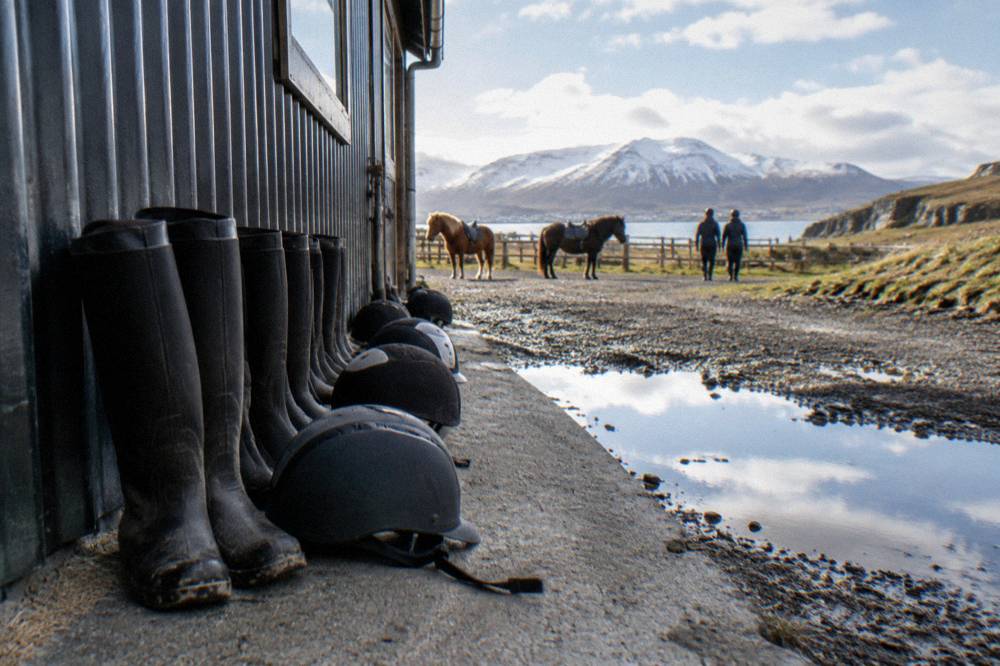
The reason for all of this is that the island's horse population is a closed book. Horses of Iceland states that no horse or other equine can enter the country at all, and once a horse leaves Iceland it can never return. The farmers' association behind that page adds that very few, if any, horses were imported after the 13th century, that Icelanders passed a law prohibiting horse importation in 1882, and that strangles, equine influenza and equine herpes virus type 1 have never reached the country (see Icelandic Horse Culture). We cover the full story of that border in why the horses can never come back, and it explains why a simple pat on a farm horse comes with a rulebook.
The operators echo the authority. Eldhestar's own FAQ tells visitors that used boots, riding wear, helmets and saddlebags must be disinfected before arrival in Iceland, and that chaps, bridles and other used leather gear must not be brought at all. In practice, this is why every stable lends you its own helmets, boots and rain gear, which solves the problem for almost every visitor before it starts. Bring clean clothes, wear what you wore on the plane, and borrow the rest.
Eldhestar also happens to run one of the most relaxed first rides in the countryside roster. The Siggi Ride from Hveragerði covers about 2 hours from $135 per person, rated 4.5 across 47 reviews, with a 110 kg weight limit and pickup offered from Reykjavik. Its half-day format leaves unhurried time in the yard around the ride itself, which is exactly the window where meeting the horses happens.
Can You Feed Icelandic Horses?
Not without permission. Treats are always the handler's call, and on a riding tour that means the staff leading your ride. Hand-feeding teaches horses to nudge and nip at every pocket, so the usual guidance is to ask first and let the petting be the reward. Roadside horses must never be fed at all, whatever the season, and the safe default on any farm is an open empty hand.
The reasoning behind that default is behavioural rather than bureaucratic. A horse that learns strangers carry carrots will start searching every jacket that leans over its fence, and a thousand nudging greetings is how gentle animals learn pushy habits. Stables that run several tours a day are managing exactly that risk, so if a stable does allow treats, it will tell you, when, what and how much. Until someone says otherwise, your hands stay empty and the horse gets scratched on the neck instead, which most of them seem to prefer anyway.
The ground time around a ride is where the real contact happens. Horses are prepared and untacked in front of guests, staff are right there, and the slow minutes before mounting are the moments when a nervous visitor and a patient horse usually come to an understanding. Short rides concentrate this effect. The one-hour Vík black sand ride from Vík Horse Adventure runs from $126 per person, rated 4.8 across 571 reviews, and its easy-going walking pace suits total beginners. Up north, the Hestasport Viking Ride at Varmahlíð in Skagafjörður starts from $118, rated 4.9 across 223 reviews, and meets its riders at the stable before a short, scenic loop.
Children and treats deserve one extra line. Petting under supervision is fine from the youngest ages the stables accept, which is 6 on the shortest Sólhestar and Vík family rides, but food should stay in the car. Empty pockets prevent most of the problems before they start, and the staff will always hand a child something safe to do with their hands if the horses crowd the fence.
Which Rides Give You The Most Time With The Horses
Three rides stand out for ground time with the horses. The Sturlureykir Viking Ride at Reykholt runs 1.5 to 2.5 hours from $129 per person. The Eldhestar Siggi Ride covers about 2 hours from $135, rated 4.5 across 47 reviews. The Viking Horses Volcano Ride gives 3 hours total from $182, rated 4.7 across 259 reviews, with pickup in central Reykjavik.
Put side by side, the three make the trade-offs plain. Sturlureykir is the farm-visit pick, cheapest of the three and rooted in one family's yard at Reykholt. The Siggi Ride is the short countryside option with pickup from the capital. The Volcano Ride is the longest total experience and the most reviewed of the three, and it is the one that builds a whole half-day around the horses.
| Ride | Operator | Duration | Price | Rating | Weight limit |
|---|---|---|---|---|---|
| Sturlureykir Viking Ride, Reykholt | Sturlureykir Horse Farm | 1.5 to 2.5 hours | From $129 per person | On the listing | 100 kg |
| Eldhestar Siggi Ride, Hveragerði | Eldhestar Volcano Horses | About 2 hours | From $135 per person | 4.5 across 47 reviews | 110 kg |
| Viking Horses Volcano Ride, Reykjavík | Viking Horses | About 3 hours | From $182 per person | 4.7 across 259 reviews | 110 kg |
The Volcano Ride deserves its own paragraph because of how it is built. Viking Horses caps its groups at eight people, runs three hours in total with one to one and a half hours actually in the saddle, and labels the tour all levels and beginner friendly. Pickup and drop-off within the Reykjavik city centre is included, with morning, afternoon and evening departures across the May to September season. Cancellation terms are tiered: a full refund more than 14 days out, a 20% fee at 7 to 14 days, 50% at 4 to 7 days, and no refund inside four days, all in writing. The small-group volcano ride with pickup has the full breakdown, and you can Check availability on the live listing.
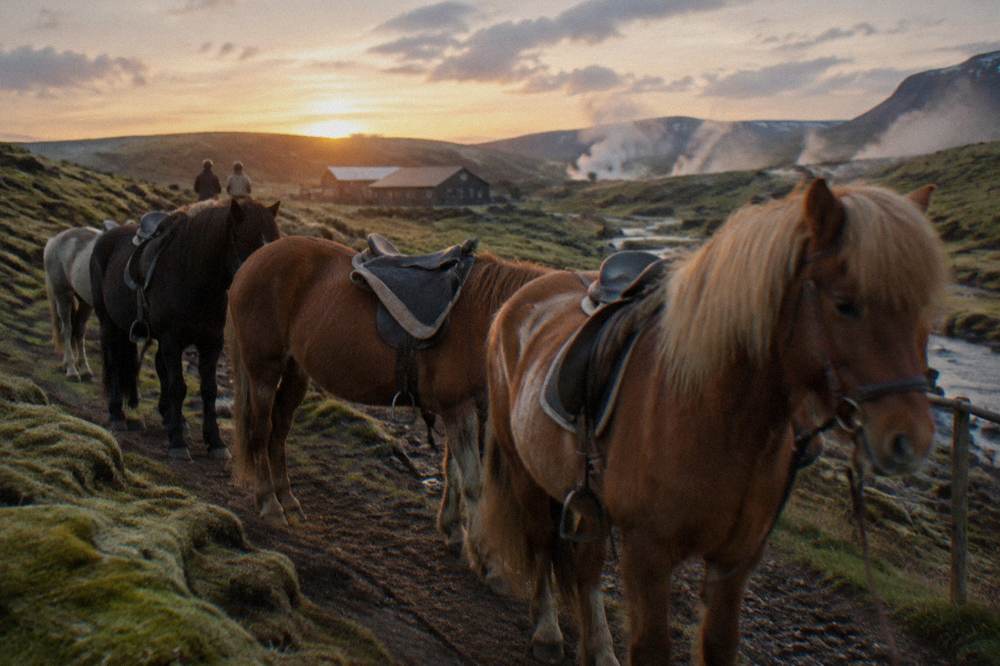
Whichever of the three you lean toward, the practical preparation is the same. Arrive in clean clothes, borrow the stable's gear, keep your hands empty, and let the staff set the pace of the introduction. The horses will do most of the work themselves, because a breed that has spent a thousand years around people tends to walk over and ask.
Common Questions About Petting Icelandic Horses
Can you pet the icelandic horses?
Yes. At riding stables, petting is a normal part of the ground time before a tour, and staff are beside you while it happens. At roadside fences, look and photograph but do not feed, chase or climb in, because those horses belong to working farms.
Can you feed Icelandic horses treats?
Only with the handler's permission, and never at a roadside fence. Treats are the stable's call on the day, and the default is an open empty hand plus a scratch on the neck rather than food from a pocket.
Is it safe to pet horses at the roadside in Iceland?
Generally yes, from your side of the fence and with an open hand. The risks are habit formation and loose gates rather than the horses themselves. Never feed them, never open a gate, and never enter a pasture without the owner.
Do riding tours include time with the horses before mounting?
Yes. Every tour on the roster begins with check-in, borrowed gear and an introduction to your horse, and that ground portion is where most of the petting happens. Shorter rides such as the Siggi Ride and the Sturlureykir Viking Ride keep the whole experience compact around that yard time.
Can children pet Icelandic horses?
Yes, under supervision, from the youngest age a stable accepts, which is 6 on the shortest Sólhestar and Vík family rides and rises to 10, 12 or 14 on longer routes depending on the operator. Keep snacks out of their pockets and let the staff lead the introduction.
Why can't you bring used riding gloves to Iceland?
MAST, the Icelandic Food and Veterinary Authority, bans used riding gloves and used riding equipment outright because the national herd is unvaccinated and susceptible to disease from abroad. Used clothes and boots must be machine washed or dry cleaned, and unwashable items need a detergent rinse, drying, a 2% VirkonS spray and five days in storage before touching a horse.