Is Horse Riding In Iceland Worth It?
An honest verdict on horse riding in Iceland, with real prices, ratings, weight limits and beginner facts drawn from 30 compared listings.
Is Horse Riding In Iceland Worth It?
For most travellers, yes. The Icelandic horse's smooth tolt gait, the lava field and black sand scenery, and prices that start at $86 per person make riding one of the few Iceland activities that genuinely differs from anything at home. The honest verdict depends on your ride type, your budget and your weight, so this page breaks the question down piece by piece.
Start with the strongest signal available: customer satisfaction at volume. The Sólhestar red lava ride out of Reykjavík is rated 4.8 across 2,789 reviews, and the Íshestar lava field ride holds 4.8 across 1,989. Those are enormous review pools for a country this size, and both scores sit well above what visitors typically award paid activities anywhere. When thousands of people independently describe the same hour and a half of riding in similar terms, the experience is doing something right.
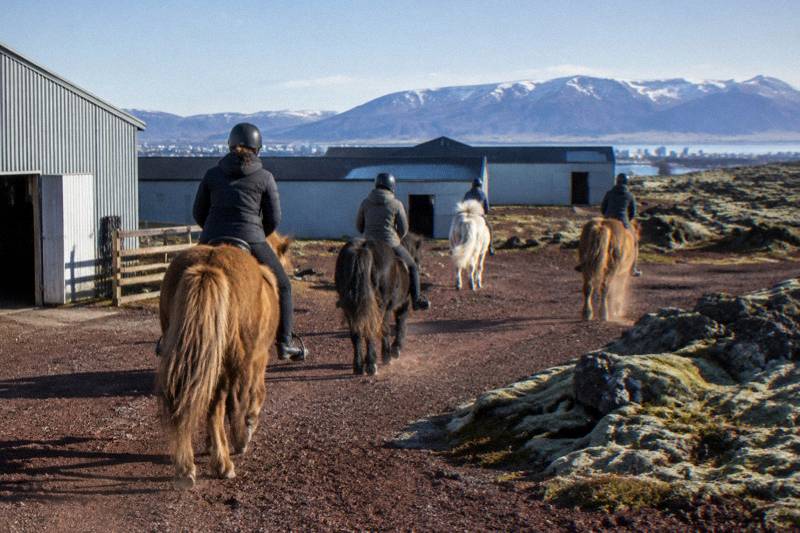
The second signal is differentiation. A whale watch, a lagoon soak and a Golden Circle bus day are all things you can approximate elsewhere in the world, at least in flavour. Riding a five-gaited horse across a mossy lava field, in windproof overalls, twenty minutes from a capital city, is not something you can approximate. The breed is the product here as much as the landscape, and the breed exists in this form nowhere else.
That said, worth is a personal calculation, and this page does not pretend otherwise. If you weigh over 110 kg, several major operators will decline you. If you visit in deep winter, you get four to five hours of usable daylight. If you book a three-hour beach ride expecting a gallop, you may be surprised by how much of an Icelandic tour is spent at a walk. The sections below take each of those caveats in turn, with the real numbers attached.
What Makes The Icelandic Horse Different From Other Horses?
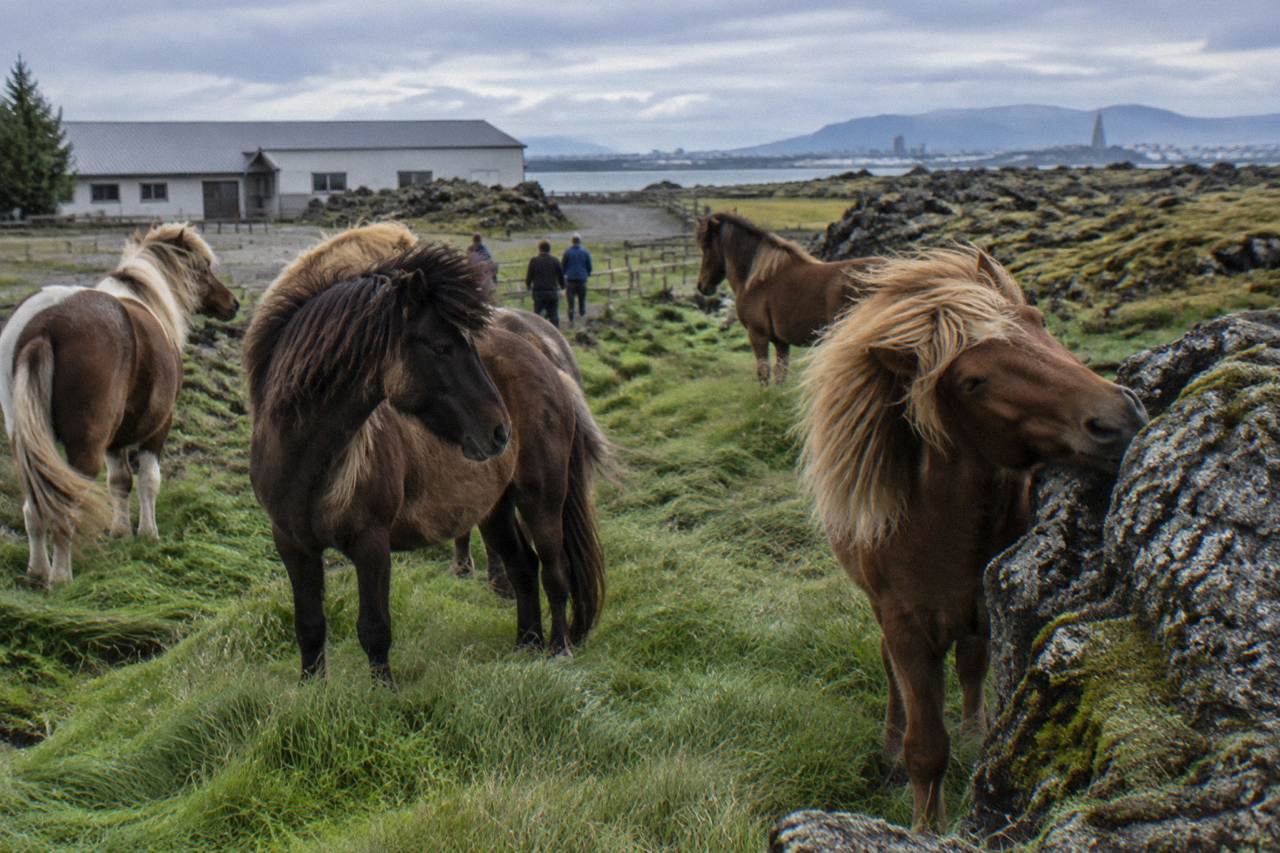
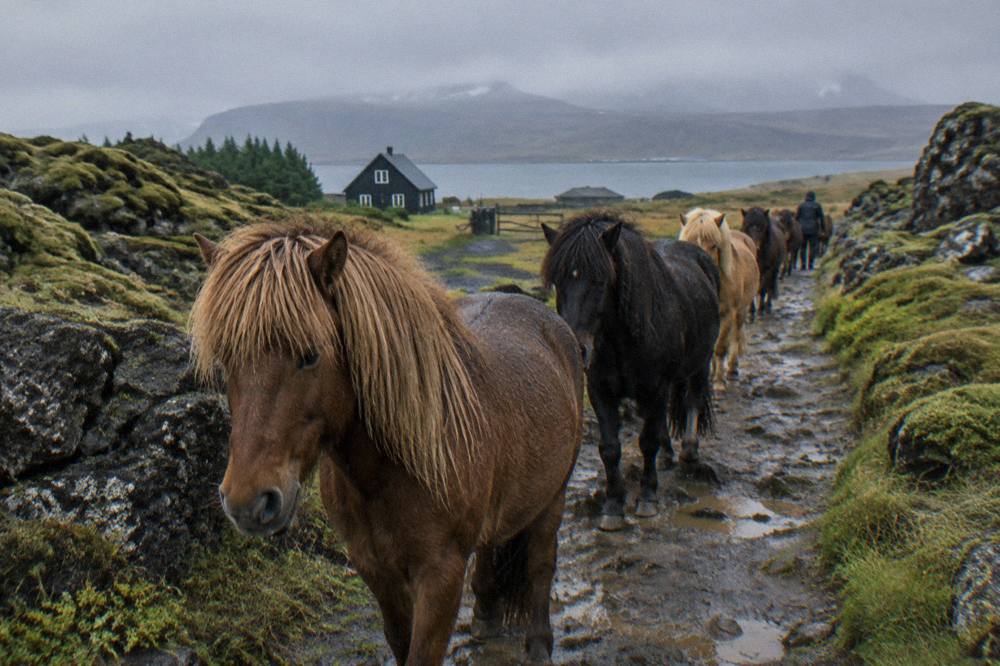
The breed itself is the main draw. Icelandic horses offer five gaits rather than the usual three, including the smooth four-beat tolt that the breed is best known for, and the registries always record the animal as a horse despite its average 142 cm withers height. Over 300,000 are registered worldwide, and roughly 40 percent of them live in Iceland.
Most riding horses walk, trot and canter. The Icelandic adds tolt, a four-beat lateral gait with no suspension phase, which in plain language means the horse always has at least one foot on the ground, so the rider bounces very little even at speed. Many Icelandics also offer flying pace, a fast two-beat gait used in short races, though some horses are four-gaited and lack it. The breed association describes tolt as the gait the breed is best known for, and it is the single thing first-time riders most often mention afterwards. If you want the full explainer, read what tolt feels like in the saddle.
The horse-versus-pony question comes up constantly, and the answer is a matter of record rather than opinion. Breed registries always refer to Icelandics as horses, even though the withers height of 130 to over 150 cm would qualify as pony territory under other rules. The average horse shown in breeding evaluation stands at 142 cm. Size matters practically: mounting blocks are standard at Icelandic stables, and the horses are strong carriers relative to their height.
| Breed fact | What the sources state | Why it matters on a ride |
|---|---|---|
| Gaits | Most are five-gaited: walk, trot, canter, tolt, flying pace | Tolt gives a smooth, bounce-free speed between walk and canter |
| Size | 130 to over 150 cm at withers, average 142 cm | Small enough for nervous riders, strong enough for adults |
| Colours | Over 40 colours, up to 100 variations | You will likely ride something you have never seen |
| Population | Over 300,000 registered worldwide, about 40 percent in Iceland | Horses are everywhere in the landscape, not a staged attraction |
| Isolation | Descended from settlement-era stock, isolated over 1,000 years | No genetic input from other breeds, and no equine imports at all |
That last row is the quiet reason the whole experience feels distinct. No horse or other equine can enter Iceland, and a horse that leaves can never return, a rule the farmers' association explains as protection for a population with no vaccinations and no exposure to common equine diseases. The animals you meet at Laxnes or Eldhestar are the end of an unbroken local line, which is a strange and rather lovely thing to sit on.
How Much Does Horse Riding In Iceland Cost?
Expect from $86 per person for a 30-minute photo ride in the north, from $95 for a one-hour countryside ride, and from $129 to $166 for the classic two to three hour lava field rides near Reykjavik. Combination days with snorkelling or the Golden Circle run from $222 to $307. Every figure below comes from live operator listings.
Iceland has a deserved reputation for eye-watering prices, so the riding ladder is a pleasant surprise. At the bottom sits the Hestasport 30-minute waterfall photo ride in the north at from $86 per person, a short scenic loop built around photographs rather than saddle time. One step up, the Eldhestar one-hour countryside ride at Hveragerði starts at $95. The mainstream experience, the two to three hour lava field ride with pickup from Reykjavik, clusters between $129 and $182, and the most reviewed options sit right in that band.
The per-hour maths is what convinces most doubters: the Sólhestar red lava ride at from $140 for roughly 2.5 hours works out cheaper per hour than many Reykjavik restaurant dinners.
| Ride | Saddle time | Price per person | Rating and review count |
|---|---|---|---|
| Hestasport waterfall photo ride, Varmahlíð | 30 minutes | from $86 | 11 reviews, too few for a rating |
| Eldhestar one-hour countryside ride, Hveragerði | 1 hour | from $95 | 4.8 across 50 reviews |
| Íshestar comfort ride, Reykjavik area | 50 minutes | from $128 | 4.9 across 106 reviews |
| Íshestar lava field ride, Reykjavik area | 2 to 4.5 hours | from $129 | 4.8 across 1,989 reviews |
| Sólhestar red lava ride, Reykjavik | 2.5 hours | from $140 | 4.8 across 2,789 reviews |
| Laxnes farm ride with pickup | 3.5 hours | from $166 | 4.8 across 901 reviews |
| Foss Travel black beach ride, south coast | 2 hours | from $185 | 4.8 across 108 reviews |
| Riding and Silfra snorkel combo | 8 hours | from $307 | 4.6 across 35 reviews |
If your instinct is that a half day is too much commitment, the short formats are genuinely good rather than a token. The related pick for this article is the Íshestar lava field ride, which runs 2 to 4.5 hours from $129 per person, carries a 4.8 rating across 1,989 reviews and takes beginners, with the full lava field ride listing worth a look before you decide on length.
Is It Worth It For A First-Time Rider?
Yes, and in many ways beginners are the target market. Laxnes states its tours suit all levels, Íshestar labels its lava tour for beginners and intermediate riders, and Eldhestar calls its half-day rides suited to all experience levels. Operator-stated minimum ages run from 6 to 12 depending on the tour, so check the listing for your specific ride.
Icelandic stables run a different model from the riding schools most visitors know back home. The horses are calm, deliberately chosen for temperament, and the terrain is open enough that a guide can control the pace of the whole string. Tours mostly move at a walk, with tölt offered to riders who look comfortable. Nobody is pushed into a trot on a beach ten minutes after admitting they have never sat on a horse.
The honest caveat is duration. A first-ever ride of three hours is a long time on muscles you did not know you had, which is why the short formats exist. The Eldhestar one-hour countryside ride at from $95 and the Íshestar 50-minute comfort ride at from $128, rated 4.9 across 106 reviews, are both built exactly for this reader. Our beginner guide to riding in Iceland goes deeper on fitness and nerves.
| Operator and ride | Saddle time | Operator-stated minimum age | Stated level |
|---|---|---|---|
| Íshestar lava tour | 1.5 to 2 hours riding | 7 | Beginners and intermediate |
| Eldhestar half-day rides | 1 hour | 7 | All experience levels |
| Laxnes farm ride | 1.5 to 2 hours riding | 7, exceptions for experienced children | All levels |
| Viking Horses volcano tour | 1 to 1.5 hours in the saddle | 10 for beginners, 8 for experienced young riders | All levels, beginner friendly |
| Sólhestar 1-hour tours | 1 hour | 6 | First-timers to seasoned equestrians |
| Vík Horse Adventure family beach ride | 30 minutes | 6 | Easy-going, walking speed |
Note how the age columns move with ride length. Sólhestar takes children from age 6 on its one-hour tours, from 10 at 1.5 hours, and from 14 on rides of three hours or longer. That gradient is about attention and stamina rather than danger, and it is a useful template for adults too: match the saddle time to your fitness, not your ambition.
Is A Black Sand Beach Ride Worth The Long Drive?
If the south coast is already on your itinerary, yes. The Foss Travel two-hour black beach ride costs from $185 per person and is rated 4.8 across 108 reviews, while the one-hour Vík Horse Adventure ride starts at $126 with a 4.8 rating across 571 reviews. Vík sits roughly a three hour drive from Reykjavik.
The south coast is where Iceland looks like the photographs, and a horse is an unusually good vehicle for it. FossTravel runs a two-hour black beach ride from $185 per person, rated 4.8 across 108 reviews, and Vík Horse Adventure runs a one-hour ride along Víkurfjara from $126, rated 4.8 across 571 reviews. Both take beginners, and both move mostly at walking speed with tölt for capable riders. The Saddle Stories three-hour Reynisfjara beach ride, from $292, is the premium option, though it carries only 7 reviews so far, too few for a rating claim.
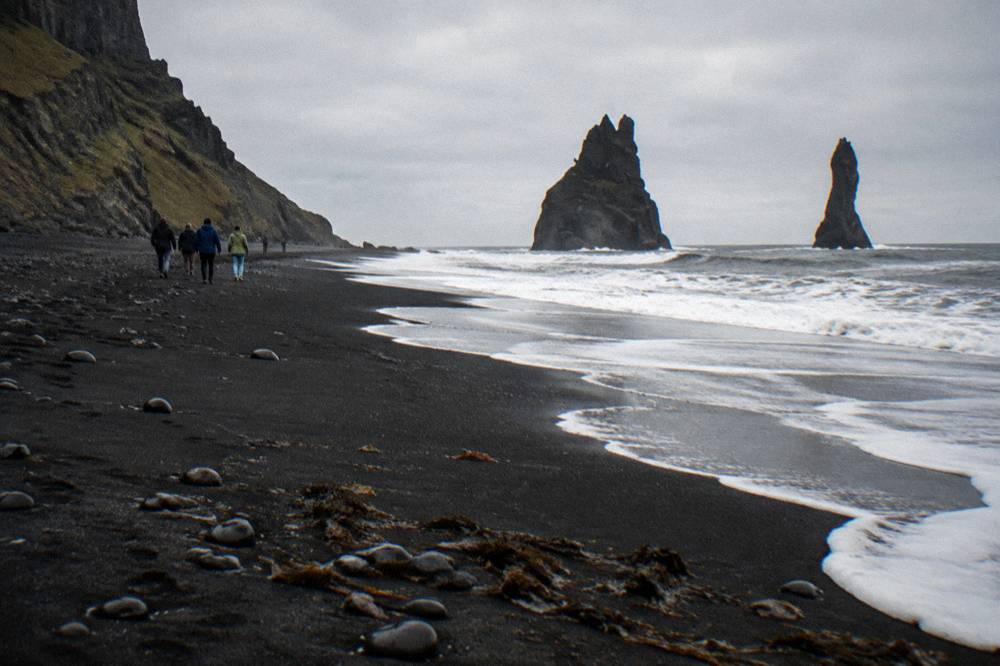
Be honest with yourself about the drive before you book. The route from Reykjavik to Vík takes close to three hours in good conditions, and most riders arrive in a rental car. Weather on the south coast turns quickly, and the same beach that looks calm at noon can be dangerous by mid-afternoon. At Reynisfjara specifically, a warning light system tells visitors when to stay out of the danger zone, and sneaker waves are a real, documented hazard rather than a cautionary tale. Operators time their beach rides around the tides and forecast, which is one more argument for booking a listed tour rather than improvising.
| South coast ride | Saddle time | Weight limit | Price per person | Reviews |
|---|---|---|---|---|
| FossTravel black beach ride | 2 hours | 110 kg | from $185 | 4.8 across 108 |
| Vík Horse Adventure black sand ride | 1 hour | 100 kg fully clothed | from $126 | 4.8 across 571 |
| Saddle Stories Reynisfjara beach ride | 3 hours | 100 kg | from $292 | 7 reviews, too few for a rating |
| Saddle Stories Írafoss waterfall ride | 2 hours | 100 kg | from $246 | No rating shown on the listing |
The weight column deserves a glance even before you read the next section. Vík Horse Adventure sets its limit at 100 kg fully clothed and reserves the right to weigh riders on site, a policy the operator states openly on its own page. For more on the region, see the black sand beach rides near Vík guide.
What Could Make Riding In Iceland Not Worth It For You?
Three things: your weight, your gear and the season. Rider weight limits run from 95 to 120 kg depending on the operator, and most sit at 100 to 110 kg. Used riding equipment and used riding gloves are prohibited imports, and riding clothes and boots must be washed or disinfected before entry. Mid-winter leaves only about four to five hours of usable daylight.
The weight limits are the bluntest filter, so take them first. Laxnes accepts riders up to 120 kg, Íshestar, Sólhestar, Eldhestar and Viking Horses set 110 kg, and several smaller operators sit at 100 kg, with one northern tour at 95. These are welfare rules for the horses, not judgement, and operators enforce them. If you are near a limit, ask the operator before booking rather than hoping, because a refusal at the stable is a lost day for everyone.
Gear is the surprise nobody expects. Because no horse can enter Iceland and the native population has no vaccinations, the Icelandic Food and Veterinary Authority prohibits importing used riding equipment and used riding gloves outright, and requires used riding clothes, helmets and boots to be machine washed, dry cleaned or disinfected before arrival. The authority publishes the full rules, including the disinfectant procedure. In practice this is simple: bring clean clothes, borrow the operator's helmets, boots and overalls, which every major stable supplies free, and leave your old riding gloves at home.
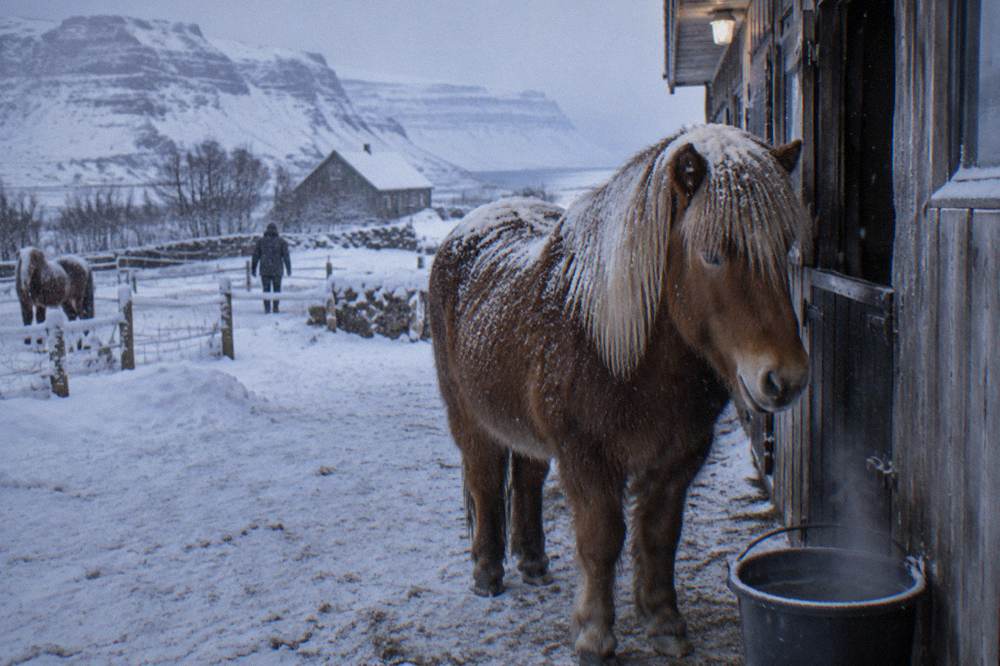
Season is the third factor, and it cuts both ways. Rides genuinely operate in all twelve months of the year, and a snowy lava field is a spectacular arena. But Eldhestar's own FAQ puts mid-winter effective daylight at around four to five hours, which compresses departure options, and the weather that makes winter beautiful also makes it demanding. If a storm is forecast, operators cancel, and a cancelled ride refunded in full is still a lost morning.
When Is Riding In Iceland At Its Best?
June, for daylight and ground conditions. Reykjavik gets around 21 hours of daylight and its driest month of the year, about 43 mm of rain. September balances 13 hours of daylight with the start of the northern lights season, which runs from September to April. Rides run in all twelve months, so the honest answer is that only weather, not the calendar, closes the window.
June is the statistical sweet spot. The capital area sees roughly 21 hours of daylight in June, the month is the driest of the Reykjavik year, and the high averages a mild 13°C. September runs it close: 13 hours of daylight on the 15th of the month, a 11.4°C average high, and the opening of the aurora season, which the national tourist board describes as running from September to April and being most active around the equinoxes. No operator will promise you a display, and neither will this page; the forecast office publishes a real-time aurora and cloud forecast worth checking on the day.
For a fuller seasonal breakdown, including what a winter ride actually feels like, read riding in Iceland in winter. The short version for the worth-it question: book the ride you want for the scenery you want, in any month, and let the operator's cancellation policy be your insurance against the weather.
One last practical note on timing. The classic lava field rides near Reykjavik run all year, while some short formats, such as the Íshestar comfort ride, run on a summer schedule. If your heart is set on a specific format, confirm the operating window on the live listing before you lock in flights, because a June-only ride is no help to a February visitor.
Common Questions About Horse Riding In Iceland
is horseback riding in iceland worth it?
For most travellers, yes. The combination of a unique five-gaited breed, scenery you cannot replicate elsewhere and prices from $86 to $185 per person for the mainstream rides makes it one of the better value paid activities in an expensive country. The main exceptions are riders over the operator weight limits, visitors with only stormy winter windows, and travellers who genuinely dislike horses.
Is horse riding in Iceland worth it?
Yes, and the review data backs the instinct. The three most reviewed rides in the country hold 4.8, 4.8 and 4.8 across 2,789, 1,989 and 901 reviews respectively. Per hour of activity, a lava field ride at from $129 to $166 compares well against almost any other guided experience in Iceland, and the short formats from $95 make the entry price even easier to justify.
Do I need experience to ride an Icelandic horse?
No. Most listings are explicitly beginner-friendly: Laxnes states its tours suit all levels, Íshestar labels its lava tour for beginners and intermediate riders, and Vík Horse Adventure's one-hour beach ride suits beginners and experienced riders alike. Tours move mostly at walking speed, helmets, boots and overalls are supplied, and guides introduce the tölt only to riders who look comfortable.
What is the rider weight limit in Iceland?
Operator-stated limits run from 95 to 120 kg, with most stables at 100 to 110 kg. Laxnes accepts up to 120 kg, Íshestar, Sólhestar, Eldhestar and Viking Horses set 110 kg, and Vík Horse Adventure sets 100 kg fully clothed and may weigh riders near the limit. If you are close to a limit, ask the operator directly before booking; nobody can promise an exception.
Is horse riding in iceland worth it?
The verdict of this page: yes for the large majority of visitors, and most decisively for first-time riders, families with children over 6, and anyone already driving the south coast. Book a short format if you are unsure, pick a lava field ride with pickup if you want the classic experience, and read the weight and gear rules before you pay. The related Íshestar lava field ride, from $129 per person with pickup and a 4.8 rating across 1,989 reviews, is a sound default.