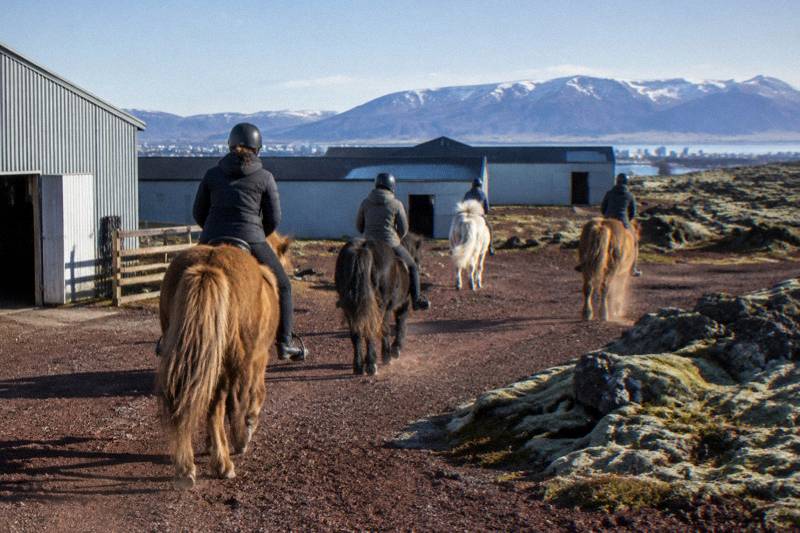
What Is Tolt? The Icelandic Horse Gait You Feel On A Ride
Tolt is the four-beat gait that makes the Icelandic horse famous, and it is the reason many travellers book a ride at all. Here is what it is, how it differs from the trot, and which tours let you feel it.
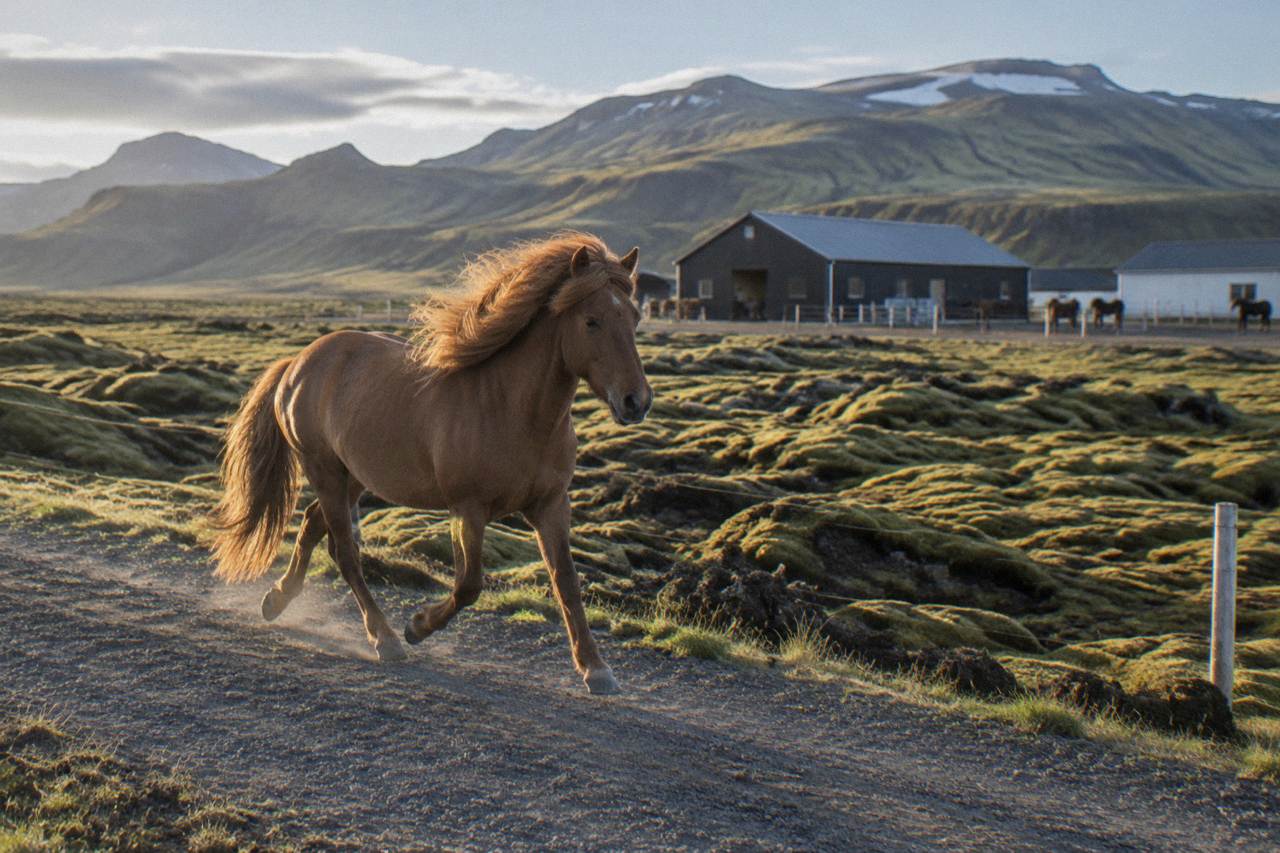
Short answer
Tolt is a four-beat lateral gait with no suspension phase, so one foot is always on the ground and the ride feels gliding rather than bouncy. Most Icelandic horses can do it. Beginner-friendly tours from $135 per person, including the Eldhestar Siggi ride, let first-timers try it at a gentle pace.
What Is Tolt And Why Do Riders Travel For It?
Tolt is the Icelandic horse's signature gait: a four-beat lateral movement with no suspension phase, meaning at least one foot always stays on the ground. Riders describe it as a gliding, chair-like motion rather than a bounce. Most Icelandic horses offer it, and many beginner-friendly tours near Reykjavik let first-timers try it at a controlled speed.
That single sentence explains why Iceland has a riding scene out of proportion to its size. The breed's own association describes tolt as the four-beat lateral gait the breed is best known for, a movement with no suspension phase, which is the technical way of saying the horse never leaves the ground entirely as the Horses of Iceland gaits page explains. A trot, by contrast, has a moment where all four hooves are airborne. That moment is what jolts the rider. Remove it and the saddle stops pitching, which is why people who find trotting uncomfortable often find tolt genuinely pleasant.
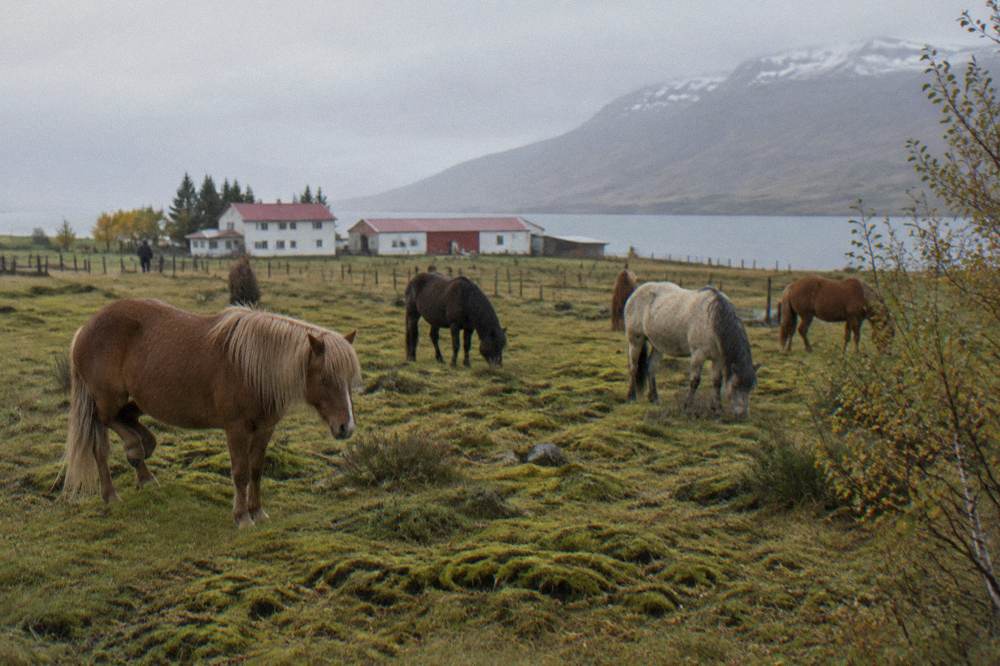
The gait is not a trick trained into the horse. It is inherited, part of how the breed moves, and it shows up naturally in the field. Icelandic horses descended from animals brought during the settlement period of 874 to 930 and have been isolated for more than a thousand years without genetic input from other breeds, according to the international federation FEIF. Tolt is one of the things that isolation preserved.
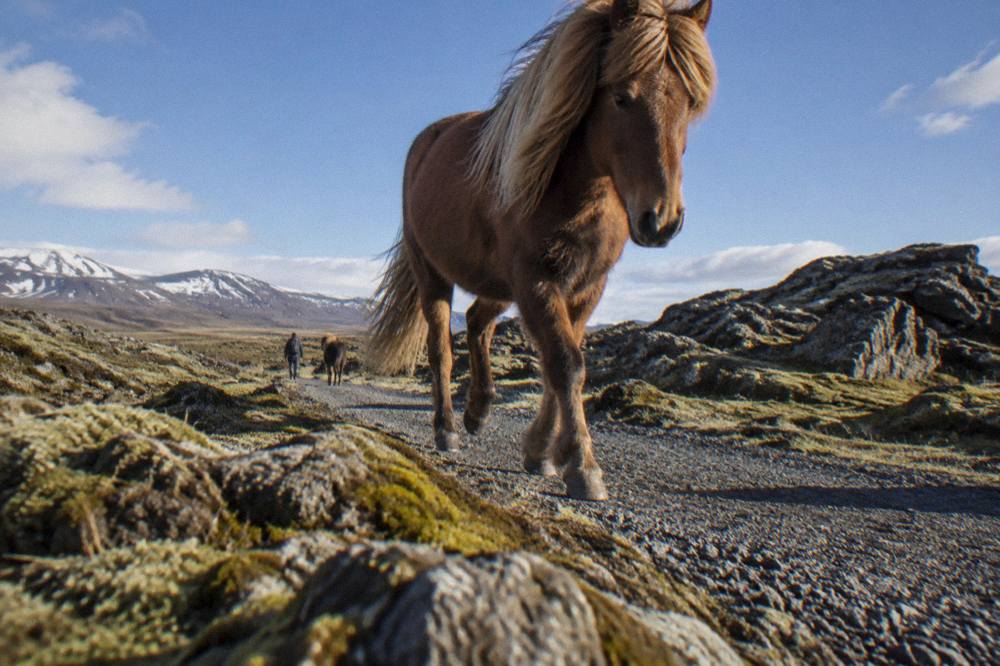
For a visitor, the practical point is this: you do not need riding experience to feel tolt. Tours such as the Sólhestar red lava ride near Reykjavik, rated 4.8 across 2,789 reviews, and the Íshestar lava field ride, rated 4.8 across 1,989 reviews, are built around first-time riders, and their guides deliberately introduce tolt at a speed each group can handle. The Eldhestar Siggi ride from Hveragerdi does the same in about two hours, from $135 per person. The question is not whether the horse can tolt. It is whether the tour pace suits you, which is what the rest of this guide works through.
What Is A Gaited Horse?
A gaited horse is one that performs additional gaits beyond the basic walk, trot and canter. Icelandic horses are the classic example: most are five-gaited, adding tolt and flying pace to the three standard gaits. Some Icelandics are four-gaited and lack the flying pace, but tolt itself is near universal across the breed, which is why every riding stable in the country can offer it.
The term confuses people because "gait" sounds technical. In plain terms, a gait is a pattern of footfall, a rhythm the horse repeats. Every horse walks, trots and canters. Gaited breeds have extra rhythms in their movement vocabulary, and different breeds developed different ones. The American Saddlebred, the Tennessee Walking Horse and the Paso Fino all have their own additional gaits. The Icelandic horse's contribution is tolt, plus the flying pace, a two-beat lateral gait with a suspension phase that the breed association notes is sometimes used for racing over 100 to 250 meters.
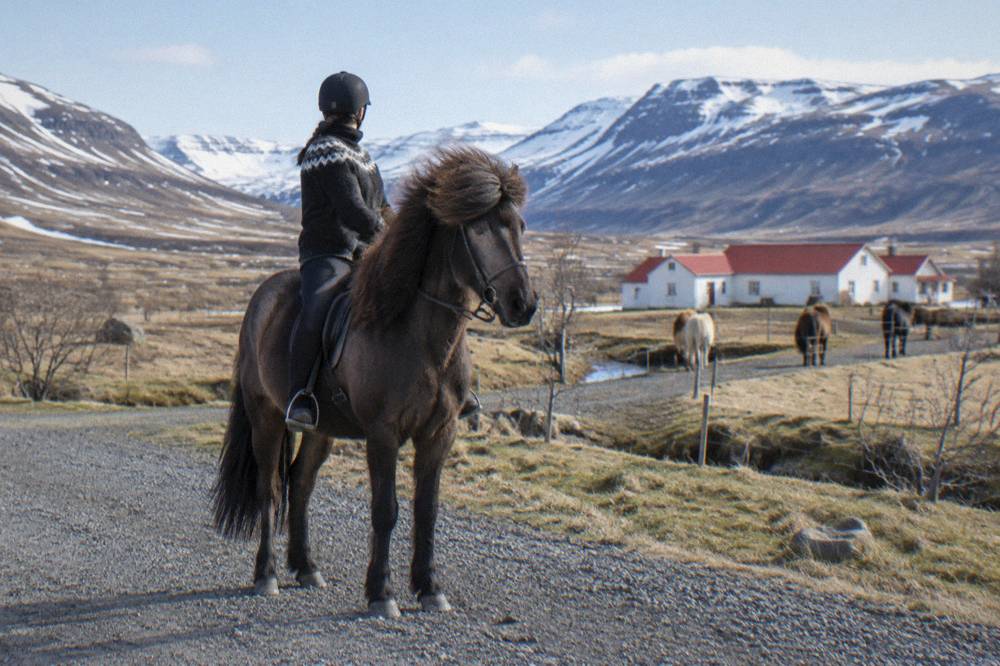
What makes the Icelandic case unusual is how uniform the trait is. This is not a rare skill appearing in a few bloodlines. The breed numbers over 300,000 registered horses worldwide as of 2024, with roughly 40 percent in Iceland according to Horses of Iceland, and the overwhelming majority of riding tours in the country are run on horses that tolt freely. A visitor booking the Víðidalur volcanic landscape ride, rated 5.0 across 22 reviews, is booking a gaited horse with the same certainty as booking a saddle.
There is one naming point worth settling. The Icelandic stands roughly 130 to 150 cm at the withers, with the breeding-evaluation average at 142 cm, which by conformation would qualify it as a pony in some systems. The breed registries nonetheless always refer to it as a horse, and breeders do the same, so "horse" is the correct word on any stable yard in the country. If a guide or a listing calls it the Icelandic horse, that is the registry convention, not a size claim.
What Are The Five Gaits Of A Horse In Order?
In order from slowest to fastest, the five gaits of the Icelandic horse are walk, tolt, trot, canter or gallop, and flying pace. Walk is a four-beat flat gait, tolt is a four-beat lateral gait, trot is a two-beat diagonal gait, canter is a three-beat gait, and flying pace is a fast two-beat lateral gait used in short races.
The order above is the everyday progression a guide uses on the trail, though riders should know that tolt and trot sit at overlapping speeds and a horse may switch between them depending on what the rider asks for. Here is each gait in plain terms.
| Gait | Beats | Character | What the rider feels |
|---|---|---|---|
| Walk | 4 | Flat, ground-covering footfall | Gentle sway, no jolt |
| Tolt | 4 | Lateral, no suspension phase | Gliding, seat stays level |
| Trot | 2 | Diagonal pairs, suspension phase | Bouncing unless you post |
| Canter or gallop | 3 | Rocking-horse motion, then full speed | Rolling, then a surge |
| Flying pace | 2 | Lateral, suspension phase, racing gait | Fast and thrilling, brief |
Two clarifications keep this honest. First, "five gaits" describes most but not all Icelandics: some horses are considered four-gaited and lack the flying pace, per the breed association. Tolt, however, is the common inheritance. Second, flying pace is a specialist gait. You will not see it on a tourist ride; it belongs to short sprint races on prepared tracks, and a beginner tour will never ask a horse for it.
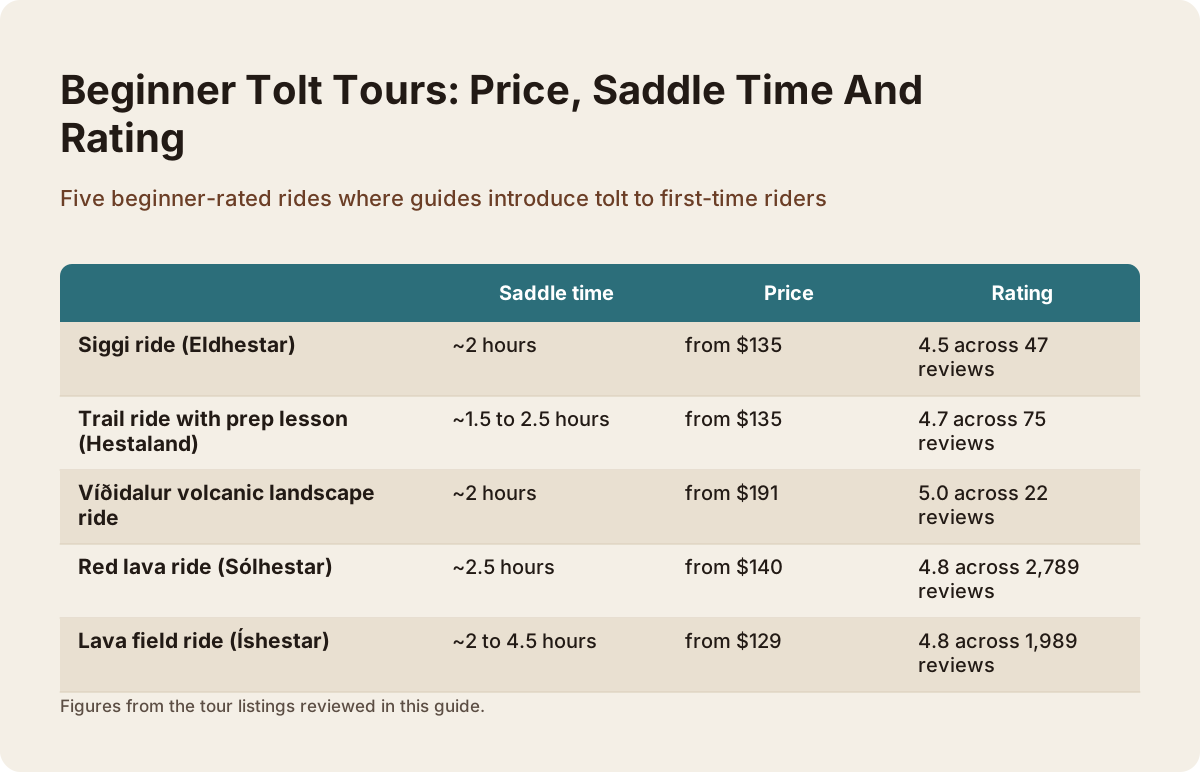
If you are choosing a tour around the gaits, the short answer is that walk and tolt are what a first-time rider will actually experience. The Eldhestar Siggi ride, the Hestaland trail ride with its prep lesson, and the Islenski Hesturinn volcanic landscape ride all spend most of the saddle time at these two gaits, introducing faster work only when the group is ready. For a wider view of how these listings stack up, our beginner's guide to horseback riding in Iceland walks through the same question from the rider's side.
Tolt Versus Trot: Which Feels Smoother In The Saddle?
Tolt feels smoother for almost every rider because it has no suspension phase: with one foot always grounded, the horse's back stays level and the rider sits still. Trot has a moment of full suspension, so the rider is launched slightly upward each stride and must absorb it by posting or gripping. Beginners who dread bouncing should ask for tolt, not trot.
The difference is mechanical, not a matter of taste. In trot, diagonal pairs of legs move together, and between each pair of footfalls all four hooves are off the ground. That airborne instant is the bounce. In tolt, the lateral footfalls are spread so evenly through the stride that the support alternates without a gap, and the horse's spine stops seesawing. The rider's impression is of a smooth conveyor belt under the saddle, which is why tolt is sometimes compared to sitting in a gliding chair.
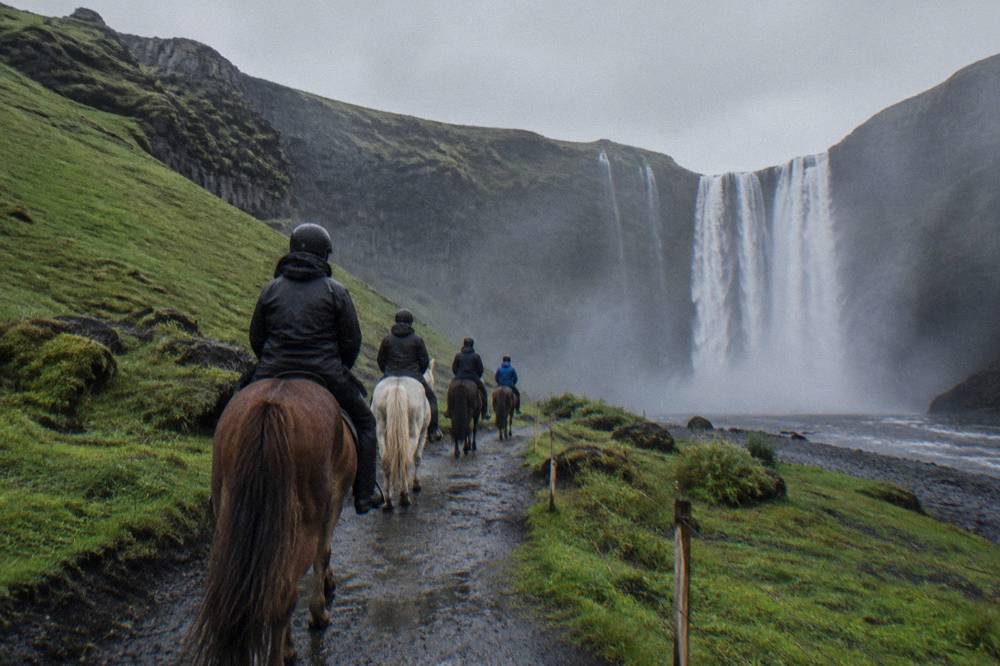
Speed is where the two gaits overlap confusingly. A slow tolt is close to walking pace; a fast tolt, sometimes called racing tolt, can outpace a working trot. Guides control this by asking the horse for a specific tempo, which is why a well-run tour feels calm even when the horses are technically gaiting briskly. The Vik Horse Adventure black beach ride describes its tours as mostly at walking speed with the opportunity to try tolt for capable riders, a fair summary of how most stables manage a mixed group.
One caution belongs here because it affects comfort directly: smooth does not mean effortless. A long session of any gait uses core muscles a desk worker forgot they had, and riders who worry about that can read our piece on whether a two-hour ride is too long for a beginner. Tolt removes the bounce, not the duration.
Which Rides Let Beginners Try The Tolt?
Nearly every beginner-rated tour in the roster lets riders try tolt, because the gait is safe at low speed and it is the breed's main selling point. The Eldhestar Siggi ride from Hveragerdi, the Hestaland trail ride with prep lesson, and the Sólhestar red lava ride all introduce it to first-timers, from $135 per person, with guides matching the tempo to the group.
The pattern across stables is consistent: a slow start in walk, a demonstration of tolt from the guide's horse, then an invitation for anyone who wants to try. Nobody is forced, and the group's pace follows its least confident rider. What differs between listings is the amount of groundwork you get before the trail, and that is where the Hestaland prep lesson stands out: the listing is built around instruction before you leave the yard, which suits a nervous first-timer more than a scenic-only ride.
| Tour | Operator | Saddle time | Price | Rating | Beginner tolt access |
|---|---|---|---|---|---|
| Siggi ride | Eldhestar Volcano Horses | ~2 hours | from $135 | 4.5 across 47 reviews | Yes, all levels, pickup offered |
| Trail ride with prep lesson | Hestaland | ~1.5 to 2.5 hours | from $135 | 4.7 across 75 reviews | Yes, lesson-first format |
| Víðidalur volcanic landscape ride | Islenski Hesturinn | ~2 hours | from $191 | 5.0 across 22 reviews | Yes, no pickup, meet on location |
| Red lava ride | Sólhestar Horse Riding | ~2.5 hours | from $140 | 4.8 across 2,789 reviews | Yes, first-timers welcome |
| Lava field ride | Íshestar Riding Tours | ~2 to 4.5 hours | from $129 | 4.8 across 1,989 reviews | Yes, beginners and intermediate |
Read the table as a comfort decision, not a quality ranking. The Sólhestar and Íshestar listings carry the largest review pools, which tells you they run constantly and handle mixed groups daily. The Víðidalur ride has a small pool of 22 reviews but a perfect 5.0, and it is the one to pick if you would rather meet the stable directly than ride a pickup bus. The Eldhestar Siggi ride splits the difference: pickup from Reykjavik, a two-hour format, and a stable whose FAQ is unusually clear about what beginners can expect.
If your question is really "will I be the only beginner," the answer on these listings is almost always no. Beginner-friendly rides are the volume product of Icelandic stables, and the guides are practiced at managing a group where half the riders have never sat on a horse. For a fuller comparison across the country, our guide to the best horse riding in Iceland breaks the options down by region and price.
Can You Learn To Recognize Tolt Before You Book?
You can learn to recognize tolt from the ground in minutes: watch the horse's back and head. In tolt the back stays level and the head bobs in a steady four-beat rhythm, while in trot the back dips and rises sharply each stride. Riders who watch a few minutes of gait video before booking consistently report they notice the difference on day one.
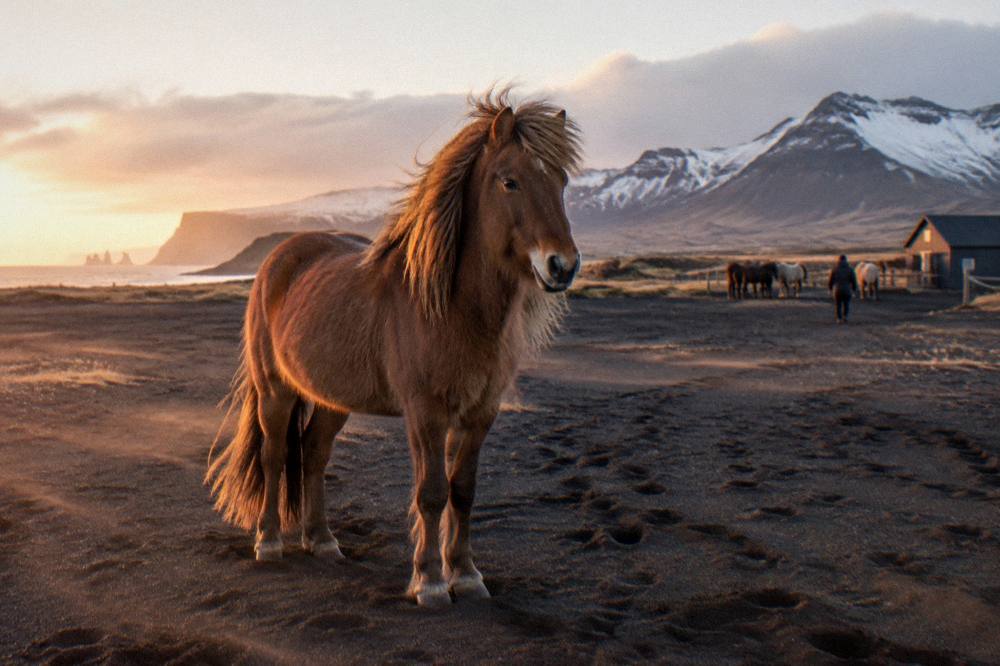
The visual cues are reliable. A trotting horse looks like it is bouncing on a trampoline, the whole spine flexing. A tolting horse looks like it is gliding on rails, the legs working underneath but the topline almost still. The footfall pattern is lateral, meaning the legs on the same side move in sequence rather than in diagonal pairs, and if you slow a video down you can see the near-side legs and then the off-side legs land in turn.
Feeling it is a different skill, and this is where a small amount of preparation pays off. In the saddle, the tell is that your seat stops being pushed upward. If you find yourself rising out of the saddle rhythmically, you are trotting; if the saddle feels like a slow conveyor, you are tolting. Guides will say exactly this before asking the horse to move up, so listen for it. The Hestaland prep lesson format exists partly to teach these cues in the yard before the trail starts, and riders who have done a lesson-first tour tend to ask better questions on later rides.
One thing you cannot prepare for is the horse's individual character. Some Icelandics tolt so smoothly the gait feels like a rumor; others are bumpier at the same gait. Guides know their string and will move a nervous rider onto a famously smooth horse when they can. Asking costs nothing and stable staff answer that question all day.
What Does Tolt Mean For Comfort, Fitness And Age?
Tolt makes riding accessible to people who would find trotting painful: the level back removes the jarring that aggravates backs and knees, and age is not a barrier, with stables accepting riders from young children to senior riders. The real constraints are operator rules on weight, 95 to 120 kg across the roster with most at 100 to 110 kg, and minimum ages that range from 6 to 12 depending on the tour.
The comfort point deserves emphasis because it changes who rides. A bouncing trot is the single most common reason first-timers give up on riding, and tolt simply deletes that problem. Riders with sensitive backs, older riders and nervous beginners all report that the gliding gait let them enjoy a trail ride they had assumed was beyond them. Our article on whether 60 is too old to ride a horse covers the age question in detail, but the short version is that Icelandic stables host senior riders routinely and the tolt is a large part of why.
| Constraint | Range across the roster | Notes for tolt seekers |
|---|---|---|
| Rider weight | 95 to 120 kg | Most stables 100 to 110 kg; Laxnes allows 120 kg |
| Minimum age | 6 to 12 by tour | Short family rides start at 6; longer tours from 10 to 12 |
| Saddle time for beginners | 30 minutes to 3 hours | One to two hours suits a first tolt experience |
| Price range | from $86 to $303 | Tolt-capable beginner rides cluster from $129 to $191 |
Weight limits are operator-stated and strictly enforced for horse welfare, so a rider near a limit should ask the operator directly rather than assume. Vík Horse Adventure sets 100 kg fully clothed and reserves the right to weigh riders on site, while Laxnes Horse Farm allows up to 120 kg, the most generous limit in the roster, on its farm ride from $166 per person. Borderline cases are handled by conversation, not by promise, and no stable guarantees acceptance in advance.
Age works in the same direction. The shortest rides accept the youngest riders: Vík Horse Adventure's 30-minute family beach ride takes children from 6, while the longer Viking-format tours at Íshestar start at 12. For a family deciding together, our guide to horse riding in Iceland with kids and age limits lists every operator's rule side by side.
How Do You Pick A Tolt Tour That Matches Your Confidence?
Pick by preparation, not by scenery. Nervous first-timers should choose a tour with a lesson or yard session first, such as the Hestaland trail ride with prep lesson from $135. Confident beginners can go straight to a scenic ride like the Sólhestar red lava ride or the Eldhestar Siggi ride, and riders who want a full day combine the ride with a Golden Circle tour from $223 per person.
Confidence is the honest variable here. Two riders with identical experience can want completely different tours: one wants hand-holding and a slow introduction, the other wants lava fields and a faster group. Icelandic stables serve both, but the listings that serve them best are different, and reading the listing's own description of pace is more useful than reading its photos.
| If you are... | Best-fit tour | Why |
|---|---|---|
| Nervous, never ridden | Hestaland trail ride with prep lesson | Instruction in the yard before the trail |
| First-timer wanting scenery | Sólhestar red lava ride | Huge review pool, first-timers daily, pickup offered |
| Wanting a small group | Víðidalur volcanic landscape ride | Small operation, 5.0 across 22 reviews, meet on location |
| Short on time | Íshestar comfort ride, ~50 minutes | From $128, a taste of the gait without a half day |
| Wanting a full day | Golden Circle and horse riding day tour | ~11 hours, ride plus sightseeing, from $223 |
The comfort ride deserves a word because it is the roster's shortest listing at about 50 minutes, from $128 per person, rated 4.9 across 106 reviews. It is not a tolt masterclass; it is a sampler, and for a traveller unsure whether they like horses at all it is a rational first purchase. Riders who already know they want the gait should skip it and book two hours or more, because the tolt reveals itself once the group settles, usually ten or fifteen minutes in.
Whatever you book, arrive with the right clothes. Stables supply helmets, boots and rain gear, but your own layers matter in a climate where Reykjavik's July high averages 14.9 degrees and rain falls in every month. Our what to wear horseback riding in Iceland guide covers the layering system, and one rule from it applies to every tolt seeker: skip the jeans, they grab and chafe in a gliding gait.
The tolt is, in the end, the reason Iceland Horse Tours exists as a site. A gliding gait on a calm, colorful horse across a lava field is an experience that no other European riding destination can copy, because the breed and the landscape come as a pair. Choose the tour that matches your confidence, wear layers you can move in, and let the horse do what a thousand years of isolation taught it.
Common Questions About Tolt
What is a gaited horse?
A gaited horse performs additional gaits beyond walk, trot and canter. The Icelandic horse is the best known example: most are five-gaited, adding tolt and flying pace. Some Icelandics are four-gaited and lack the flying pace, but tolt itself is near universal in the breed.
What are the five gaits of a horse in order?
In order from slowest to fastest: walk, tolt, trot, canter or gallop, and flying pace. Tolt and trot overlap in speed, so the practical order on the trail is walk, then tolt or trot depending on what the rider asks for, then canter. Flying pace is a racing gait, not a trail gait.
Can a beginner ride the tolt?
Yes. Tolt is stable and comfortable at low speed, and beginner-rated tours introduce it routinely. The Eldhestar Siggi ride, the Hestaland trail ride with prep lesson and the Sólhestar red lava ride all let first-timers try it, with the guide setting a tempo the group can hold.
Is tolt the same as pacing?
No. Tolt is a four-beat lateral gait with no suspension phase, smooth and usable at trail speeds. Flying pace is a two-beat lateral gait with a suspension phase, fast enough that it is raced over 100 to 250 meters. A tourist ride will offer tolt, never flying pace.
Do all Icelandic horses have tolt?
Nearly all. The breed association describes most Icelandic horses as five-gaited, and the four-gaited minority lacks only the flying pace, not the tolt. Any licensed riding tour in Iceland will be mounted on horses that tolt.
Which tours near Reykjavik let you try tolt?
The Sólhestar red lava ride from $140 per person, the Íshestar lava field ride from $129 and the Eldhestar Siggi ride from Hveragerdi at from $135 all introduce tolt to beginners, and all offer pickup from the capital area. Check availability on the operator's live listing for current departure times.