Are Icelandic Horses Hard To Ride?
Icelandic horses are calm, small and smooth-gaited, which makes them one of the easier breeds for beginners. Here is what actually makes a ride feel hard, and which tours suit nervous riders.
Icelandic horses have a reputation that cuts both ways. Some people hear "Icelandic horse" and picture a sturdy, forgiving animal that carries nervous tourists all day. Others hear "five gaits" and imagine a complicated, highly trained mount that needs an experienced hand. Both pictures contain a piece of the truth, and the honest answer sits between them: the breed itself is one of the easier ones to ride, while the tour you book determines almost everything else about how hard the day feels.
Are Icelandic Horses Hard To Ride?
No, Icelandic horses are not hard to ride for most people, and the breed is widely regarded as one of the more beginner-friendly ones. They are small, calm, sure-footed and naturally smooth, and operators across Iceland place first-time riders on them every day of the year. The difficulty comes less from the horse and more from the tour length, the terrain and the gait you attempt.
That answer deserves unpacking, because "hard" means different things to different riders. A nervous first-timer worries the horse will bolt or buck. A dressage rider worries the aids and gaits will feel unfamiliar. A rider returning after twenty years worries their body will not cooperate. Icelandic horses answer each of those worries differently, and mostly reassuringly.
Start with temperament. Icelandic horses live close to people, often in open fields beside farmhouses, and the ones used on riding tours are chosen precisely because they tolerate beginners. Tour operators would not survive otherwise: the Ishestar lava field ride alone has accumulated 1,989 reviews at 4.8, and most of those riders are tourists who have never sat on a horse before.
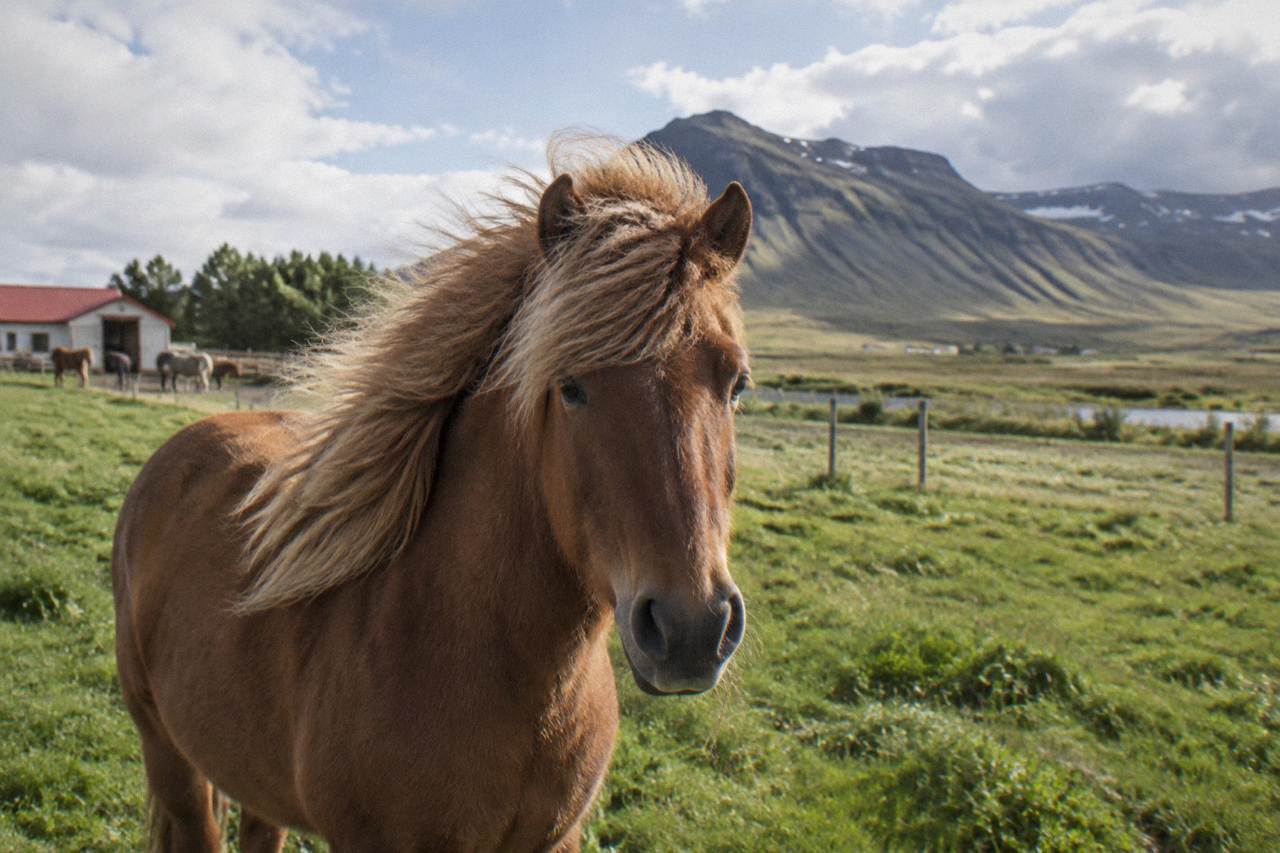
Size matters too, in a direction that helps the beginner. Horses of Iceland states the breed ranges from about 130 cm to over 150 cm at the withers, with an average around 142 cm in breeding evaluations. That is a small horse. The distance to the ground is shorter, the saddle sits lower, and the whole animal feels less imposing than a tall warmblood would. Registries insist on calling it a horse rather than a pony, and the breeders' own association is right to insist, but the practical effect for a nervous rider is pony-sized confidence.
The one genuinely new thing is the tölt. This is where a small number of riders do find a learning curve, and it is worth understanding before you book. The tölt is the breed's famous four-beat lateral gait, and it is the reason so many people describe an Icelandic ride as "sitting in an armchair". It has no suspension phase, meaning the horse always has a foot on the ground, so there is none of the bumping that makes trotting uncomfortable. Most tour horses will offer it at a gentle speed without being asked.
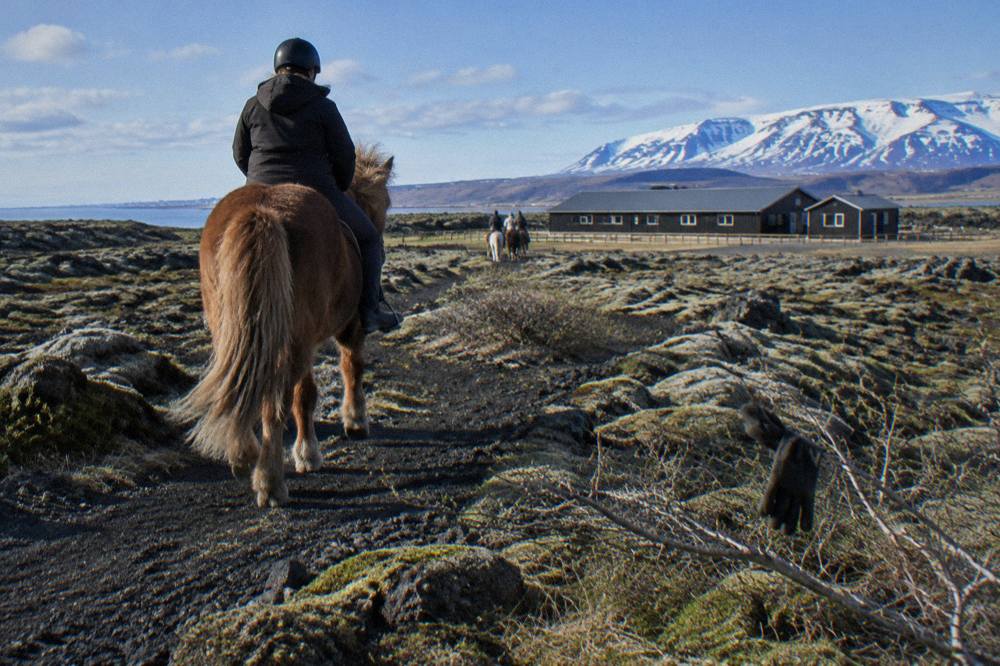
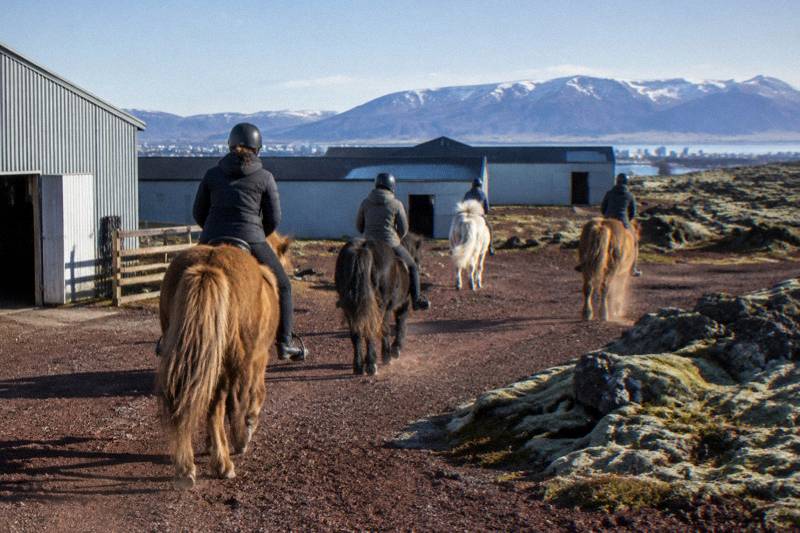
What this means in practice: if you book a one-hour or ninety-minute beginner tour, you will walk, perhaps try a slow tölt, and finish with your confidence intact. If you book a three-hour tour with an experienced group, you may tölt at speed and canter, and that is a different kind of day. The horse is the same. The tour is not.
For a first ride, the roster's shortest option is a good fit. The Ishestar Comfort Ride runs about 50 minutes, is rated 4.9 across 106 reviews, and costs from $128 per person. It exists almost exactly for the person asking this question. If you want a slightly longer taste of the lava landscape, the Ishestar lava field ride runs about 2 to 4.5 hours depending on the option, from $129 per person, and the operator states its Lava tour suits beginners and intermediate riders. Riders who want scenery over speed sometimes pick the Foss Travel black beach ride instead, about 2 hours from $185 per person, rated 4.8 across 108 reviews.
What Makes The Tolt Feel Different From A Trot?
The tölt is a four-beat lateral gait with no suspension phase, so the horse always keeps one foot on the ground and the rider stays almost still in the saddle. Unlike the trot, which bounces you upward twice per stride, the tölt feels like a smooth, fast walk, which is why beginners usually find it easier, not harder, than trotting.
Horses of Iceland, the breed's own association, describes the tölt as "the four-beat lateral gait, that the breed is best known for", and notes it has no suspension phase. That last phrase is the mechanical heart of the matter. In trot, the horse springs from one diagonal pair of legs to the other, with a moment where all four feet are off the ground. That moment is what launches you out of the saddle. In tölt, the feet land one at a time in an even rhythm, like a drum roll, and the rider's body simply stays put.
Some Icelandic horses are five-gaited, adding flying pace to walk, trot, canter and tölt. Flying pace is a racing gait over 100 to 250 meters, and you will not be asked to try it on a tourist ride. Most tour horses are asked only for walk, tölt and occasionally canter, and many tour descriptions, including Vik Horse Adventure's own page, note that rides are mostly at walking speed with a chance to try tölt for capable riders.
The beginner question is whether the tölt is hard to sit. It is not, in the way a trot is hard to sit. The common beginner difficulty is asking for it: the tölt is cued by speed and balance rather than a distinct leg aid, so a first-timer sometimes gets a brisk trot instead. Tour guides handle this by leading the file or calling the pace from the front, and the horse usually knows the routine better than the rider does. If the tölt starts to feel bumpy, the fix is nearly always the same: slow down half a step, and the gait smooths out.
This is also why the breed has a reputation for being comfortable for older riders and riders with back or joint concerns. There is no posting, no rising out of the saddle, and no impact. The gait absorbs the work the rider's body would otherwise do. Riders who gave up on trotting years ago often find they can tölt for an hour without soreness, which is one of the quiet selling points of the whole Icelandic riding scene.
Do You Need Riding Experience To Ride An Icelandic Horse?
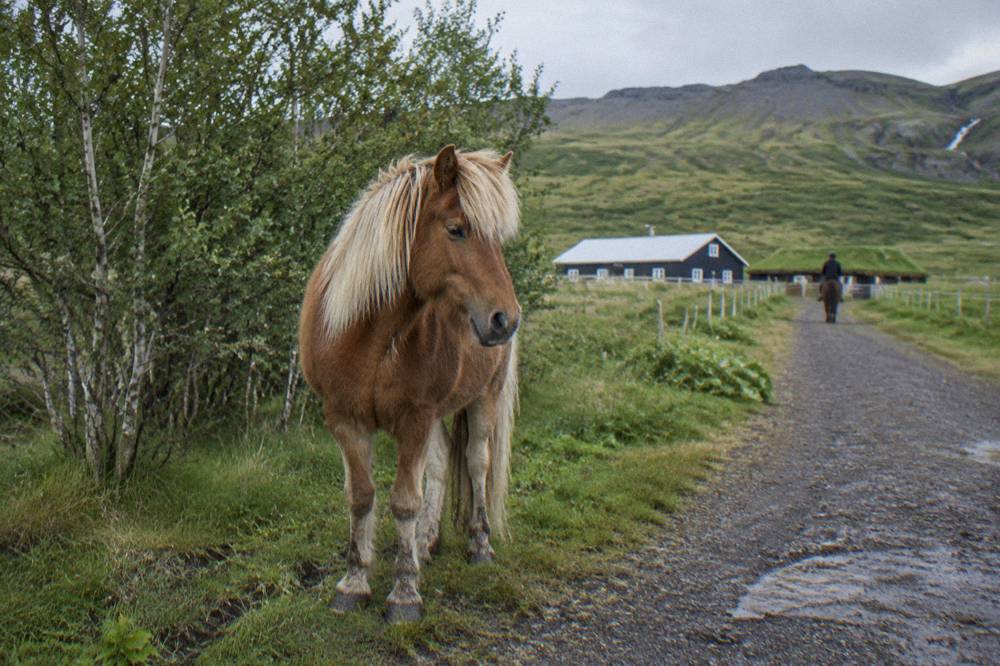
For most short tours, no. Operators across Iceland explicitly welcome beginners: Ishestar lists its lava tour for beginners and intermediate riders, Viking Horses calls its volcano tour beginner friendly, and Laxnes states its tours suit all levels. Experience only becomes a requirement on longer or faster rides, where operators state it in the listing.
The pattern across the verified operator pages is consistent. Ishestar's lava tour, a 1.5 to 2 hour ride, is described for "beginners and intermediate" riders. Viking Horses' volcano tour is labelled "All levels - Beginner friendly", with 3 hours total but only 1 to 1.5 hours actually in the saddle. Laxnes, the farm behind the roster's most-reviewed family ride at 4.8 across 901 reviews, states plainly that "our tours are suited for all levels". Eldhestar's half-day and combo tours are likewise described as suited for all experience levels, while its wilderness tours are reserved for experienced riders only.
That last clause is the honest caveat. The breed being easy does not mean every tour is easy. Operators sort their products, and the sorting is what you should read when booking. A 50-minute comfort ride and a multi-hour wilderness trek use the same breed but not the same rider. The table below shows how the difficulty signals differ across some of the most-booked listings near Reykjavik and beyond.
| Tour (roster name) | Length | Rating and reviews | From, per person | Beginner signal |
|---|---|---|---|---|
| Ishestar Comfort Ride | ~50 minutes | 4.9 across 106 reviews | $128 | Shortest listed ride, ideal first taste |
| Ishestar Lava Field Ride | ~2 to 4.5 hours | 4.8 across 1,989 reviews | $129 | Operator lists beginners and intermediate |
| Laxnes Farm Ride, Pickup | ~3 hours 30 minutes | 4.8 across 901 reviews | $166 | Farm states all levels |
| Viking Horses Volcano Ride, Pickup | ~3 hours | 4.7 across 259 reviews | $182 | Listed as beginner friendly, 8 riders max |
| Foss Travel Black Beach Ride | ~2 hours | 4.8 across 108 reviews | $185 | Beach pace, walking speed base |
| Eldhestar Siggi Ride, Pickup | ~2 hours | 4.5 across 47 reviews | $135 | Half-day format, all levels per operator |
Age and weight limits are the other gatekeeping numbers, and they are operator-stated rather than breed-wide. Across the operator pages the site's research verified, weight limits run from 95 to 120 kg, with most operators at 100 to 110 kg. Laxnes allows up to 120 kg, Ishestar, Eldhestar, Viking Horses and Sólhestar set 110 kg, and Vik Horse Adventure sets 100 kg fully clothed and reserves the right to weigh riders near the limit. Minimum ages range from 6 on the shortest Sólhestar and Vik family rides to 12 on Ishestar's Viking tour. If you are near a limit, the answer is to ask the operator before booking rather than assume.
None of these limits exist because the horses are difficult. They exist because a small horse carrying weight over lava rock needs to be managed carefully, and because Icelandic operators are unusually direct about horse welfare. The weight limits are a feature of a well-run stable, not a warning about the breed.
How Does Size And Temperament Affect The Ride?
An Icelandic horse stands roughly 130 to 150 cm at the withers, averaging about 142 cm, so the saddle sits low and the horse feels manageable rather than intimidating. The breed's temperament is steady and people-oriented, shaped by over a thousand years of isolation and farm work, which is why tour operators trust it with first-time riders daily.
The size figures come from Horses of Iceland, the breeders' association, which notes the average horse shown in breeding evaluation now measures 142 cm to the withers. Registries and breeders always refer to the breed as a horse, never a pony, and that naming is worth respecting even though the stature is what a nervous rider notices first. A lower saddle means a shorter fall, an easier mount, and less of the neck-and-shoulders looming that unsettles new riders on taller breeds.
Temperament is the bigger factor. Iceland's isolation policy, enforced so strictly that no horse may enter the country and an exported horse can never return, has produced a genetically closed population descended from settlement-era stock, with no genetic input from other breeds for over a thousand years, as the FEIF breed federation describes. Closed populations can concentrate bad traits as easily as good ones, but centuries of practical selection on Icelandic farms favored exactly the traits a tour rider wants: calm, forward-going, sure-footed, unflappable in wind and weather.
Icelandic horses also live comparatively social lives. They are kept in large outdoor herds, rounded up each autumn in the réttir gatherings, and handled by whole families. A horse that has grown up in a herd and been ridden by everyone from children to grandparents tends to read people well, and tour horses specifically are selected for tolerance. The riders who report the biggest surprises are usually experienced equestrians, who expect a pony and find a genuine riding horse with its own balance and opinions.
The operator-stated limits, gathered from each stable's own policy pages, show how narrow the practical band really is. The table below collects the verified weight and age rules from the main stables, and it doubles as a quick pre-booking checklist.
| Operator | Rider weight limit | Minimum age notes | Gear supplied |
|---|---|---|---|
| Ishestar | 110 kg (240 lbs) | Lava tour 7, Viking tour 12 | Helmet, warm overall or rainwear, rubber boots |
| Eldhestar | 110 kg (242 lbs) | Half-day and combo tours 7, longer tours 10 to 12 | Helmets, rain gear, warm overalls |
| Laxnes | 120 kg (240 lbs) | 7 on the Laxnes special, exceptions with riding experience | Boots, helmets, rain gear or snowsuits |
| Viking Horses | 110 kg (240 lbs) | 10 for beginners, 8 for experienced young riders | Saddles, helmets, gloves, rain clothes |
| Sólhestar | Up to 110 kg (242 lbs) | 1-hour tours 6, 1.5-hour 10, 3 hours and longer 14 | Helmet fitted at check-in |
| Vik Horse Adventure | 100 kg (220 lbs) fully clothed | 1-hour ride 10, 30-minute family ride 6 | Helmet fitted, safety demo |
One honest note on the far end of the spectrum: the breed is not a push-button machine. A well-trained Icelandic horse can be forward-going, and tölt at speed is genuinely quick. On a fast group ride, an Icelandic horse can feel more energetic than a placid trekking cob. That is why the tour type matters more than the breed, and why nervous riders should book the short, walk-based options rather than the long ones. For a deeper look at the breed's gaits and character, the site's guide to tolt and the Icelandic horse gait breaks down each gait in detail, and the question of what is so special about Icelandic horses covers the history behind the temperament.
What Should Nervous Riders Look For In A Tour?
Pick the shortest ride that still gives you the experience you want, confirm pickup is included so you are not rushing, and check the operator's cancellation policy before paying. A 50-minute or one-hour ride with a beginner-friendly label is the right first booking, and Iceland's operators make it easy to upgrade later once you know how the horse feels.
The nervous rider's real enemy is not the horse, it is commitment. A three-hour booking feels like a prison sentence if things go wrong at minute ten. So the first filter is duration, and the roster has genuinely short options. The Ishestar Comfort Ride at about 50 minutes, from $128 per person, is the shortest listed ride near Reykjavik. Vik Horse Adventure offers a 30-minute family ride, minimum age 6, which is short by design. Hestasport's 30-minute waterfall photo ride in the north, from $86 per person, is the cheapest listed ride on the whole roster.
The second filter is group management. Small groups mean the guide can keep your horse at walking speed. Viking Horses caps its volcano tour at 8 people. Sólhestar's Red Lava ride, 4.8 across 2,789 reviews, from $140 per person, fits beginners, and the operator describes its range as "from first-timers to seasoned equestrians". A private ride removes the group variable entirely: Icelandic Riding's private Úlfarsfell ride, from $154 per person, rated 4.9 across 57 reviews, includes pickup and lets you set the pace.
The third filter is cancellation. Viking Horses offers a full refund more than 14 days before departure, with a sliding fee scale closer in, and all cancellations must be in writing. Sólhestar gives a full refund 24 hours or more before departure on its standard bookings, though scheduled group rides need five days. Read the specific operator's terms before you book, because these policies differ and they are the safety net that makes trying something new feel rational.
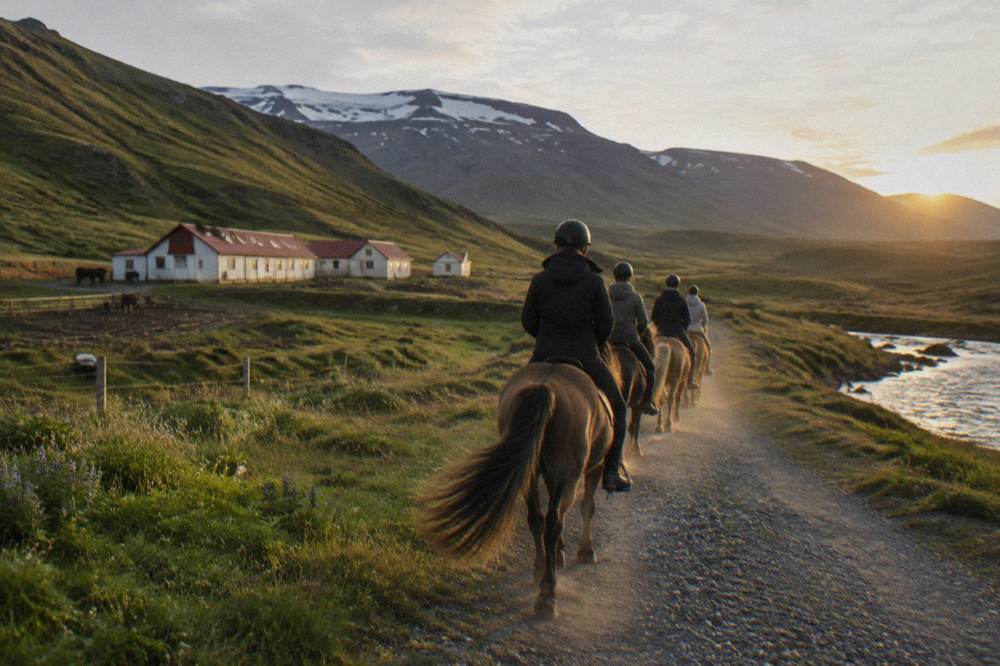
Gear should not be a worry at all, and bringing your own can actually be a problem. Every major operator supplies helmets, boots and rain gear or overalls: Ishestar lends a helmet, warm overall or rain coat and rain pants and rubber boots, Laxnes supplies boots, helmets and rain gear or overall snowsuits, Viking Horses provides saddles, helmets, gloves and rain clothes. You bring warm layered clothing and nothing else. Used riding equipment, including saddles, bridles, whips and used riding gloves, is strictly prohibited from import by the Icelandic Food and Veterinary Authority, and used riding clothes and boots must be machine washed or dry cleaned before entry, with non-washable items disinfected and stored for at least five days before contact with horses. MAST states these rules to protect a horse population that is not vaccinated and so has no resistance to diseases that have never reached the island. In practice: wear clean clothes, use the operator's gear, and read the site's guide on what to wear horseback riding in Iceland before you pack.
For riders weighing whether their body can handle it at all, the honest data point is that the tölt removes most of the impact that makes riding hard on joints, and operators report riders across a wide age range. The site has looked at the age question directly in is 60 too old to ride a horse, and at the physical toll in general in is horseback riding hard on your body (see Riding And Your Body). The short version: a walk-and-tölt ride is far gentler than most people assume, and the breed is a large part of the reason.
If you already know you want the classic lava-field experience rather than a cautious first step, the longer Ishestar lava field ride remains the most-reviewed option on the roster, and it is the natural second booking after a short ride goes well.
And if your itinerary points south rather than at the capital region, the beach rides are a different flavor of the same easy horse. The Foss Travel black beach ride keeps to a relaxed pace over sand, and the one-hour Vik black sand ride, 4.8 across 571 reviews from $126 per person, is explicitly built around walking speed with optional tölt.
Common Questions About Riding Icelandic Horses
are icelandic horses hard to ride?
Not for most people. The breed is small, calm and smooth-gaited, and operators across Iceland place beginners on these horses every day. The difficulty comes from tour length, terrain and pace, not from the horse, so nervous riders should book a short, walk-based tour such as a 50-minute comfort ride.
Can a total beginner ride an Icelandic horse?
Yes. Ishestar lists its lava tour for beginners and intermediate riders, Viking Horses calls its volcano tour beginner friendly, and Laxnes states its tours suit all levels. Beginners are the core market for Icelandic riding tours, and the horses are selected for tolerance of new riders.
Is the tolt difficult to learn?
The tölt is usually easier to sit than a trot because it has no suspension phase, so the rider stays nearly still in the saddle. Asking for it can take practice, since it is cued by speed and balance, but on a guided tour the horse and guide handle the timing and most beginners simply enjoy it.
Why do Icelandic horses feel smoother than other horses?
The tölt is a four-beat lateral gait in which one foot is always on the ground, eliminating the suspension and bounce of the trot. Horses of Iceland describes it as the gait the breed is best known for, and it is the main reason riders describe Icelandic horses as armchair-smooth.
Is a two-hour ride too long for a beginner?
Usually not, if the ride is walk-based. Two hours is a standard beginner tour length across the roster, and operators such as Sólhestar and Eldhestar run rides of that length for all levels. If you are nervous, start with a 50-minute or one-hour ride and build up.
Do Icelandic horses buck or spook like other breeds?
Any horse can spook, but Icelandic horses are widely described by their breed association and by tour operators as steady and people-oriented, shaped by over a thousand years of farm work and closed breeding. Tour horses in particular are chosen for calm temperament and work in guided single-file groups, which reduces surprises.
The honest summary: the question "are they hard to ride" usually dissolves within the first ten minutes of a beginner tour. The horse is small, calm and smooth, the guide sets the pace, and the operator supplies everything except warm clothing. What deserves your care is the booking itself: the length, the group size, the weight and age limits, and the cancellation window. Get those right and the horse will take care of the rest, as it has been doing for Icelandic families for a thousand years. If you are still deciding between regions and formats, the site's guide to choosing a horseback riding tour in Iceland walks through the full decision, and Iceland Horse Tours keeps the whole roster compared in one place.