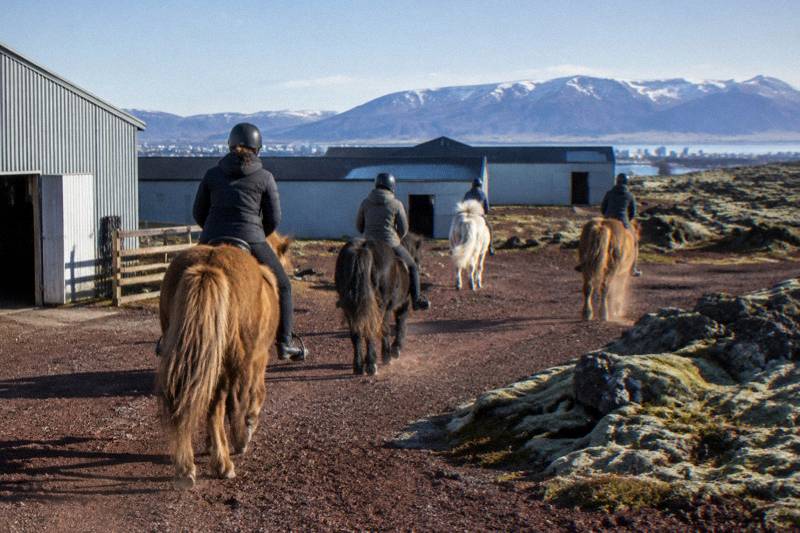
Is Horseback Riding Hard On Your Body?
An honest look at the physical cost of an Icelandic horse ride: which muscles work, how sore first-timers get, and how ride length, rider weight and the tolt gait change the strain.
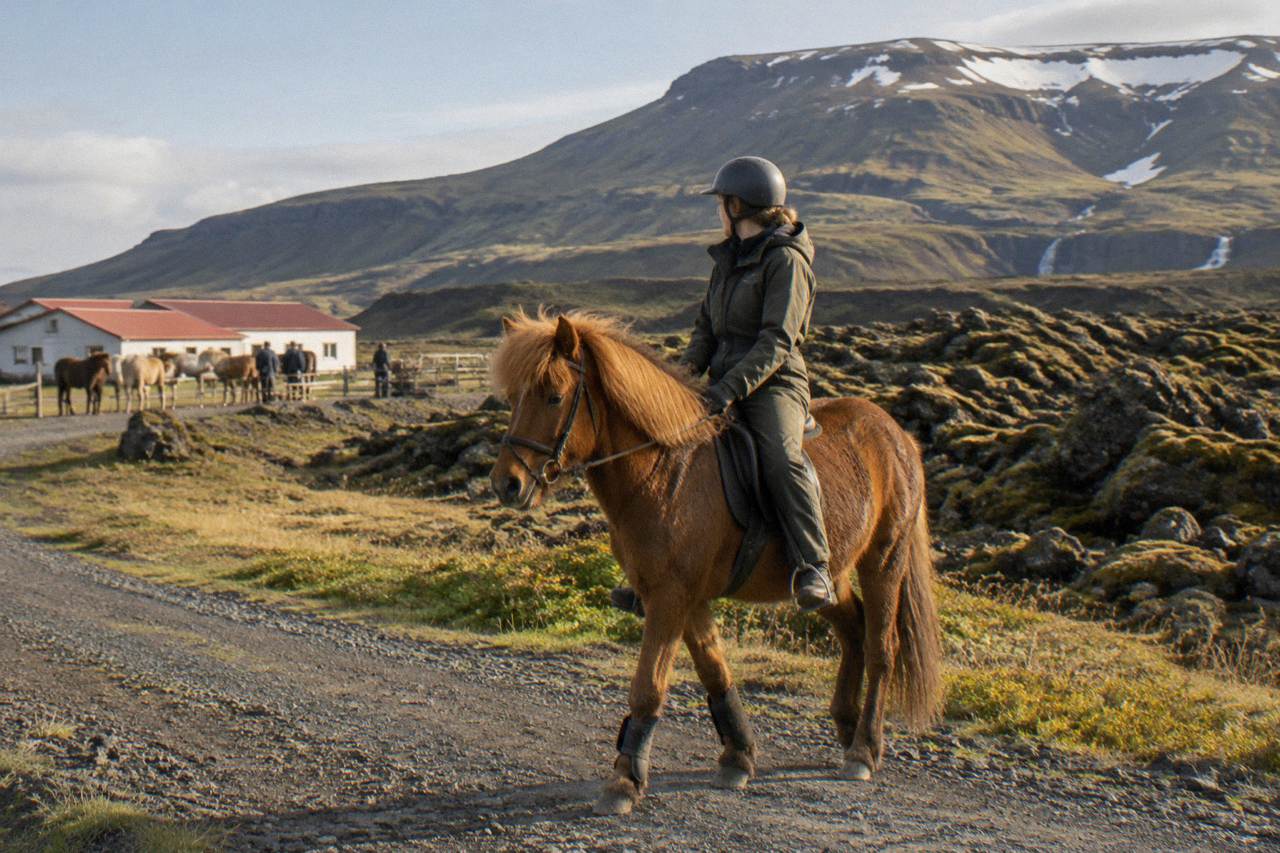
Is Horseback Riding Hard On Your Body?
Horseback riding is a real workout, but a short one, and in Iceland it is gentler than most people expect. A 50-minute ride works your core, inner thighs and calves, leaves many first-timers pleasantly sore for a day or two, and rarely causes injury. The tolt gait of the Icelandic horse, which has no suspension phase, removes most of the bouncing that makes trotting punishing elsewhere.
The honest answer depends on three things: how long you sit in the saddle, which gait the horse is doing, and how fit you already are. A rider who has never been on a horse will feel a two-hour ride the next morning, mostly in the adductor muscles along the inner thighs. An experienced rider will finish the same tour barely noticing it. Neither of those outcomes is a reason to skip the booking, and the roster gives you plenty of ways to control the dose.
That control is the part first-time visitors miss. The Ishestar Comfort Ride near Reykjavik keeps you in the saddle for about 50 minutes, rated 4.9 across 106 reviews, from $128 per person. The Laxnes farm ride runs roughly 3 hours 30 minutes door to door, from $166, and the Ishestar lava field ride sits between the two at 2 to 4.5 hours, from $129. The physical cost scales almost exactly with the saddle time, so choosing the tour length is choosing how hard the day will be on your body.
This is the question readers weigh before booking, so it deserves a straight answer rather than a brochure's reassurance. This article walks through the muscles riding actually uses, the soreness you should expect, the way rider weight and age change the picture, and the small amount of preparation that makes the difference between a stiff morning and a miserable one.
Which Muscles Does Riding Actually Use?
Riding is an isometric workout: your legs grip, your core holds you upright, and almost nothing moves through a full range of motion. The inner thigh adductors do the most work, followed by the calves, the hip stabilisers and the deep abdominal muscles that stop you slumping. Shoulders and lower back get a lighter, sustained load, which is why posture, not strength, is what tires first.
Because the effort is sustained rather than explosive, it feels unfamiliar rather than hard while it is happening. You are essentially holding a slow squat with your knees apart for the length of the ride. Riders who lift weights regularly report that riding finds muscles squats miss, especially the ones that stabilise the pelvis when the horse steps sideways or turns. The arms do far less than beginners fear; a good rider steers with tiny rein cues, not pulling, and the horse does the carrying.
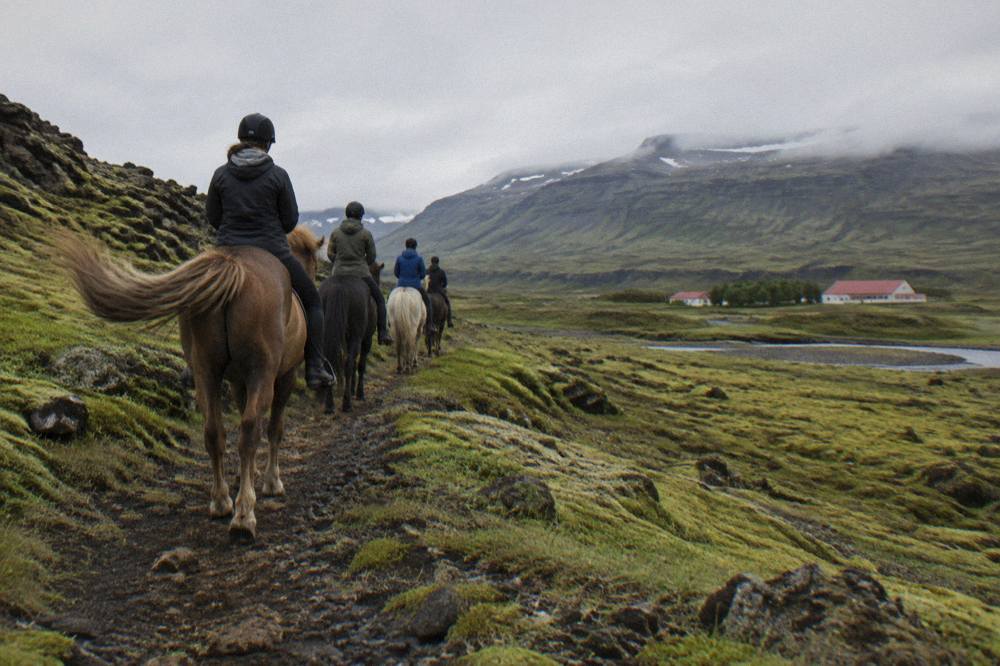
The tolt deserves its own mention because it is the reason Iceland is the easy place to test this. The Icelandic horse is a gaited breed, and tolt is a four-beat lateral gait with no suspension phase, which means at least one foot is always on the ground and the rider's body is not launched upward between strides. The breed registry's own gaits page describes tolt as the smooth gait the breed is best known for, and most horses also walk, trot and canter like any other horse. On an Icelandic tour you will mostly walk and tolt, which is why a first ride here is so much kinder to the spine than a trotting lesson elsewhere.
| Body area | What it does in the saddle | When you feel it |
|---|---|---|
| Inner thighs (adductors) | Grip the horse and hold your position | Next morning, walking downstairs |
| Calves | Press against the barrel, cue forward | During and after the ride |
| Core and obliques | Keep you upright over uneven ground | Next day, when sitting up |
| Hip stabilisers | Absorb the horse's side-to-side motion | During the ride |
| Lower back | Hold posture for the whole ride | End of the ride, next morning |
| Shoulders and neck | Carry arms, hold reins softly | End of longer rides |
Vik Horse Adventure describes its black beach tours as mostly walking speed with the opportunity to try tolt for capable riders, which is a fair picture of most beginner tours in the country. The physical demand is closer to a long walk than to a gym session, and the soreness that follows is the muscle-use kind, not the injury kind.
How Sore Will You Be The Next Day?
Most first-time riders are sore for one to two days, concentrated in the inner thighs, and it resolves on its own. It is delayed-onset muscle soreness from muscles holding an unfamiliar position, not damage. Riders over 50 or anyone returning after years off a horse feel it more, and a shorter tour, like a 50-minute or one-hour ride, cuts the dose dramatically.
The soreness peaks around 24 to 48 hours after the ride, which catches people off guard when they feel fine at dinner and stiff the next morning. Gentle walking, a warm shower or a soak in one of Iceland's geothermal pools all help, and none of it needs a doctor. What does warrant attention is sharp joint pain, numbness, or pain that worsens after three days, which points to a positioning problem or a pre-existing issue rather than ordinary muscle ache.
Saddle time is the single biggest variable, and the roster makes the comparison easy. The Eldhestar Countryside Charm ride near Hveragerdi keeps you riding for about one hour, from $95 per person, rated 4.8 across 50 reviews. The Sólhestar Red Lava Ride outside Reykjavik is about 2.5 hours, from $140, rated 4.8 across 2,789 reviews, the most reviewed ride on the roster. The Foss Travel black beach ride on the south coast is about 2 hours, from $185, rated 4.8 across 108 reviews. If you are worried about the day after, the one-hour option exists precisely for you.
Beginners planning a first ride can read more in the beginner guide to riding in Iceland, which covers experience levels tour by tour. A related worry, whether two hours is simply too long for a newcomer, is tackled in is a 2-hour horseback ride too long for a beginner.
Does A Short Ride Feel Different From A Long One?
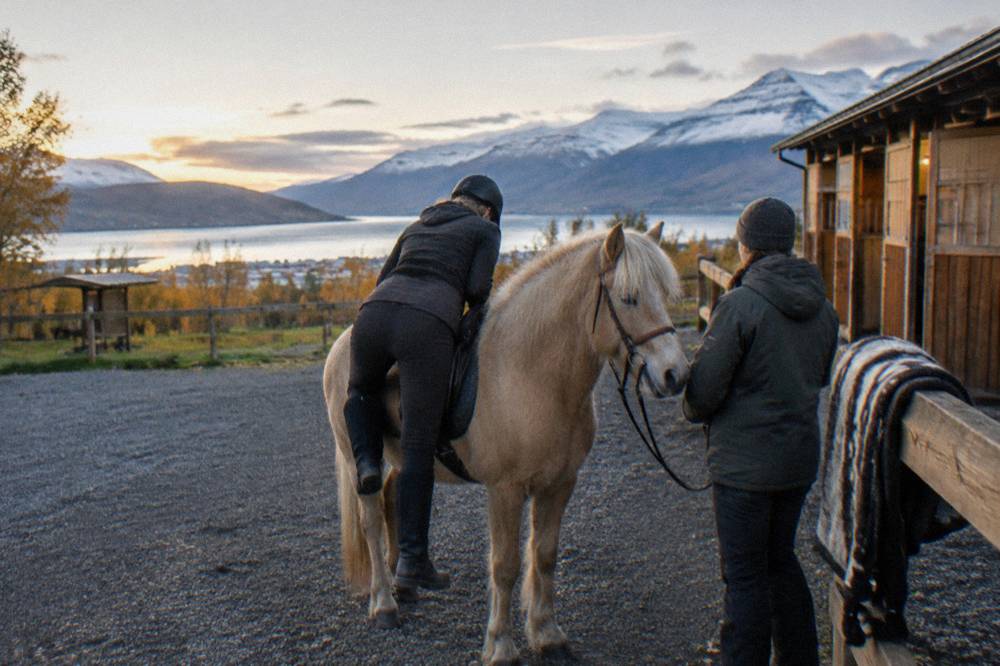
Yes, and the difference is larger than most people guess. The first 30 minutes of any ride is learning the horse's rhythm, and it is the least comfortable part. A 50-minute tour ends shortly after that adjustment window, before deep fatigue sets in, while a 3-hour ride moves into a settled rhythm but loads the same muscles for far longer.
The short formats are not a lesser product, they are a different one. The Ishestar Comfort Ride, about 50 minutes in the saddle, is rated 4.9 across 106 reviews and priced from $128 per person, and the operator supplies helmets, warm overalls or rain gear, and rubber boots, so you are not riding cold or wet. The Hestasport Viking Ride in Varmahlíð, about 1.5 hours, is rated 4.9 across 223 reviews, from $118. These rides suit anyone whose main question is whether the body will cope, because the answer arrives before the body has time to complain. The full index of guides sits on Iceland Horse Tours.
Longer rides change in character rather than in difficulty. After the first hour the gripping becomes automatic, most riders stop consciously squeezing with the inner thighs, and the load shifts to the core and lower back as posture starts to tire. That is why a 3-hour tour like the Viking Horses volcano ride, from $182 and rated 4.7 across 259 reviews, can feel easier in the legs than a clumsy first hour, and harder in the back by the end. Riders who want the scenery and the story without the endurance test can pick a mid-length option such as the Deacon Ride near Akureyri, about 2 hours 15 minutes, rated 4.9 across 51 reviews, from $153.
| Ride | Saddle time | From (per person) | Rating | Body load |
|---|---|---|---|---|
| Ishestar Comfort Ride | ~50 minutes | $128 | 4.9, 106 reviews | Light |
| Eldhestar Countryside Charm | ~1 hour | $95 | 4.8, 50 reviews | Light |
| Hestasport Viking Ride, Varmahlíð | ~1.5 hours | $118 | 4.9, 223 reviews | Light to moderate |
| Foss Travel Black Beach Ride | ~2 hours | $185 | 4.8, 108 reviews | Moderate |
| Sólhestar Red Lava Ride | ~2.5 hours | $140 | 4.8, 2,789 reviews | Moderate |
| Laxnes Farm Ride, pickup | ~3.5 hours total | $166 | 4.8, 901 reviews | Moderate to high |
The pattern in the table is simple: saddle time, not terrain or price, is what your body notices. Choose the row that matches your fitness, not the one with the best photo.
Does Rider Weight Or Age Change The Strain?
Weight changes what you may book more than how you feel: operators set hard limits, mostly 100 to 110 kg, to protect the horses. Age changes recovery speed rather than ability, and several operators welcome riders well past 60. Both questions are answered by asking the operator directly before booking, because the limits are theirs to enforce, not the booking page's.
The weight limits are welfare rules, and they are strict. Laxnes allows up to 120 kg, the highest on the roster, and supplies boots, helmets and rain gear or snowsuits on its rides. Ishestar sets 110 kg across its tours. Vik Horse Adventure sets 100 kg fully clothed and states it may weigh riders on site near the limit. Hestasport in Skagafjörður sets 100 kg. If you are close to a limit, email the operator first rather than gambling at check-in; a refusal at the stable is the one genuinely hard outcome for the body and the mood.
Age works differently than newcomers assume. Balance and core strength matter more than cardio, and a walking-pace tour on a calm horse asks very little of the heart. Operators themselves state their tours suit all levels: Laxnes says its tours suit all levels, and Solhestar describes its riders as ranging from first-timers to seasoned equestrians. The question of whether 60 is too old has its own fuller answer in is 60 too old to ride a horse, but the short version is that age alone disqualifies nobody.
| Operator | Stated weight limit | Notes from the operator's own policy |
|---|---|---|
| Laxnes Horse Farm | 120 kg | Tours suited to all levels, gear supplied |
| Ishestar | 110 kg | Same limit across all its tours |
| Sólhestar | 110 kg | First-timers to seasoned equestrians |
| Hestasport, Varmahlíð | 100 kg | Stated on its Viking Ride page |
| Vik Horse Adventure | 100 kg fully clothed | May weigh riders near the limit |
One point that surprises visitors: the Icelandic horse is small, typically around 142 cm to the withers on average in breeding evaluation, but registries insist on calling it a horse, not a pony, and it carries adult riders comfortably within the stated limits. The limits protect the animal, and asking about them in advance is part of riding responsibly here.
How Do You Prepare Your Body And Gear?
Prepare with light movement the week before, a good night's sleep, and clothes you can layer, and let the operator supply the rest. Stretching the inner thighs and hips helps, arriving fed and hydrated helps more, and every major Icelandic stable supplies helmets, rain gear and boots. The one thing you must not bring is used riding equipment, which Icelandic biosecurity rules prohibit outright.
The week before, a few minutes a day of bodyweight squats, hip stretches and core work such as planks will make the saddle feel less foreign. On the day, eat normally and drink water; a ride at walking pace is not a marathon, but cold, wind and nerves burn energy. Wear slim, flexible trousers rather than jeans with thick seams, and bring layers, because Icelandic weather can move through three seasons in one outing.
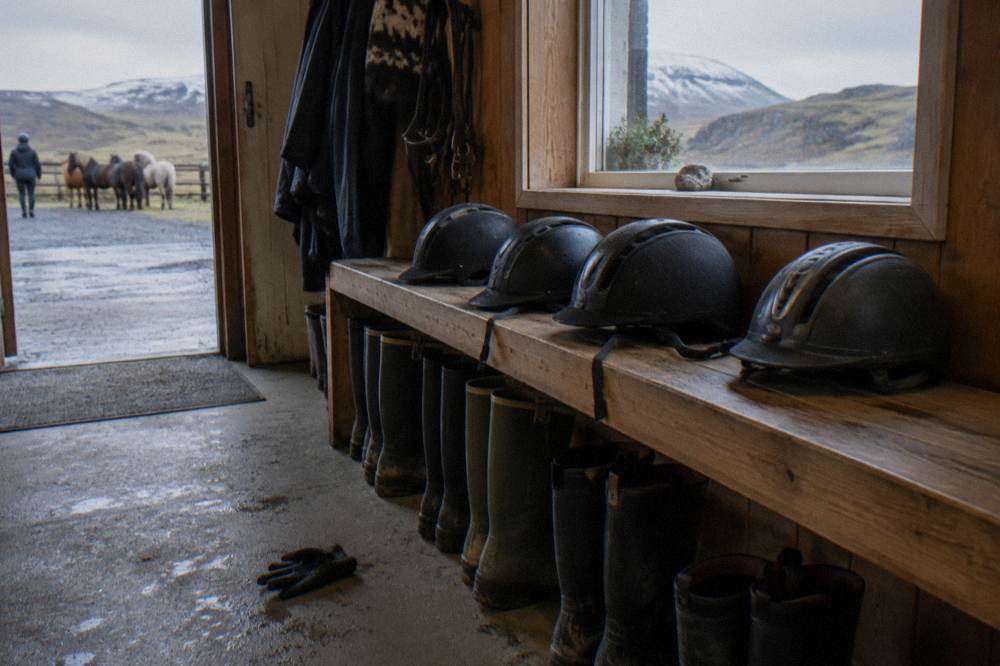
The gear is genuinely handled for you. Ishestar lends a helmet, a warm overall or rain coat, rain pants and rubber boots. Eldhestar supplies helmets, rain gear and warm overalls. Viking Horses provides high-quality saddles, helmets, gloves and rain clothes. You do not need to buy or pack riding kit, and in fact you must not bring your own used kit.
The biosecurity rules are strict and worth knowing before you pack. The Icelandic Food and Veterinary Authority states that used riding equipment such as saddles, bridles, nosebands, pads, rugs and whips, and used riding gloves, are strictly prohibited from import. Used riding clothes and boots must be machine washed or dry cleaned before entry, and items that cannot be washed must be rinsed with detergent, dried, sprayed with 2% VirkonS and stored at least five days before contact with horses in Iceland. The reason is that Icelandic horses are not vaccinated and the population's disease-free status depends on this. The same isolation works the other way too: once a horse leaves Iceland it can never return, as the breed association explains.
When Should You Actually Skip A Ride?
Skip or postpone a ride for acute back or disc problems, recent surgery, uncontrolled pain in hips or knees, or a doctor's explicit instruction, and tell the operator about pregnancy before booking. Ordinary stiffness, mild arthritis, desk-job fitness or nervousness are not reasons to skip, they are reasons to choose a short, walking-pace tour and say so in the booking notes.
The line is between conditions that a bumpy gait could worsen and conditions it merely makes tired. A healed old injury is usually fine at walking pace; a fresh one is not. Balance disorders that cause falls on flat ground are a genuine reason to wait. Everything in between is a conversation with the operator, who has heard every version of the question and would far rather answer it by email than discover it at the stable.
Operators make the honest version of this easy. Solhestar takes riders from first-timers to seasoned equestrians and fits helmets at check-in. The Viking Horses volcano tour is described by its operator as all levels and beginner friendly, with 3 hours total of which 1 to 1.5 are in the saddle, capped at 8 people. The Foss Travel black beach ride on the south coast, about 2 hours, from $185, rated 4.8 across 108 reviews, suits a cautious rider who still wants the big scenery. Choosing one of these and declaring your concerns is the whole strategy.
It is also worth saying plainly what does not happen on these tours. Beginner rides in Iceland do not gallop, jump or race. They walk, they tolt when the horse and rider are ready, and they stop for photos. The body cost of that is a day of mild soreness and a story, which is exactly the trade most riders are happy to make. If the worry is more about skill than strain, the answer to are Icelandic horses hard to ride covers the other half of the fear.
For riders whose curiosity survived the soreness discussion and who want the longer version, the lava field ride from the same stable, the Ishestar flexible-length lava field ride, from $129 per person and rated 4.8 across 1,989 reviews, is the natural step up. On the south coast, the Foss Travel black beach ride covers the same question with different scenery. Whichever length you choose, the operator's live listing shows the current dates and the exact terms before you commit anything.
Common Questions About Riding And Your Body
Is horseback riding hard on your body?
It is a real but short workout. A beginner ride at walking pace works the inner thighs, calves and core, and leaves most first-timers sore for a day or two. The tolt gait of the Icelandic horse has no suspension phase, which removes most of the bouncing, and a 50-minute tour keeps the load light.
Which muscles hurt after horseback riding?
The inner thigh adductors hurt first, from gripping the horse, followed by the calves and the deep core muscles that hold you upright. The lower back tires on longer rides. The soreness is ordinary delayed-onset muscle soreness and fades within one to two days.
Can you ride if you are not fit?
Yes. Operators such as Laxnes state their tours suit all levels, and beginner tours run mostly at walking pace. Desk-job fitness is enough for a 50-minute or one-hour ride. Choose a short tour, tell the operator you are a beginner, and expect mild soreness rather than exhaustion.
Is riding harder on older bodies?
Age itself disqualifies nobody; balance and core strength matter more than cardio. Recovery from soreness is simply slower past 60. A walking-pace tour with a helmet fitted at check-in, such as the short rides near Reykjavik, is a sensible first choice, and the operator can advise on any specific condition.
Does rider weight affect the horse?
Yes, which is why operators set hard limits: 120 kg at Laxnes, 110 kg at Ishestar and Sólhestar, 100 kg at Hestasport and Vik Horse Adventure, which may weigh riders near its limit. The limits protect the horses' welfare, and anyone close to a limit should ask the operator before booking.
How do you reduce soreness after a ride?
Walk gently the same evening, take a warm shower or a geothermal pool soak, and stretch the inner thighs and hips. Hydrate and eat normally. The soreness peaks around 24 to 48 hours after the ride and resolves on its own; sharp joint pain or symptoms lasting past three days are worth a medical check.