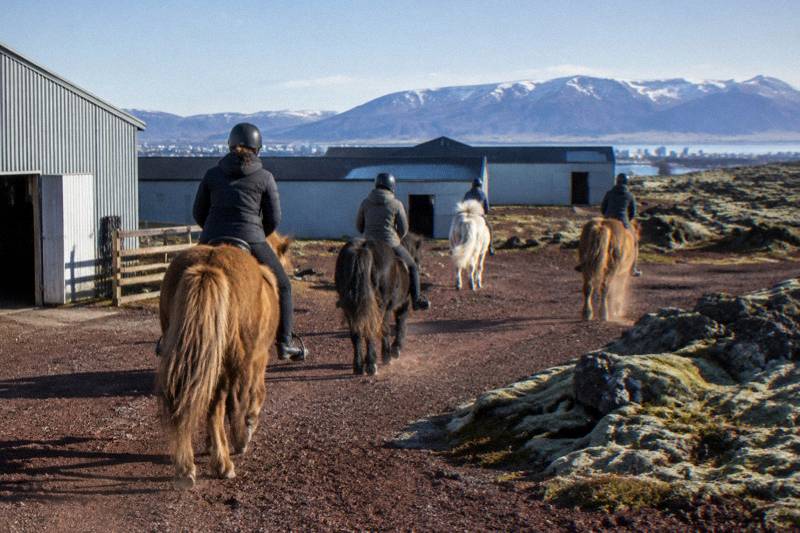
What To Wear Horseback Riding In Iceland, Season By Season
Icelandic stables lend you helmets, rain gear and rubber boots, so you do not need to arrive with equestrian kit. What matters is layering for wind, rain and four seasons in one day, and knowing the biosecurity rules before you pack your own riding clothes.
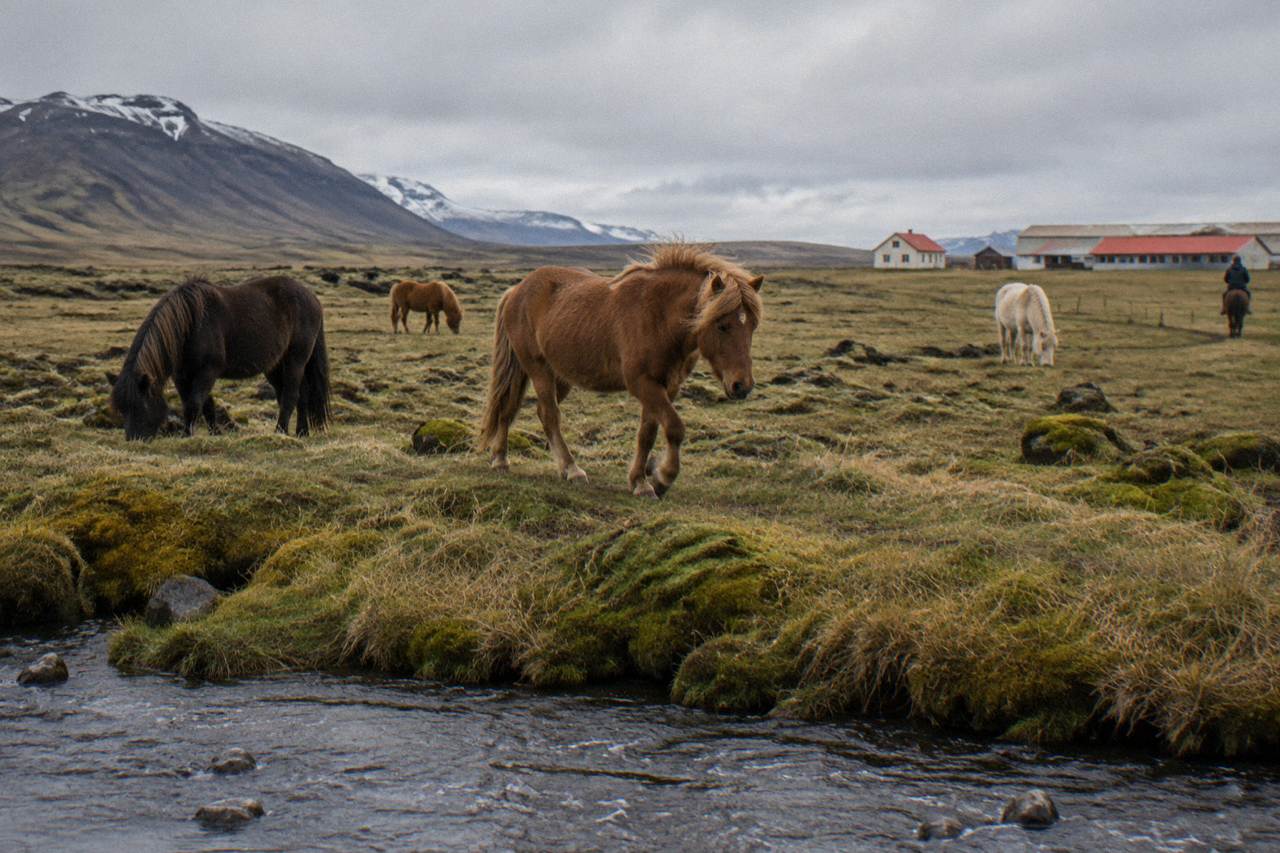
Short answer
Wear three warm layers you can shed, a wind and waterproof shell, long trousers and sturdy shoes; the stable lends you a helmet, rain overall and rubber boots. Do not pack used riding gloves, chaps, saddles or bridles: Icelandic biosecurity law bans them. Used riding clothes and boots must be machine washed or dry cleaned before you fly.
What Should You Wear Horseback Riding In Iceland?
The core outfit is three insulating layers under a windproof and waterproof shell, long trousers, and closed sturdy shoes, with the stable supplying helmet, rain overall and rubber boots. Icelandic weather shifts between sun, drizzle and horizontal wind inside a single ride, so the plan is layers you can remove one at a time while sitting in the saddle. Nothing you wear needs to be equestrian-specific.
The mistake most first visitors make is packing for the average temperature. The Reykjavik monthly normals put July highs near 14.9 C and January highs near 3.2 C, but the number that shapes your clothing is wind chill on an open lava field, not the forecast on your phone. A 12 C afternoon with a 20 kilometre wind across the Hellisheidi heath feels close to freezing on horseback, because you are sitting still while the horse does the work.
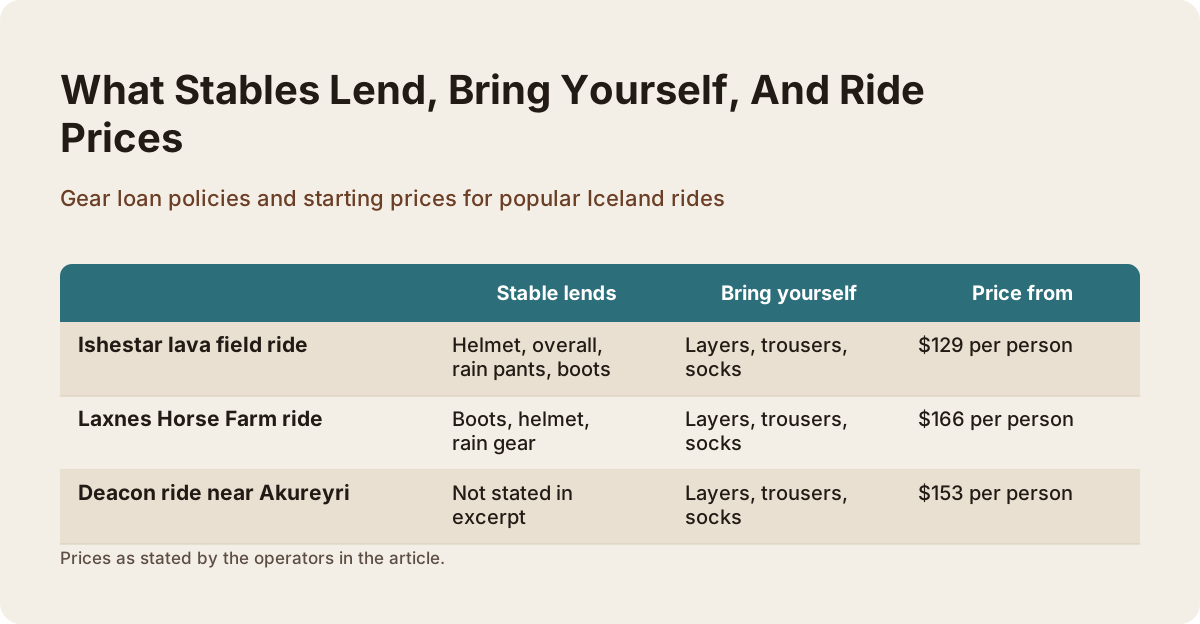
The second mistake is over-packing equestrian gear. Stables in Iceland lend nearly everything a rider actually needs. Ishestar lends a helmet, a warm overall or rain coat, rain pants and rubber boots. Laxnes Horse Farm supplies boots, helmets and rain gear or overall snowsuits. Viking Horses provides high-quality saddles, helmets, gloves and rain clothes. Eldhestar hands out helmets, rain gear and warm overalls. If you book the Mjölnir Afternoon Ride with Viking Horses, from $179 per person, or the Sólhestar Red Lava Ride near Reykjavik, from $140 per person, the practical kit you must bring yourself shrinks to base layers, trousers and socks.
This guide walks through what the stables lend, what to bring, what to leave at home, the biosecurity rules that govern your own riding gear, and how the outfit changes with the season. The site's broader how to choose a horse riding tour in Iceland guide covers the decision itself; this page is for the reader who has booked, or is about to, and is standing in front of a suitcase.
What Do The Stables Lend You, And What Should You Bring Yourself?
Almost every Icelandic stable lends you the safety and weather kit free of charge: a fitted helmet, rain overall or coat, rain pants, and rubber boots. Some, like Viking Horses, also lend riding gloves. What you bring yourself is the clothing next to your skin, long trousers, warm socks, a midlayer, and anything you would want for the drive or the wait before mounting. Check the listing's inclusions before packing duplicates.
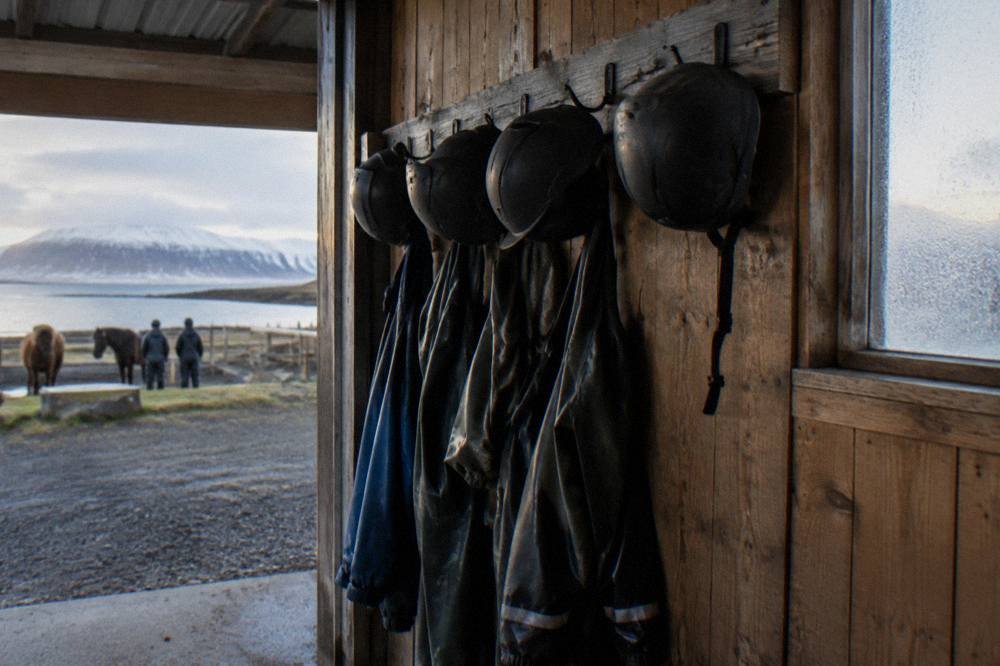
The lending system exists because of the weather, not because riders forget things. A stable that sends a group out into a squall without overalls would have miserable guests and cold horses by the halfway point. Eldhestar's FAQ states plainly that helmets and rain gear with warm overalls are supplied; Ishestar's tour pages list the same set. Treat the lent gear as the outer shell of your outfit and build your own layers underneath it.
What you bring yourself is the part that touches your body for three hours. That means:
- Base layer: a synthetic or wool long-sleeve top, not cotton, which holds sweat and chills you when the wind picks up.
- Midlayer: a fleece or light insulated jacket you can stuff in a daypack if the sun appears.
- Trousers: full-length, flexible, without a thick inseam seam. Leggings, softshell hiking trousers or thin riding tights all work.
- Socks: one pair of wool or synthetic hiking socks. Rubber boots are lent unpaired with socks, so bring your own.
- Gloves: a thin pair of your own for warmth, though Viking Horses lends riding gloves on its tours.
The table below matches the roster's major operators against what their own pages say they lend, so you can see how little you genuinely need to carry.
| Operator | Lent gear stated by the stable | Bring yourself |
|---|---|---|
| Ishestar | Helmet, warm overall or rain coat, rain pants, rubber boots | Base and mid layers, trousers, socks |
| Laxnes Horse Farm | Boots, helmets, rain gear or overall snowsuits | Layers, trousers, socks |
| Viking Horses | Saddles, helmets, gloves, rain clothes | Layers, trousers, socks |
| Eldhestar | Helmets, rain gear, warm overalls | Layers, trousers, socks |
| Sólhestar | Helmet fitted at check-in | Full layering kit, waterproofs if you prefer your own |
One practical note: sizes run out. On busy summer afternoons, the popular rides, the Ishestar lava field ride from $129 per person and the Laxnes farm ride with pickup from $166 per person, fill their departure slots, and the largest overalls and boots go first. If you wear an unusual shoe size, bring your own ankle-high waterproof footwear rather than gambling on the loan rack. The site's Reykjavik stables and pickup guide covers which yards are easiest to reach before you factor in gear logistics.
What Not To Wear When Horseback Riding?
Leave at home anything loose, noisy or slippery: shorts, skirts, jeans with thick seams, slippery rain ponchos that balloon in wind, dangling scarves, and any shoe with a smooth sole or open toe. Also skip perfume-heavy products near the horses, and do not wear brand-new boots you have not walked in. The wrong clothing on an Icelandic ride is mostly a comfort and safety problem, not a fashion one.
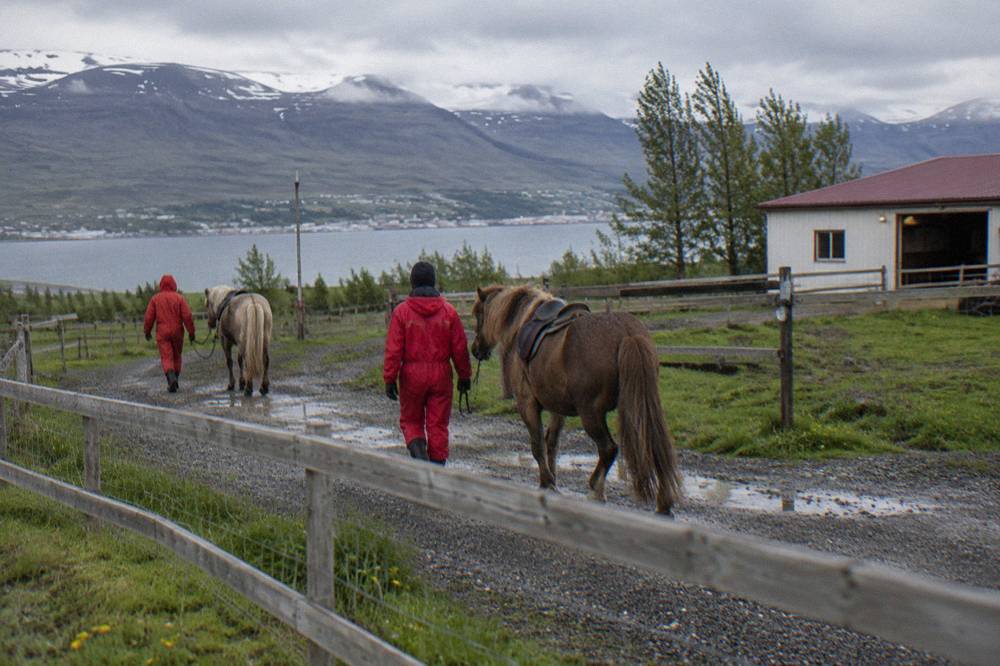
Shorts are the most common bad call, even in July. The Reykjavik July normal high of 14.9 C sounds mild, but saddle leather, wind and drizzle make bare legs miserable within twenty minutes, and the rubber boots most stables lend end above the knee. Skirts and dresses fail for the same reason plus the mounting moment. Jeans deserve a specific warning: the thick double seam on the inside of the leg sits exactly where your calf meets the stirrup leather and girth strap, and after an hour it rubs.
Footwear is where clothing becomes safety. A smooth-soled sneaker can slide through a wide stirrup, and if the horse moves while your foot is wedged, you have a drag situation. A shoe with a defined heel, any hiking boot or leather shoe with a modest heel, keeps the foot where it should be. Sandals, flip-flops and anything open are refused at some stables outright. The Deacon ride near Akureyri, from $153 per person, and the Hestasport Viking Ride in Varmahlíð, from $118 per person, both take riders onto gravel and uneven ground where ankle support matters as much as the stirrup does.
| Do not wear | Why it fails on horseback | Better swap |
|---|---|---|
| Shorts or skirts | Wind, rain and saddle leather against bare skin | Full-length flexible trousers |
| Thick-seamed jeans | Inner-leg seam rubs against stirrup leather | Leggings, softshell or riding tights |
| Poncho-style rain cape | Balloons in wind, spooks horses, blocks view | Fitted rain jacket and rain pants |
| Loose scarf or shawl | Can catch on tack or blow across the horse's face | Zipped neck layer or snood |
| Smooth-soled sneakers | Foot can slide through the stirrup | Boots with a heel and grip |
| New unworn boots | Blisters before the first hour ends | Broken-in footwear you trust |
| Dangling jewellery, loud plastic bags | Noise and flash unsettle the horses | Left in the car or daypack |
The poncho point deserves emphasis in Iceland specifically. A cape that behaves politely on a city street becomes a sail in a 30 kilometre crosswind, and a horse that sees a flapping sheet behind its rider's head is a horse making its own decisions. Fitted rain layers, yours or the stable's, are the answer. Viking Horses lends exactly that: fitted rain clothes plus gloves on its small-group tours, which is one reason its rides suit riders who arrive with nothing but ordinary travel clothing.
A reader sizing up the whole experience, including whether the clothing hassle is worth it, will find the honest breakdown in is horse riding in Iceland worth it. The short version: the gear burden is lighter than people expect, because the stables carry the heavy outer layers.
Can You Bring Your Own Riding Gear, Helmet Or Boots To Iceland?
You can bring used riding clothes, helmets and boots only if they are machine washed or dry cleaned before you fly, and used riding gloves, saddles, bridles, nosebands, pads, rugs, whips and chaps are strictly prohibited outright. These are the rules of the Icelandic Food and Veterinary Authority, MAST, and they exist because Icelandic horses are unvaccinated and vulnerable to imported disease. Plan around them before you pack.
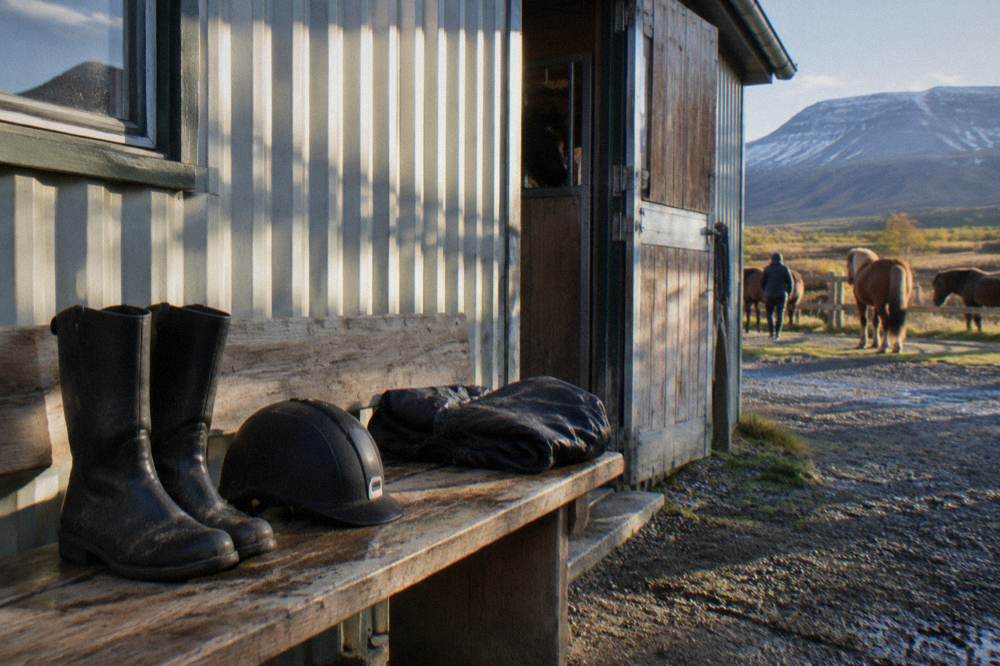
Iceland's horse population has been genetically isolated for over a thousand years, and the country keeps it disease-free by law and by habit. The farmers' association Horses of Iceland notes that very few, if any, horses were imported after the 13th century, and that in 1882 Icelanders passed a law prohibiting the importation of horses. Today no horse or other equine can enter the country, and once a horse leaves Iceland it can never return, as Horses of Iceland states. The clothing rules are the traveller-facing edge of the same policy.
MAST's guidance is specific, and its import page is the authoritative source:
| Item | MAST rule |
|---|---|
| Saddles, bridles, nosebands, pads, rugs, whips | Strictly prohibited, used |
| Used riding gloves | Strictly prohibited |
| Used riding clothes and boots | Must be washed in a machine or dry cleaned before entry |
| Items that cannot be machine washed or dry cleaned | Rinse with detergent, dry, spray with 2% VirkonS (20g per litre of water), store at least 5 days before horse contact |
The practical reading for a riding tourist: your own helmet, boots and breeches may come, if they come out of a washing machine or dry cleaner immediately before the flight. Your own gloves and any leather tack may not come at all. Eldhestar's FAQ repeats the rule in almost the same words, telling guests that used boots, riding wear, helmets and saddlebags must be disinfected before arrival, and that chaps, bridles and other used leather gear must not be brought to Iceland at all. The full index of guides sits on Iceland Horse Tours.
The simplest strategy is to bring ordinary, freshly laundered outdoor clothing and use the stable's kit. The lent helmet is fitted at check-in, the lent boots are rubber and disinfected between guests, and the lent overalls are sized for exactly this climate. Riders who bring their own helmet for fit reasons should pack it clean, and expect the stable to look at it. If you are heading to a private ride, such as the Finnsstaðir private tour near Egilsstaðir, from $247 per person, or the Víðidalur volcanic landscape ride from $191 per person, the same MAST rules apply; private does not mean exempt.
For the full story on the border rule and why it exists, the site's why can't Icelandic horses return to Iceland post covers the history and the disease logic in depth (see The One-Way Border).
What Should You Wear Riding In Each Season?
Dress for the season's worst hour, not its best: three layers plus shell from October to March, two layers plus shell from April to September, and always waterproofs regardless of forecast. June brings around 21 hours of daylight in Reykjavik and mid-winter around four to five effective hours, which changes how long you are outside and how much spare clothing to carry. Vik on the south coast is wetter than Reykjavik in every single month.
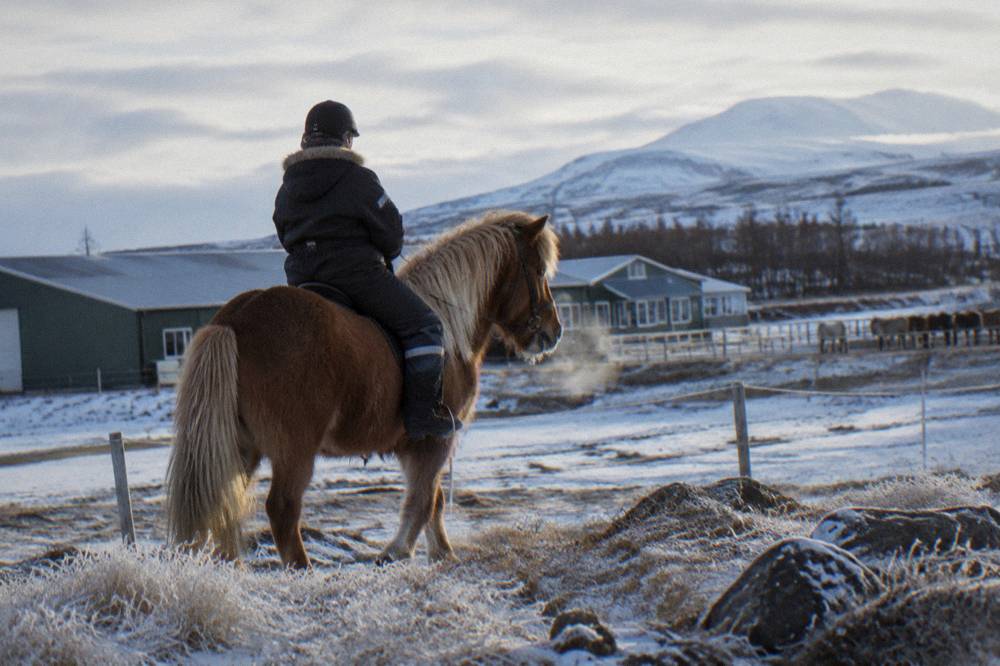
The numbers below come from Icelandic Met Office normals as tabulated for Reykjavik, and they are the honest basis for layering. Note the rain column: there is no month in which waterproofs are optional, and the difference between a 43.3 mm June and a 94.9 mm December is how often you will deploy them, not whether.
| Month | Reykjavik high / low | Rain | Daylight on the 15th | Layering plan |
|---|---|---|---|---|
| January | 3.2 / -1.7 C | 87.1 mm | 5h 25m | Base, fleece, insulated jacket, shell, lent overall |
| March | 4.2 / -1.3 C | 80.7 mm | 11h 42m | Base, fleece, shell, warm hat and gloves |
| May | 10.1 / 4.0 C | 52.6 mm | 18h 24m | Base, fleece, shell; sun protection |
| June | 13.0 / 7.2 C | 43.3 mm | 21h 02m | Base, light fleece, shell in the daypack |
| August | 14.1 / 8.6 C | 64.5 mm | 16h 24m | Base, fleece, shell |
| October | 7.6 / 2.7 C | 79.8 mm | 9h 49m | Base, fleece, insulated jacket, shell, hat |
| December | 3.3 / -1.6 C | 94.9 mm | 4h 12m | Full winter kit, lent snowsuit if offered |
Winter riding is a real category, not a token one. Tours run in all twelve months of the year, and the winter outfit is essentially alpine: thermal base layer, thick fleece, insulated jacket, and the stable's overall on top. Eldhestar notes around four to five hours of effective daylight in mid-winter, which means winter departures are short, cold and often spectacular in clear weather. The site's horse riding in Iceland in winter guide covers the season in detail.
Summer has its own trap: the midnight sun. June gives Reykjavik around 20 to 21 hours of daylight, and evening rides, such as the Viking Horses 19:00 to 22:00 departures that its site lists for the summer season, run in light that feels like late afternoon at nine in the evening. Riders dress light, then sit still as the temperature falls. A packable midlayer is the single most useful summer item. The midnight sun riding guide explains the timing.
One clothing question the seasons answer for you: hands. Thin gloves matter from October to April, and even in July a pair in the pocket is wise for the trot sections. Viking Horses is the roster's one operator that lends riding gloves as standard kit, which is worth knowing if you tend to run cold.
What Shoes And Boots Work For Icelandic Horse Riding?
Any closed, waterproof shoe or boot with a modest heel and grip works: hiking boots, rubber rain boots or leather ankle boots. The stable lends rubber boots in most cases, so your own footwear mainly matters for getting to the yard, walking gravel paths and the drive home with wet socks. Avoid smooth soles, open toes and brand-new unbroken leather. If you bring your own riding boots, they must arrive freshly washed or dry cleaned.
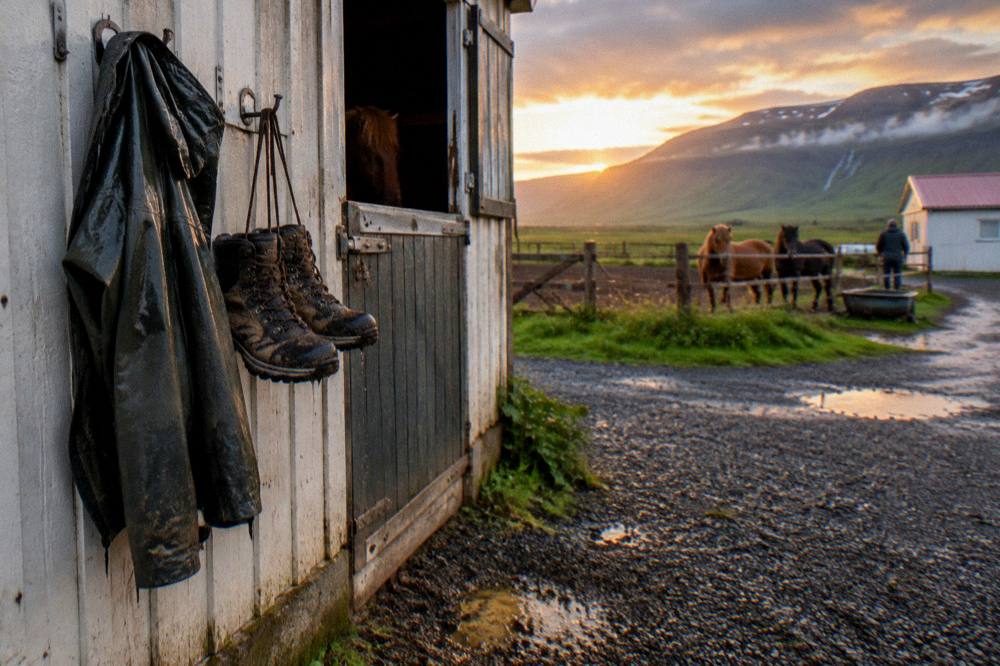
The stirrup is the deciding factor. Icelandic stables mostly use standard stirrups that a heeled boot keeps you safely seated in, and a waffle-soled hiking boot does the job as well as a proper riding boot. What fails is the smooth city sneaker, the track shoe with a foam sole, and anything with a heel so high the foot cannot rest flat. Between those failures and a proper boot, almost everything in a normal travel wardrobe qualifies.
Gravel and mud are the second factor. Icelandic yards are working farms. The path from the changing room to the mounting area is frequently the same ground the horses use, and after a wet week it is ankle-deep in places. Waterproof footwear earns its space in the suitcase before you ever reach the saddle. The Hestaland trail ride with a prep lesson, from $135 per person, and the Eldhestar Siggi ride from $135 per person both involve farm tracks and soft ground where a grippy sole matters.
Socks do more work than people expect. Rubber boots are not insulated, and on a February ride your feet are the first thing to go numb. A single pair of wool hiking socks, not cotton, and not two pairs layered so tightly the circulation stops, is the winter answer. In summer the same boots are warm, so a thin synthetic sock is better. Riders booked on longer days out, like the Golden Circle and horse riding tour at eleven hours from $223 per person, should carry a spare pair; a wet sock on hour eight of any tour is a small misery that is easy to prevent.
How Should You Dress For A Long Ride Or A Combo Tour?
For a long ride or a combo day, dress in the same layers but add spares: a second base layer, spare socks, and a daypack-friendly item for each half of the day, because a boat deck or a glacier lagoon is colder than a stable yard. Combo tours run five to eleven hours, so plan for the warmest and coldest hour you will stand through, not the ride alone. Pickup times are early and returns are late.
The combo tours in the roster are long days by any standard. The riding and Silfra snorkel combo runs about eight hours from $307 per person. The riding and whale watching combo runs five and a half hours from $222 per person. The Golden Circle and riding day tour runs eleven hours from $223 per person. On each of them you will be outdoors, mostly stationary, in two or three different microclimates, and the snorkel combo adds cold-water exposure that demands a dry change of clothes for the drive back.
The packing logic is simple arithmetic. An eleven-hour day in June spans a 13 C afternoon and a 7.2 C evening, plus wind. In September it spans 11.4 C and 6.2 C with 87 mm of monthly rain behind it. Layers you can add and remove in a moving minibus, plus a dry base layer in the bag, cover every version of that day. The riding portion supplies its helmet and outer shell as normal; the sightseeing portions are yours to dress for.
Longer single rides reward the same thinking. The Sólhestar Reykjadalur hot spring valley ride, from $140 per person, pairs two hours of riding with the geothermal valley, where the operator's listing describes the bathing option; a swim layer under your riding clothes and a towel in the car turn that from a missed opportunity into the best hour of the trip. The site's Reykjadalur riding and hot spring hike guide covers the logistics.
For families packing for children as well as adults, the age and gear picture is laid out in the horse riding in Iceland with kids guide; the clothing advice here scales down directly, with the note that children feel wind chill faster and the lent overalls come in small sizes.
The three rides above suit three different dressing plans. The Mjölnir afternoon ride is a Reykjavik pickup tour where the stable's rain kit covers the outer layer. The Víðidalur volcanic landscape ride is a meet-on-location ride, so you carry your own shell to the yard. The Finnsstaðir private ride in East Iceland is a full farm visit, where practice time in a fenced area before the scenic ride means you will be on and off the horse, so flexible layers beat stiff ones.
Common Questions About What To Wear Horseback Riding In Iceland
What not to wear when horseback riding?
Do not wear shorts, skirts, thick-seamed jeans, loose ponchos, dangling scarves, smooth-soled sneakers, open shoes or unworn new boots. In Iceland specifically, skip cotton base layers, which hold sweat and chill you in wind, and leave used riding gloves and leather tack at home entirely, since MAST prohibits them.
Do I need to bring a helmet to ride an Icelandic horse?
No. Every major stable in the roster lends a helmet and fits it at check-in. Ishestar, Laxnes, Viking Horses, Eldhestar and Sólhestar all state this on their own pages. If you bring your own for fit reasons, it must be freshly machine washed or dry cleaned before arrival under MAST rules.
Can I wear jeans horseback riding in Iceland?
You can, but thin jeans with a flat inseam seam only. The thick double seam on ordinary denim sits against the stirrup leather and rubs over an hour or more. Leggings, softshell hiking trousers or riding tights are the better choice for any ride over an hour.
Do the stables lend rain gear and boots?
Yes, almost universally. Ishestar lends a warm overall or rain coat, rain pants and rubber boots. Laxnes supplies boots, helmets and rain gear or overall snowsuits. Eldhestar provides helmets, rain gear and warm overalls. Viking Horses also lends riding gloves. Bring your own socks.
What should I wear riding in Iceland in winter?
Thermal base layer, thick fleece, insulated jacket and a windproof shell, with the stable's overall on top, plus a warm hat and thin gloves. Reykjavik winter highs sit near 3 C with 87.1 to 94.9 mm of monthly rain, and wind chill does the real work. Winter daylight is around four to five effective hours, so departures are short and cold.
Can I bring my own riding boots and gloves to Iceland?
Boots yes, if freshly washed or dry cleaned before entry; MAST requires machine washing or dry cleaning for used riding clothes and boots. Used riding gloves are strictly prohibited, as are saddles, bridles, nosebands, pads, rugs, whips and chaps. The simplest route is ordinary clean outdoor clothing plus the stable's kit.