Is A 2 Hour Horseback Ride Too Long For A Beginner?
A research-based answer to whether 2 hours in the saddle is too much for a first-time rider, with Icelandic tour lengths, soreness facts and operator limits.
Is A 2 Hour Horseback Ride Too Long For A Beginner?
No, a 2 hour ride is not too long for most beginners, and in Iceland it is one of the most common first-ride lengths, but the answer hinges on what the tour includes. Many listings labelled 2 or 3 hours spend only 1 to 1.5 hours in the saddle, with the rest going to gear up, a safety briefing and a walk out. Riders who choose a tour matched to their fitness rarely regret 2 hours.
That distinction between total tour time and saddle time is the single most useful thing a first-time rider can learn before booking. The Viking Horses volcano tour, for example, runs about 3 hours door to door, but the operator's own page describes 1 to 1.5 hours of actual riding inside that window, with pickup, gear fitting and a farm visit filling the rest. A nervous beginner reading "3 hours" might picture three continuous hours of trotting. The reality is closer to a long walk on horseback with frequent stops.
Icelandic operators also design their day tours around first-timers, and they say so plainly. Ishestar describes its lava field ride as suited to beginners and intermediate riders. Laxnes states that its tours suit all levels. Eldhestar marks its half-day and combo rides as suited for all experience levels. The stables that sell most of the country's beginner rides have built their products around people who have never sat on a horse, which is why the answer to this question is generally no rather than yes.
There is a real limit, though, and this site's coverage of Iceland Horse Tours exists to help readers find it. Saddle soreness, stiff hips and tired inner thighs are the honest costs of a first longer ride, and they hit harder for older riders, very young children, or anyone with back, hip or knee problems. The sections below walk through what a 2 hour ride feels like hour by hour, which specific Icelandic listings match which fitness levels, and how to cut the soreness risk before it starts.
What Does A First Ride Actually Feel Like, Hour By Hour?
The first 30 minutes feel easy and slightly awkward, the middle hour settles into rhythm, and the final stretch is where beginners notice their seat, knees and lower back. Most Icelandic day tours keep the pace at a walk with short bursts of tolt, so a 2 hour ride is closer to a long hike than a workout. The soreness usually arrives the next morning, not during the ride.
Riders report the same pattern on beginner tours almost everywhere. The opening phase is mounting, adjusting stirrups, and learning to let the horse carry you rather than gripping with your legs. Guides spend this stretch at a walk, single file, checking that everyone is balanced. By the 45 minute mark most first-timers stop thinking about the horse and start looking at the landscape, which on the lava fields outside Reykjavik or the black sand near Vik is considerable compensation for a tired seat.
The last third is the honest test. Inner thigh muscles that have never worked this way begin to announce themselves, and riders who leaned forward the whole ride feel it in the lower back. None of this is dangerous soreness. It is the ordinary cost of using muscles that office life never touches, and it fades within a day or two for most people. The tolt, the Icelandic breed's famous four-beat gait, actually helps here: because it has no suspension phase, the rider is not bounced the way a trot bounces, so the smoothness spares beginners the hardest part of learning to sit a horse.
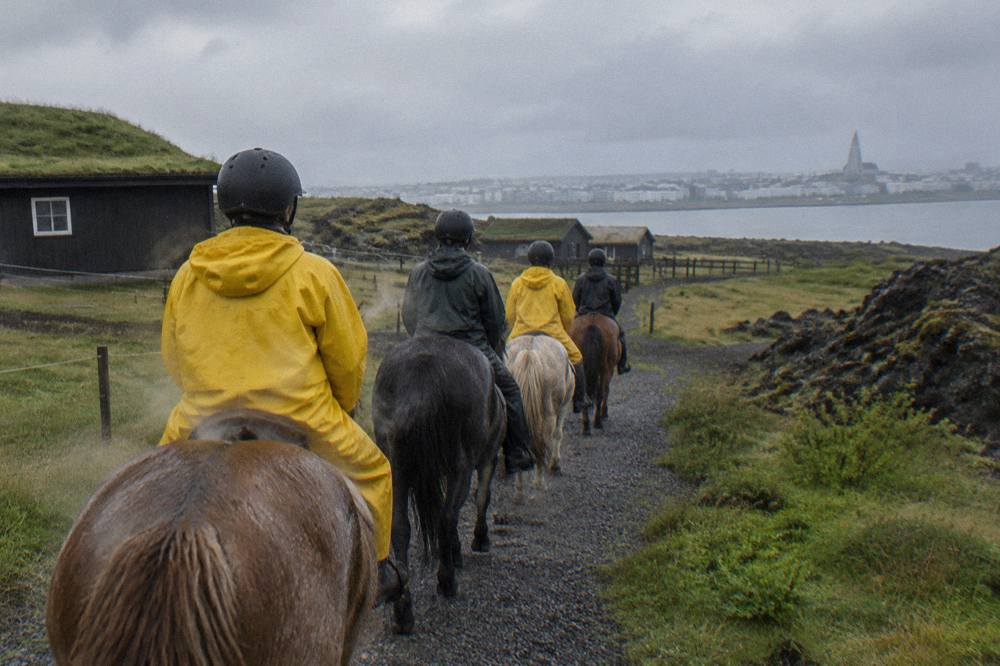
The breed itself is part of why the answer leans toward no. Horses of Iceland, the breed's association, describes the tolt as a four-beat lateral gait with no suspension phase, smooth to ride, alongside walk, trot and canter, with flying pace as a racing gait some horses add. A beginner on a walking-pace tour is on a calm, stocky animal bred for carrying people across rough ground for a thousand years. The horses are typically 130 to over 150 cm at the withers, averaging around 142 cm in breeding evaluation, which the registries insist makes them horses rather than ponies despite the size.
| Phase of a 2 hour beginner ride | What happens | How most first-timers feel |
|---|---|---|
| Opening stretch | Mounting, stirrup fitting, helmet check, safety talk | Awkward, slightly nervous, gripping too hard |
| First hour of riding | Single-file walking, first photo stops, guide checks | Relaxed, surprised at how slow and calm it is |
| Middle stretch | Possibly a short tolt attempt for capable riders | Engaged, some thigh and seat fatigue begins |
| Final stretch | Walk back to the stable, dismount, gear off | Tired but comfortable, stiff on dismounting |
| Next morning | Ordinary delayed muscle soreness | Stiff hips and inner thighs, gone in 1 to 2 days |
One point worth repeating because it surprises people: the dismount often hurts more than the ride. Legs that have been in a riding position for two hours take a moment to remember how walking works. Guides expect this, and nobody at an Icelandic stable will think less of a guest who wobbles.
Which Icelandic Rides Suit A First-Time Rider?
The best first ride is short, walk-paced and operator-supported: the 50-minute Ishestar comfort ride from $128 per person, the 1-hour Eldhestar countryside ride from $95, or the 1-hour Vik black sand ride from $126. A confident beginner can step up to a 2 to 2.5 hour lava field or farm ride, from $129 to $140 per person, and be fine.
The roster of real listings tells the story better than any general advice, because Iceland's stables have already sorted themselves by rider experience. At the short end sits the Ishestar comfort ride, about 50 minutes, rated 4.9 across 106 reviews, from $128 per person. It exists precisely for the person asking this question: enough time to learn the feel of a horse, not enough time to get genuinely sore. Eldhestar's one-hour countryside ride is the cheapest listed option at from $95 per person, rated 4.8 across 50 reviews.
The middle band is where a 2 hour ride lives, and it is the heartland of Icelandic beginner tourism. Ishestar's lava field ride runs about 2 to 4.5 hours depending on the option, rated 4.8 across 1,989 reviews, from $129 per person, and the operator describes it as for beginners and intermediate riders. Sólhestar's red lava ride, about 2.5 hours total, is rated 4.8 across 2,789 reviews, from $140, and the stable says its tours run from first-timers to seasoned equestrians. Laxnes, the farm about a 20-minute drive from Reykjavik centre, runs a roughly 3.5-hour outing rated 4.8 across 901 reviews, from $166, and states its tours suit all levels.
| Listing | Operator | Length | Rating and reviews | From, per person |
|---|---|---|---|---|
| 50-Minute Comfort Ride | Ishestar | ~50 minutes | 4.9, 106 reviews | $128 |
| One-Hour Countryside Ride | Eldhestar | ~1 hour | 4.8, 50 reviews | $95 |
| 1-Hour Vik Black Sand Ride | Vik Horse Adventure | ~1 hour | 4.8, 571 reviews | $126 |
| Flexible-Length Lava Field Ride | Ishestar | ~2 to 4.5 hours | 4.8, 1,989 reviews | $129 |
| Sólhestar Red Lava Ride | Sólhestar | ~2.5 hours | 4.8, 2,789 reviews | $140 |
| Laxnes Farm Ride, Pickup | Laxnes Horse Farm | ~3.5 hours | 4.8, 901 reviews | $166 |
| Foss Travel Black Beach Ride | FossTravel | ~2 hours | 4.8, 108 reviews | $185 |
The pattern in the table is deliberate. Every one of these operators supplies helmets, and most supply rain gear, warm overalls or rubber boots, so a beginner does not need to buy or bring riding kit. Ishestar states guests can borrow a helmet, warm overall or rain coat, rain pants and rubber boots. Laxnes supplies boots, helmets and rain gear or overall snowsuits. That gear support matters to the length question, because cold and wet riders tire and stiffen far faster than warm ones, and Icelandic weather does not negotiate.
For a reader comparing beginner options across the whole country, the deeper comparison in the Icelandic riding tours compared guide breaks the roster down by region and price, and the beginner horseback riding guide covers first-ride nerves in more detail than this page can.
The lava field ride deserves its own word here, because it is the listing most beginners actually book. The operator's page describes a 1.5 to 2 hour ride through lava fields near Hafnarfjörður, available all year, with pickup from major points in Reykjavik at set morning and midday times. The Check availability link sits beside this site's Ishestar lava field ride page, and the booking page shows the live price and departure times for each date.
Why Saddle Soreness Happens And How To Reduce It?
Saddle soreness comes from three things: gripping with the thighs instead of sitting balanced, a riding posture the body has never used, and cold muscles that were never warmed up. Beginners can cut all three by wearing stretchy layers, asking for a shorter stirrup, sitting deep rather than bracing, and walking around at every stop the guide offers.
The gripping problem is the big one. A nervous rider squeezes with the knees, which tires the inner thighs within half an hour and pushes the seat out of the saddle. Guides correct this constantly, and the fix is counterintuitive: let the legs hang long, weight the seat bones, and trust the horse. Riders who manage it early often finish a 2 hour ride with almost no soreness at all. Riders who fight the horse's motion for two hours feel it for three days.
Posture is the second factor. Horseback riding asks the rider to sit tall with a neutral spine while the pelvis tilts forward, a position no everyday activity trains. The lower back and hip flexors take the load. This is why the question of ride length is partly a question of age and conditioning, covered in the next section, and why a rider with an existing back problem should pick a shorter listing and say so to the operator when booking.
| Soreness driver | Why it happens | What a beginner can do about it |
|---|---|---|
| Inner thigh burn | Gripping with knees instead of balancing in the seat | Let legs hang long, weight the seat bones, breathe out |
| Lower back ache | Untrained forward pelvic tilt, leaning forward when nervous | Sit tall, soften the hips, follow the walk's rhythm |
| Stiff knees and ankles | Stirrups set too long or too short | Ask the guide to check stirrup length before setting out |
| Cold, tight muscles | Standing around underdressed before mounting | Warm layers, move around at every photo stop |
| Rubbing and chafe | Jeans seams and rough trousers against the saddle | Stretchy trousers or borrowed overalls, not denim |
Clothing deserves its own line because it is the easiest fix. The site's what to wear horseback riding guide covers the full kit list, but the short version is stretchy trousers, warm layers and whatever waterproof gear the stable lends you. There is also a rule that catches visiting riders off guard: Iceland's biosecurity rules, published by the Icelandic Food and Veterinary Authority, prohibit bringing used riding equipment and used riding gloves into the country at all, and require used riding clothes and boots to be machine washed or dry cleaned before entry. Since the stables lend helmets, boots and outer layers anyway, the practical move is to bring clean ordinary outdoor clothes and borrow the rest.
How Do Age, Weight And Fitness Change The Answer?
Age alone does not disqualify anyone from a 2 hour ride, but fitness and joint health do shape the choice. Operators set minimum ages between 6 and 12 depending on the tour, weight limits run from 95 to 120 kg with most at 100 to 110, and older riders or those with back and hip issues are usually happier starting at an hour. Borderline cases should ask the operator directly rather than guess.
The age floor is operator-stated and varies by tour length, which is itself evidence that the industry treats longer rides as more demanding. Solhestar takes children from age 6 on its 1-hour tours, age 10 on 1.5-hour tours, and age 14 on rides of 3 hours and longer. Ishestar sets age 7 for its lava tour and 12 for the longer Viking tour. Viking Horses takes beginners from age 10, or 8 for experienced young riders. A family weighing a 2 hour ride for a 9-year-old can read these numbers as the industry's own answer to this page's question: an hour is a child's ride, 2 hours is a teenager-and-adult ride.
At the other end of the age range, the site's coverage of riding later in life, in the piece on whether 60 is too old to ride a horse, deals with the question in full. The short version is that many riders ride happily for decades, and the variable is not the birthday but the hips, the core strength and the honesty of the rider in picking a length. A fit regular walker in their sixties will handle a 2 hour lava field ride better than a sedentary younger adult who has never used those muscles.
Weight is the one factor with hard numbers. Ishestar sets 110 kg across its tours. Laxnes sets 120 kg. Vik Horse Adventure sets 100 kg fully clothed and may weigh riders near the limit. Hestasport in the north and the Saddle Stories south-coast rides set 100 kg, and Sturlureykir near Reykholt also sets 100 kg. These are welfare limits for the horses, not judgements, and a rider near a limit should contact the operator before booking rather than arrive and be turned away. Nobody can promise a borderline rider a place, and this site never will; the operator decides on the day.
What Ride Length Should A Beginner Actually Book?
Book an hour or less if you are nervous, very unfit, an older rider with joint issues, or riding with young children. Book 1.5 to 2 hours if you are reasonably active and want the real Icelandic experience, which is the sweet spot. Book 3 hours or more only after a first ride went well, or if you already ride at home. The 2 hour answer stands: it is a beginner length, not an advanced one.
The reasoning is cumulative. The pace is a walk. The horses are calm, purpose-bred and led by professional guides. The operators lend every piece of specialist gear. The soreness is ordinary muscle fatigue that fades in a day or two, and the main ways to cause it, gripping and bad stirrup length, are fixable in the first twenty minutes. Against all that, 2 hours of walking-pace riding is a modest physical ask for anyone who can comfortably hike for two hours.
The failure mode is not the length itself but the mismatch. A rider who has not exercised in a year booking a 3.5-hour Laxnes farm outing because the reviews are excellent, a parent putting an 8-year-old on a 2.5-hour tour with an age floor of 10, or a rider just over one stable's weight limit booking with that stable anyway: these are the bookings that go badly, and none of them is caused by the number 2.
Start small if any doubt remains. The 50-minute Ishestar comfort ride is the roster's purpose-built answer to this exact worry, from $128 per person, rated 4.9 across 106 reviews. It is the listing this site points nervous first-timers toward, and the related card below shows it. If it goes well, the same operator's lava field ride is the natural second booking, and a rider who finishes both has a personal answer to this question that no article can give.
The three listings below are the ones a beginner should realistically be choosing between: the short comfort ride for the cautious, the lava field ride for the typical first-timer, and the FossTravel black beach ride for the confident beginner who wants scenery over saddle time. Prices are from each listing, and the live pages show current dates and availability.
Common Questions About Beginner Ride Lengths In Iceland
Is a 2 hour horseback ride too long for a beginner?
No. Most Icelandic 2 hour listings are built for first-timers, run at walking pace, and often include under 2 hours of actual saddle time once briefing and stops are counted. A reasonably active beginner will finish tired but unhurt, with soreness that fades in a day or two.
How long does beginner saddle soreness last?
For most people one to two days. It is ordinary delayed muscle soreness in the inner thighs, hips and lower back, not an injury. Shorter stirrups, sitting deep instead of gripping, and moving around at stops all reduce it.
Can a child do a 2 hour horse ride?
It depends on the operator's age floor. Solhestar takes age 10 on 1.5-hour tours and age 14 on 3-hour-plus tours, Ishestar sets age 7 on its lava tour, and Vik Horse Adventure's one-hour beach ride starts at age 10. Check the specific listing before booking.
What should a beginner wear for a 2 hour ride?
Stretchy trousers, warm layers and water-resistant outerwear. Stables lend helmets, and most lend rubber boots, rain gear or overalls. Used riding gloves and used riding equipment cannot be brought into Iceland, and used riding clothes and boots must be washed or dry cleaned before entry.
Is trotting or tolting required on a beginner tour?
No. Beginner tours run mostly at a walk, and guides offer a tolt attempt only to riders who look comfortable. The tolt has no suspension phase, so it is smooth, but nobody is required to try any gait faster than a walk.
Do I need riding experience for a lava field tour?
No. Ishestar describes its lava field ride as for beginners and intermediate riders, and Sólhestar says its tours run from first-timers to seasoned equestrians. The lava field ride is one of the most-booked first rides in the country.