Northern Lights Horse Riding In Iceland: Reality Check And Options
Riders come to Iceland asking for a horse tour under the northern lights, and the honest answer has two parts: the season is real, running September through April, and no operator can promise the sky will perform. This guide separates what you can book from what you can only hope for.
Short answer
The northern lights season in Iceland runs from September through April, with displays often most active around the equinoxes in September and March. No riding tour can promise an aurora, so the honest play is to book a late-afternoon or evening ride with a countryside stable under dark skies, and check the Icelandic Meteorological Office aurora forecast on the day itself.
Can You See The Northern Lights From Horseback In Iceland?
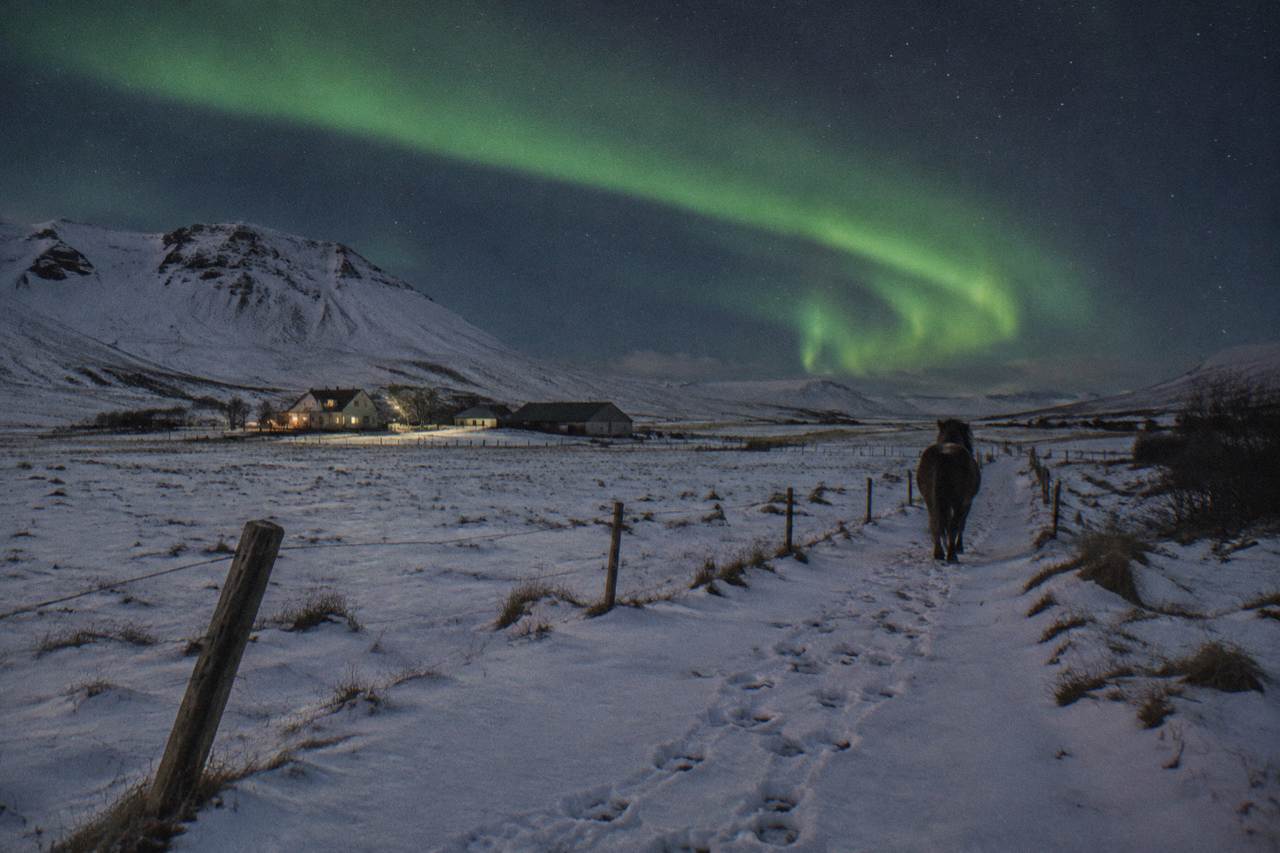
No Icelandic riding operator can promise you an aurora, and any listing that does should be treated with suspicion. The lights depend on solar activity, cloud cover and darkness, and a stable controls only the darkness part. What a good aurora-season booking actually does is put you on a quiet trail far from city glow, in the months when the sky can deliver.
The physics do not care about your itinerary. An aurora needs a solar storm strong enough to push particles into the upper atmosphere at high latitudes, and it needs a gap in the cloud to be visible from the ground. Iceland sits in an excellent position for the first condition, which is why Visit Iceland describes September through April as the main northern lights season, with activity often strongest around the equinoxes in September and March. The second condition, clear sky, is where most trips fail. Coastal Iceland is cloudy much of the winter, and a green sky behind a grey one looks exactly like no sky at all.
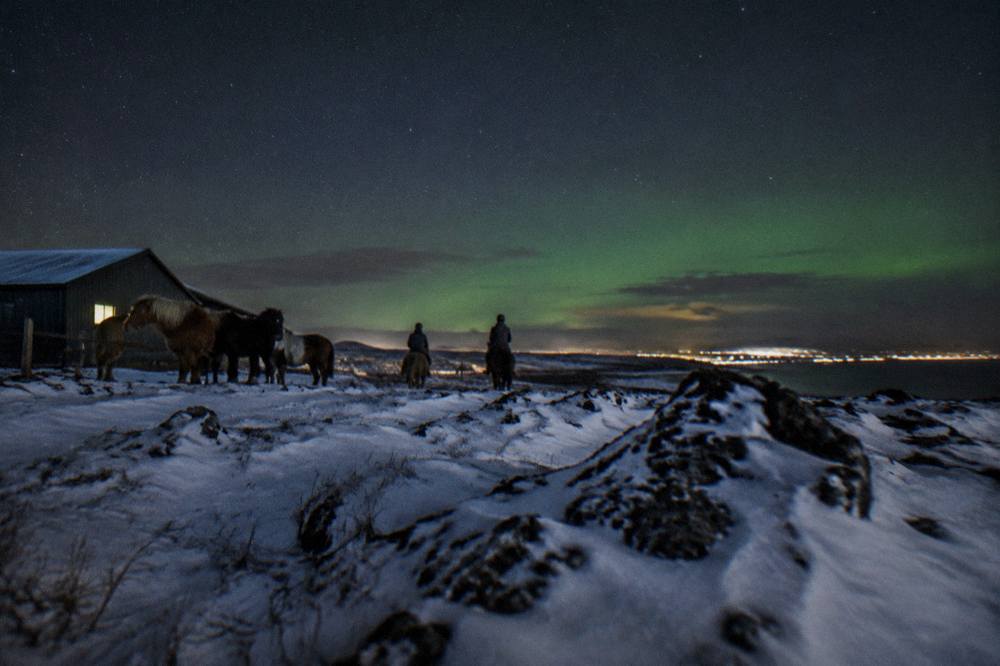
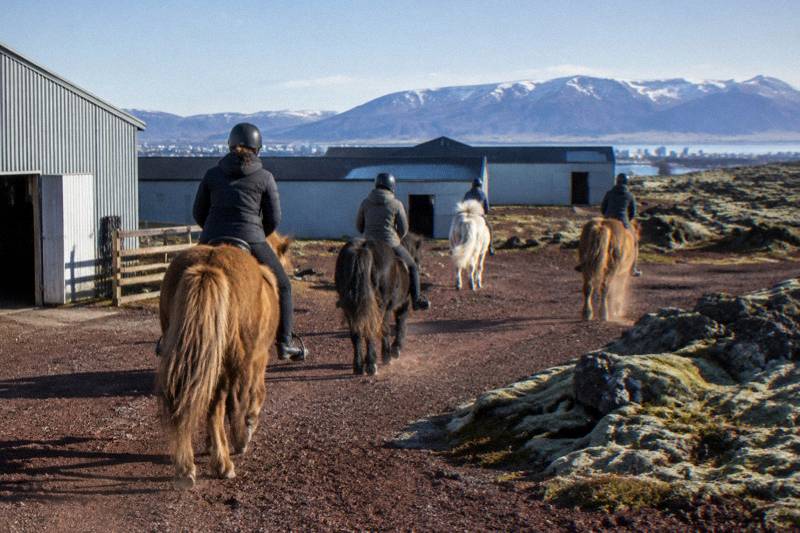
So what does "northern lights horse riding" mean as a product? In practice it means one of two things. Either you take a standard day ride whose late departure puts you outdoors around dusk, or you book an evening departure that a stable runs specifically for the dark months. The Eldhestar Siggi ride from Hveragerdi, the Hestaland trail ride with its prep lesson, and the Islenski Hesturinn ride through the Víðidalur volcanic landscape are all ordinary listings that happen to run in aurora season, and any of them can end under lights if the sky cooperates. The stable sells the ride and the setting. The sky is a bonus.
That is the correct posture, and it matches the site-wide rule that a tour describes what it delivers: horses, trails, gear and a guide. When you read "northern lights tour" on a booking page, read the fine print for what is actually included, because in most cases it is a ride at a time of day when aurora is possible, plus a drive home in the dark. The comparison on Iceland Horse Tours lists what each operator states plainly, and that is the standard this guide holds every claim to.
One more reality check: you will be looking up from a moving horse, in the dark, in cold air. Aurora displays can be faint, brief, or a wall of green that lasts an hour. Riders who enjoy these trips most treat the ride as the main event and the lights as a possible encore. That mindset also protects your budget, because the cheapest way to see the lights in Iceland is often on foot from a dark roadside, and a horse is a considerable upgrade to the evening rather than a ticket to the sky.
What Month Is Best For Northern Lights In Iceland?
September through April is the season, and the displays are often most active around the equinoxes in September and March. For riders, the trade-off is daylight: the darkest months give the longest night sky but the shortest days for travel, so late September and March balance both better than midwinter. December and January offer the most darkness, roughly 4 to 5 hours of effective daylight, but the least margin for a trip built around a ride.
The month question is really two questions wearing one coat: when is the aurora most likely, and when is a riding holiday still pleasant. The first answer favours the shoulder months. The second answer favours them too, because the same equinox periods that boost aurora activity also carry workable temperatures and enough daylight to enjoy the drive to the stable. Midwinter delivers the longest darkness, and darkness is the raw material of aurora viewing, but it compresses everything else: roads, sightseeing, and the patience of a family in a car.
The table below pulls the site's verified climate data for the aurora months. The Reykjavik daylight figures are for the 15th of each month, and the rain totals show why the south coast is a harder sell in deep winter than the inland north.
| Month | Daylight (Rvk, 15th) | Rvk high / low | Rvk rain | Aurora-month verdict for riders |
|---|---|---|---|---|
| September | 13h 02m | 11.4 / 6.2 °C | 87 mm | Equinox activity plus long enough days to travel comfortably |
| October | 9h 49m | 7.6 / 2.7 °C | 80 mm | Dark evenings return, wet but workable |
| November | 6h 30m | 4.7 / -0.1 °C | 87 mm | Real darkness, short days, quiet trails |
| December | 4h 12m | 3.3 / -1.6 °C | 95 mm | Maximum darkness, minimum margin for error |
| January | 5h 25m | 3.2 / -1.7 °C | 87 mm | Long nights, icy paths, book with a flexible stable |
| February | 8h 38m | 3.3 / -1.9 °C | 91 mm | Darkness plus returning daylight for sightseeing |
| March | 11h 42m | 4.2 / -1.3 °C | 81 mm | Second equinox peak, cold but bright days |
| April | 15h 05m | 6.9 / 1.0 °C | 59 mm | Season's last dark hours, drying weather |
Read the table as a planning instrument, not a forecast. The equinox months of September and March sit at the top of most aurora guides because geomagnetic activity statistically peaks around them, and both still give you a full day for the Golden Circle or a lava field before an evening ride. December tempts with 20 hours of darkness, but Eldhestar's own FAQ estimates around 4 to 5 hours of effective daylight in midwinter, and every kilometre of your day has to fit inside that. If your trip is a riding trip first and an aurora trip second, March is arguably the single best month on the calendar.
If your trip is an aurora trip first, plan for multiple nights anywhere in the season. One evening gives you one roll of the dice. Three evenings somewhere between Reykjavik and Hveragerdi give you three, and the same logic applies to the north, where Akureyri's winter is drier than the south coast's. The deeper planning questions, month by month, are covered in the site's winter riding in Iceland guide, and the summer mirror image, when the sky never darkens at all, is in the midnight sun riding guide.
What Do Riding Operators Actually Offer During Aurora Season?
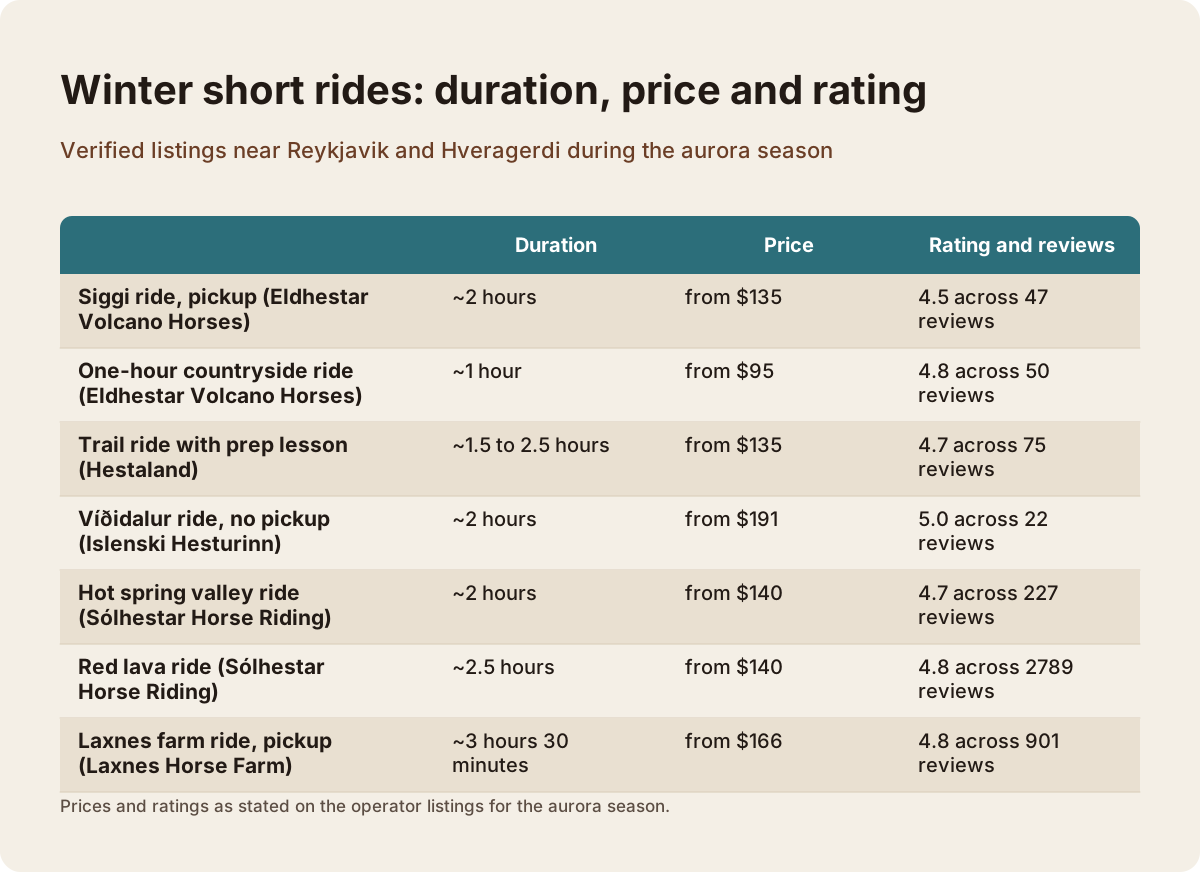
Most stables near Reykjavik and Hveragerdi keep their standard day-ride calendars running through the dark months, with late departures that finish near or after dusk. A handful market evening departures explicitly. What changes in winter is the start time and the gear, not the ride itself, and the roster's prices for short rides hold between $95 and $234 per person.
Start with the honest inventory. The rides listed for the capital area and the Hveragerdi countryside are year-round products: the Sólhestar red lava ride, the Íshestar lava field ride, the Laxnes farm ride, the Eldhestar half-day tours. None of them is sold as an aurora tour, and all of them run in September, October, November and beyond. The aurora opportunity comes from booking the latest departure of the day, so the last hour of your ride lands in darkness. In September that means the evening slot; in December almost any afternoon slot qualifies.
| Ride | Operator | Duration | Rating and reviews | Price |
|---|---|---|---|---|
| Siggi ride, pickup | Eldhestar Volcano Horses | ~2 hours | 4.5 across 47 reviews | from $135 |
| One-hour countryside ride | Eldhestar Volcano Horses | ~1 hour | 4.8 across 50 reviews | from $95 |
| Trail ride with prep lesson | Hestaland | ~1.5 to 2.5 hours | 4.7 across 75 reviews | from $135 |
| Víðidalur ride, no pickup | Islenski Hesturinn | ~2 hours | 5.0 across 22 reviews | from $191 |
| Hot spring valley ride | Sólhestar Horse Riding | ~2 hours | 4.7 across 227 reviews | from $140 |
| Red lava ride | Sólhestar Horse Riding | ~2.5 hours | 4.8 across 2789 reviews | from $140 |
| Laxnes farm ride, pickup | Laxnes Horse Farm | ~3 hours 30 minutes | 4.8 across 901 reviews | from $166 |
The table is the real answer to "what can I book." These are the listings that exist, at the prices the roster states, in the season you are asking about. The Eldhestar Siggi ride deserves a special mention for aurora-season planning: it is a two-hour ride from Hveragerdi, which the national tourism site places about 30 minutes' drive from Reykjavik, and the listing includes pickup, so a late departure does not leave you solving transport in the dark. The Eldhestar Siggi ride is rated 4.5 across 47 reviews at from $135 per person, and the operator's listing shows the live departure times, Check availability for the winter calendar.
Hestaland's trail ride with prep lesson suits a nervous rider who wants the dark-months experience without pressure, and the Víðidalur ride from Islenski Hesturinn is the shortest path to a dramatic setting, a volcanic landscape an easy distance from the capital, though that listing has no pickup, so you drive yourself. For a fuller treatment of the stable-by-stable differences, including who picks up where, the site's Reykjavik stables and pickup guide carries the detail.
A few practical notes on winter departures. Weight limits do not relax for the season; most operators on the roster cap riders at 100 to 110 kg, Laxnes at 120 kg, and the stable measures the limit fully clothed, so ask the operator rather than guessing. Helmets are supplied everywhere, and the standard winter kit adds rubber boots, rain clothes or warm overalls, which matters more at 5 pm in November than at noon in July. Book the date you want several days ahead, because the late slots in the dark months are the ones everyone else wants too, and then watch the sky rather than the calendar.
Should You Book A Combo Package Or A Day Ride?
A combo package buys a full day of sightseeing plus a saddle slot, at $222 to $307 per person on this roster, but almost every combo runs in daylight, so none is an aurora product. A standalone late ride, from $95 to $191 on the short-ride list, is the cheaper and more flexible base, and you chase the sky on your own forecast.
The combo listings are worth understanding precisely because they are so tempting in a short trip. The riding and Silfra snorkelling combo from Arctic Adventures runs about 8 hours at from $307, rated 4.6 across 35 reviews. The Golden Circle and horse riding day tour from BusTravel Iceland runs about 11 hours at from $223, rated 4.7 across 80 reviews. The riding and whale watching combo from Special Tours runs about 5 hours 30 minutes at from $222, rated 4.7 across 50 reviews. Gray Line's Viking ride plus Golden Circle runs about 9 hours at from $265, rated 4.5 across 160 reviews. All four are daylight products. You will be back in Reykjavik before the sky is worth looking at, which is fine, but you should know it before you book one hoping for lights.
| Combo listing | Operator | Duration | Rating and reviews | Price | Finishes in darkness? |
|---|---|---|---|---|---|
| Riding and Silfra snorkel | Arctic Adventures | ~8 hours | 4.6 across 35 reviews | from $307 | No, daytime schedule |
| Golden Circle and ride | BusTravel Iceland | ~11 hours | 4.7 across 80 reviews | from $223 | No, returns by evening |
| Riding and whale watching | Special Tours Iceland | ~5 hours 30 minutes | 4.7 across 50 reviews | from $222 | No, daytime departures |
| Viking ride and Golden Circle | Gray Line Iceland | ~9 hours | 4.5 across 160 reviews | from $265 | No, daytime schedule |
The smarter aurora structure is a two-part day. Take a combo or a sightseeing loop in daylight, then a short evening ride near where you are staying, or skip the ride under lights entirely and stand somewhere dark after dinner. Some farms pair riding with other activities through partner operators, and Laxnes, for one, runs riding paired with Golden Circle sightseeing or Silfra snorkelling on its own site, which is worth knowing if you want the pieces booked through one channel. The full menu of paired products is laid out in the site's combo tours from Reykjavik guide.
The budget argument also favours the split. A one-hour Eldhestar countryside ride at from $95 plus a free dark-sky viewpoint beats a $307 combo that ends before dusk on both cost and aurora odds. The combo earns its price when the snorkel or the Golden Circle is the thing you actually want, and the ride slot is a bonus. Decide which of the three you would keep if you could only keep one, and book around that.
Where Are The Clearest Skies For A Night Ride?
The clearest aurora skies sit inland and away from Reykjavik's glow, which points riders east toward Hveragerdi and the countryside stables rather than the capital's edge. The trade-off is simple: the same inland areas that stay clearer of coastal drizzle also mean a longer drive back to your hotel after a cold evening in the saddle.
Geography does part of the work here. The south coast around Vík is the wettest corner of the country, with 2,252.5 mm of rain a year in the verified data, and coastal Reykjavik sees rain in every month. Inland Hveragerdi and the farmland beyond it sit far enough from the ocean to dodge some of the drizzle, and far enough from the capital's light pollution that a moderate display is actually visible rather than washed out. The north around Akureyri is drier again, roughly 573.9 mm a year, but it is a 5 to 6 hour drive from Reykjavik, so it belongs on a north-Iceland itinerary rather than a day trip.
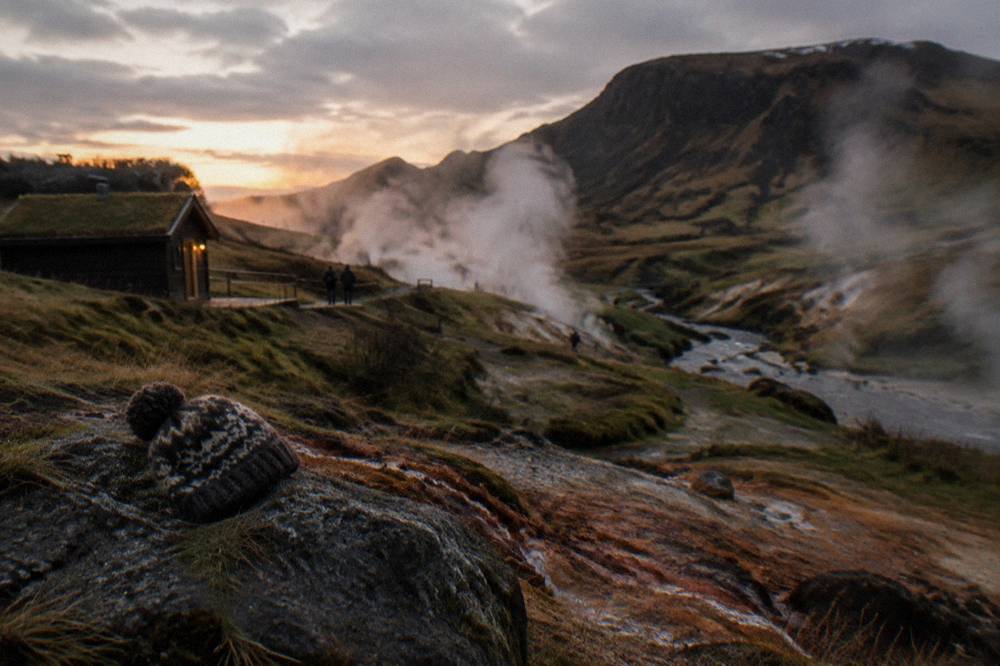
For most travellers the practical sweet spot is the Hveragerdi cluster. The Sólhestar hot spring valley ride, a two-hour tour rated 4.7 across 227 reviews at from $140, rides toward the Reykjadalur geothermal valley, where steam and dark hillsides make a memorable setting even on a night the sky stays quiet. You meet on location for that one, which suits a self-drive evening. The pairing of riding and the hot spring valley, including what the hike involves, is covered in the site's Reykjadalur ride and hot spring hike guide.
The capital-area stables are not a lost cause. The Sólhestar red lava ride and the Íshestar lava field ride operate from the Hafnarfjörður lava fields, which are darker than central Reykjavik even if they are not true wilderness. A 20 minute drive out of the city, in any direction, buys a dramatically better sky. If you are staying in the capital without a car, an evening ride with pickup beats a dark harbour on foot, because the pickup handles the light-pollution problem for you.
If you are building the whole trip around the sky, consider the north. The Hestasport Viking ride at Varmahlíð, rated 4.9 across 223 reviews at from $118, and the Deacon ride out of Akureyri, rated 4.9 across 51 reviews at from $153, put you in Skagafjörður and Eyjafjörður, where winter precipitation runs roughly a quarter of the Vík figures. That is a serious aurora advantage, paid for in driving days. The regional detail lives in the site's north Iceland Skagafjörður guide.
How Do You Read The Aurora Forecast Before Booking?
The Icelandic Meteorological Office publishes a real-time aurora forecast showing cloud cover and activity levels, and it is the one tool to check on the day of your ride. Book the ride days ahead, then judge the sky that afternoon; a stable with a lenient cancellation window lets you shift when the forecast turns grey.
The forecast page is public and free, at the Icelandic Meteorological Office's aurora forecast, and it layers two maps you need to read together. The activity scale tells you how strong the incoming solar disturbance is. The cloud map tells you whether any of it will be visible from your stable. A nine with full cloud cover is worth nothing; a three with a clean gap over the southwest can deliver a memorable evening. Beginners consistently over-weight the first number and ignore the second, which is exactly backwards.
Timing matters too. Aurora forecasts are reasonably reliable hours ahead and unreliable days ahead, so the workflow is: book your ride when you book the trip, then check the forecast the afternoon of the ride, and be ready to move your evening. This is where cancellation policy becomes an aurora feature. Sólhestar, for example, states on its own site that it refunds in full when you cancel 24 hours or more before departure, with scheduled group rides on a longer window, and Viking Horses publishes a tiered schedule with a full refund more than 14 days out. Read the operator's own terms rather than assuming, because the lenient windows are what let you chase gaps in the cloud instead of riding under a blanket of it.
Two habits close the loop. First, check the forecast again an hour before departure, because Icelandic cloud moves fast and the evening's gap can open or close after lunch. Second, ask the stable what they do when the sky is grey: some will run the ride anyway as a night ride, which can still be a fine experience, and some will let you move to another day, which is what you actually want when the aurora is the point. The listing states the policy; the operator confirms it in a reply email.
What Should You Wear On An Evening Ride?
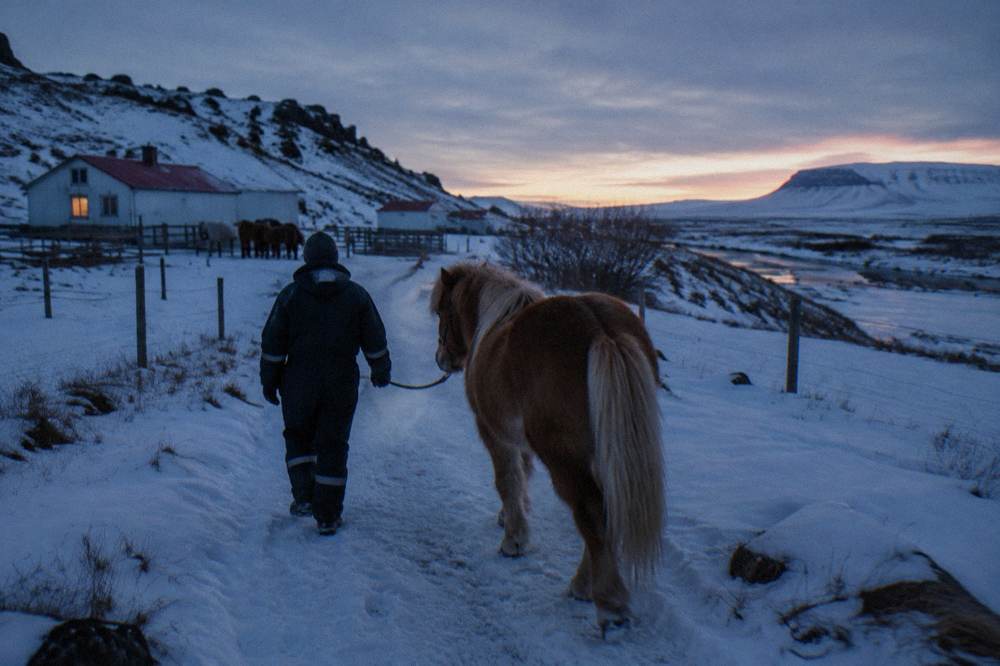
Plan for temperatures near freezing, wind, and the chance of rain or snow, and dress in layers you can shed in a heated stable. Operators supply helmets, and most supply rubber boots, rain clothes or warm overalls, so your own list is thermal base layers, warm socks, gloves and a hat for the time out of the saddle.
The verified winter numbers set the frame: Reykjavik's coldest months run daytime highs near 3 °C and lows a couple of degrees below zero, and an evening ride adds wind chill and the stillness of sitting on a horse for an hour or more. That is cold-weather clothing territory, not extreme gear, but the difference between a magical evening and a miserable one is usually footwear and fingers. The gear the stables themselves supply, from their own published information, is listed below.
| Operator | Stated gear included | Notes from the operator's own pages |
|---|---|---|
| Íshestar | Helmet, warm overall or rain coat and rain pants, rubber boots | Borrowed on site, no need to pack it |
| Eldhestar | Helmets, rain gear, warm overalls | Standard on half-day and combo tours |
| Laxnes | Boots, helmets, rain gear or overall snowsuits | Winter kit swaps to snowsuit form |
| Viking Horses | Saddles, helmets, gloves, rain clothes | Gloves included, rare among stables |
| Sólhestar | Helmet fitted at check-in | Bring or borrow the rest, ask when booking |
The one thing you cannot borrow is what you wear underneath. Thermal base layers, a warm mid-layer, thick socks and a hat are the traveller's contribution, and they are the items people forget because the listing says "gear included." Gloves matter most on an evening ride, since your hands hold the reins and the cold finds them first; if your stable is not Viking Horses, whose terms include gloves, bring your own. For the full packing treatment, including what the biosecurity rules say about bringing your own used riding gear into Iceland, see the site's what to wear horseback riding in Iceland guide.
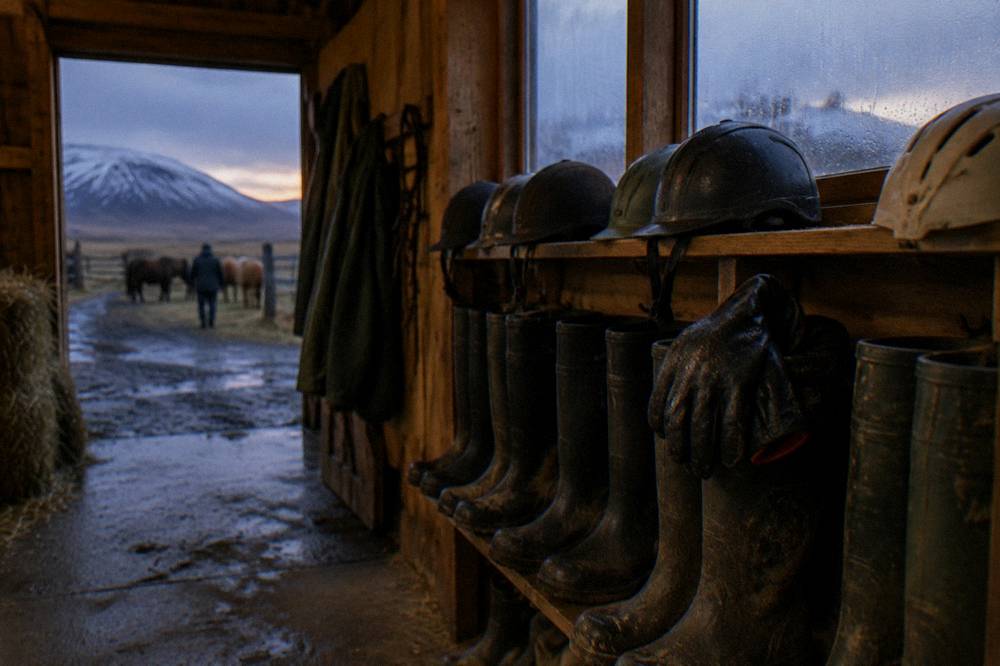
That biosecurity point is worth a sentence of its own, because it is unusual and it is enforced. The Icelandic Food and Veterinary Authority prohibits used riding equipment and used riding gloves outright, and requires used riding clothes and boots to be machine washed or dry cleaned before entry, with items that cannot be washed rinsed, dried, disinfected and stored for at least five days before contact with horses. Practically: wear clean clothes, borrow the stable's kit, and leave your old riding gloves at home. The country's horses live behind this wall, and a visitor's damp boots are the one thing that can breach it.
If you want a longer, warmer ride as the base for your evening, the Laxnes farm ride with pickup, about 3 hours 30 minutes total and rated 4.8 across 901 reviews at from $166, is the roster's most reviewed countryside product, and its weight limit of 120 kg is the most generous on the list. The pickup timetable covers central Reykjavik and nearby hotels, so the dark drive home is handled, which is exactly what you want after two hours in a November saddle.
Common Questions About Northern Lights Horse Riding In Iceland
What month is best for northern lights in Iceland?
The main season runs from September through April, and displays are often most active around the equinoxes in September and March. For riders, late September and March balance aurora chances against workable daylight and road conditions, while December and January offer the most darkness but the least margin for a travel day.
Can you see the northern lights while horse riding?
Yes, when the sky cooperates. A late-afternoon or evening ride in the dark months can finish under a display, and countryside stables away from city glow improve the odds. No operator can promise an aurora, so book the ride for its own sake and treat the lights as a possible encore.
Do any tours combine riding and the northern lights?
No listing on this roster sells a guaranteed aurora ride. Combo packages such as the Golden Circle and riding day tour or the riding and Silfra snorkelling tour run in daylight and finish before dark. The honest aurora play is a standalone evening ride near Hveragerdi or in the north, plus your own dark-sky viewpoint afterward.
What should I wear on an evening ride in Iceland?
Thermal base layers, warm socks, gloves and a hat, plus windproof outer layers. Stables supply helmets and most supply rubber boots, rain clothes or warm overalls. Bring clean clothes: used riding gear and used riding gloves are prohibited from import, and used riding clothes and boots must be washed before contact with Icelandic horses.
Is winter riding in Iceland safe for beginners?
Yes, on the right listing. Short rides such as the one-hour Eldhestar countryside ride or the Hestaland trail ride with prep lesson suit first-timers, and tours mostly move at walking pace with a chance to try the tölt gait for capable riders. Weight limits of 100 to 110 kg on most listings still apply, so ask the operator about borderline cases before booking.