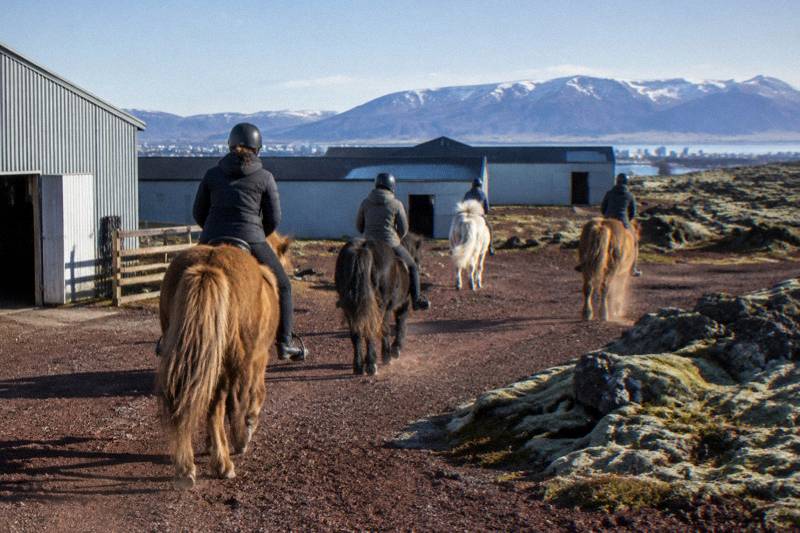
Horse Riding In Iceland In Winter: What Runs And What Feels Like
Riding tours in Iceland run in all twelve months of the year, and winter versions of the popular Reykjavik-area rides are easy to book. What changes is the light, the footing and the clothing math, not the existence of the tour.
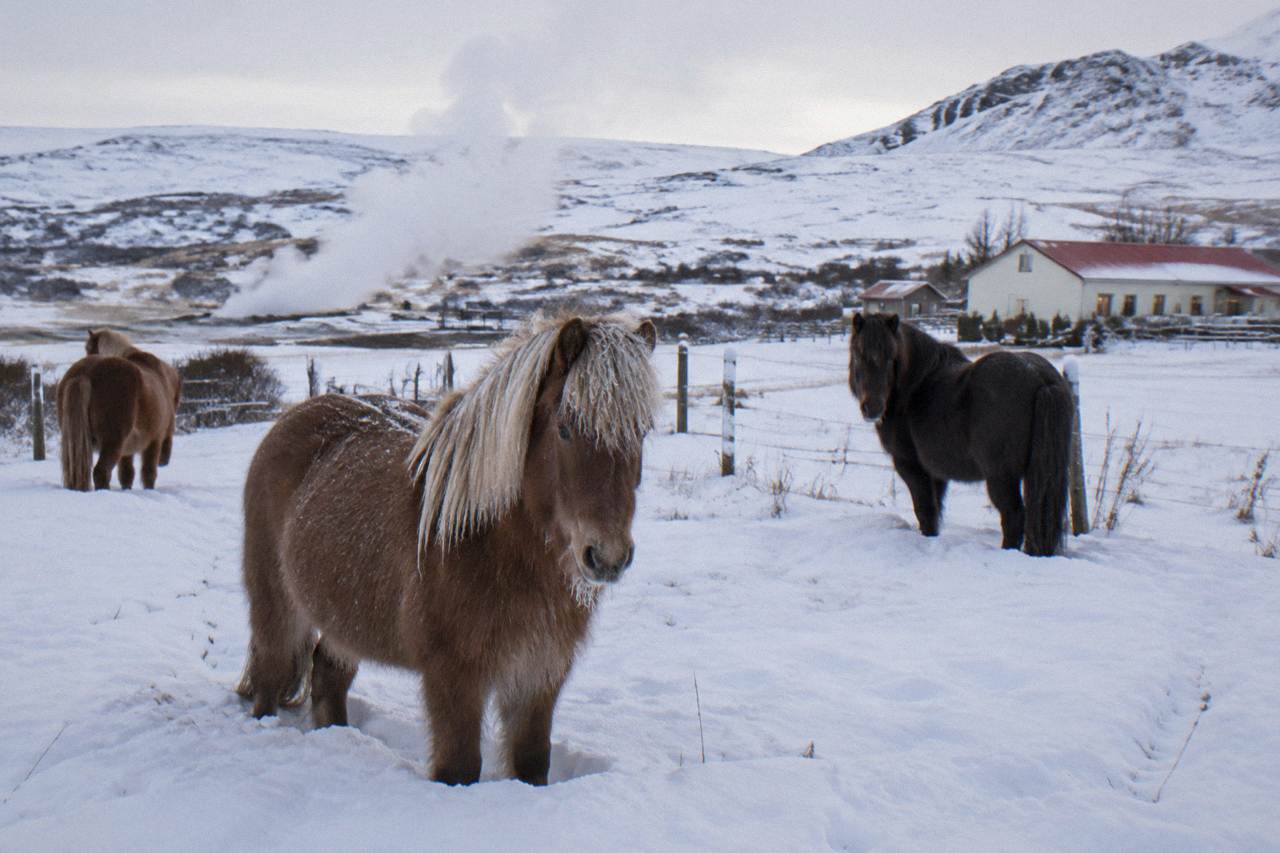
Short answer
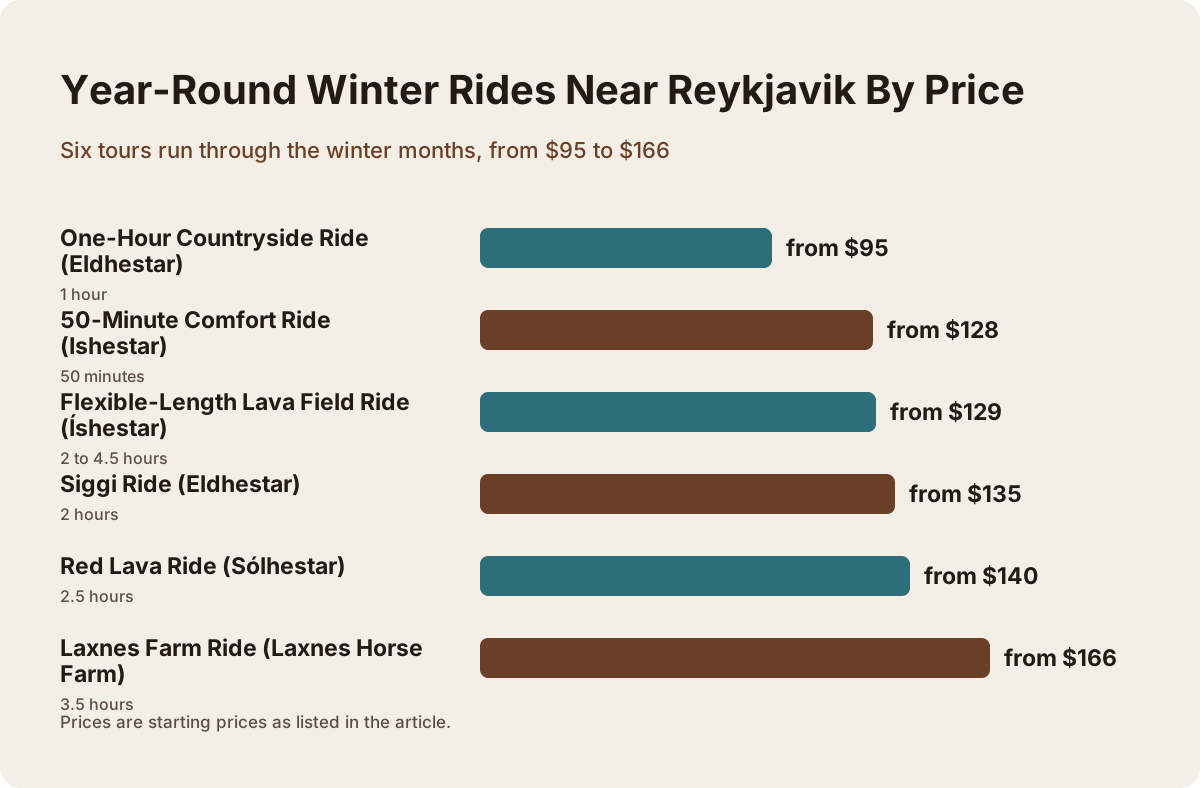
Yes, you can ride all winter. Tours like the Eldhestar one-hour countryside ride from $95 and the Sólhestar red lava ride from $140 run year-round. December days around Reykjavik give about 4 hours of daylight, so most winter departures cluster between late morning and early afternoon.
Iceland does not close its stables for winter. Riding tours across the country operate in all twelve months of the year, and the farms around Reykjavik, Hveragerdi and even Varmahlid in the north keep horses saddled through snow, wind and four-hour days. The Ishestar lava field ride runs year-round, the Eldhestar countryside rides run year-round, and the Vik Horse Adventure black beach ride runs all year too.
What actually changes is the shape of your day. Winter swaps the endless evening light of June for a tight window of daylight, adds serious layers to your kit list, and makes pickup times and cancellation policies matter more than they do in July. This guide walks through what runs, what it feels like, and how to pick a winter ride that suits your cold-weather tolerance.
Can You Go Horseback Riding In Winter?
Yes, horseback riding in Iceland runs through the full winter, and the same farms that carry the summer crowds keep their calendars open from December through February. The Ishestar lava field ride, the Eldhestar countryside ride, the Sólhestar red lava ride and the Vik black sand ride all operate year-round, so a winter visitor is choosing between real departures, not hunting for the one farm still open.
The reason is practical rather than heroic. Icelandic horses live outside year-round and are acclimated to the climate, and the working farms that run tours depend on winter income as much as summer income. Eldhestar, a volcano horse farm about 30 minutes from Reykjavik, offers riding tours all year round, including combo tours with other activities. Hestasport in Varmahlid offers short riding tours year-round as well, which puts a winter saddle experience within reach even on a north Iceland itinerary.
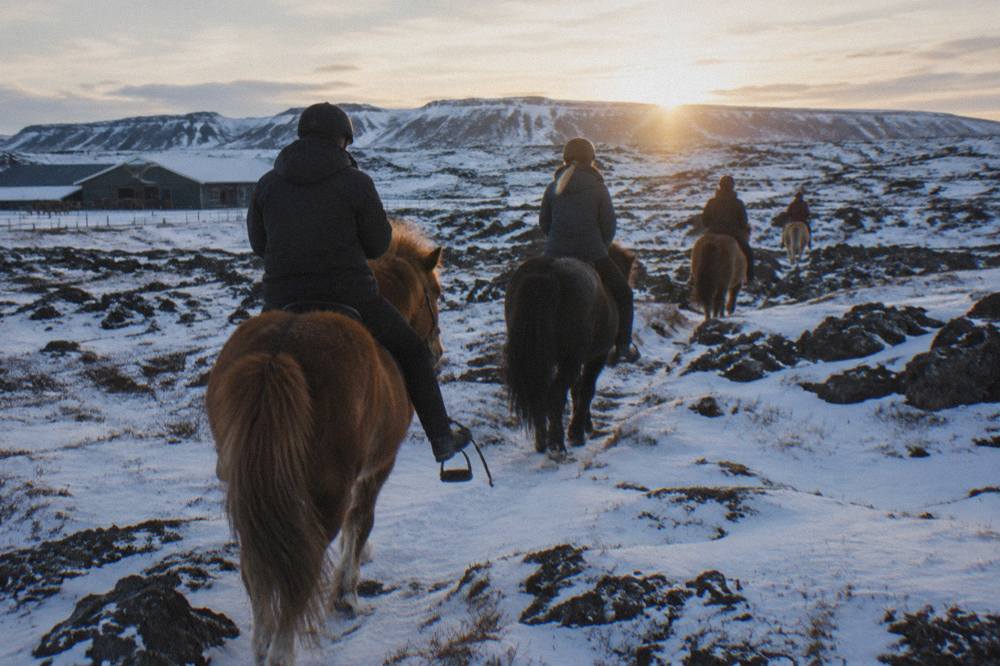
Winter riding is not a lesser version of the summer product either. Many riders actually prefer it: the lava fields and black sand hold snow in a way that transforms familiar routes, the horses are fresh in cold air, and there are far fewer people on each departure. A winter ride is quieter, colder and shorter in the saddle than its summer twin, and for plenty of travellers that combination is the point.
Which Rides Run All Year Near Reykjavik?
The year-round winter options cluster around Reykjavik and Hveragerdi: the Ishestar lava field ride from $129, the Sólhestar red lava ride from $140, the Eldhestar Siggi ride from $135, the Eldhestar one-hour countryside ride from $95, and the Laxnes farm ride from $166. Every one of these runs through the winter months, and most offer hotel pickup, which matters far more in December than in June.
The table below shows the winter-relevant roster near the capital. Durations, prices and ratings come from the live listings, and winter departure counts are typically lower than summer, so booking a few days ahead is wise even though the season is quiet.
| Tour | Operator | Duration | Price | Rating | Winter status |
|---|---|---|---|---|---|
| Flexible-Length Lava Field Ride | Íshestar | 2 to 4.5 hours | from $129 | 4.8 across 1,989 reviews | Runs year-round, pickup offered |
| Red Lava Ride | Sólhestar | 2.5 hours | from $140 | 4.8 across 2,789 reviews | Runs year-round, pickup offered |
| Siggi Ride | Eldhestar | 2 hours | from $135 | 4.5 across 47 reviews | Runs year-round, pickup offered |
| One-Hour Countryside Ride | Eldhestar | 1 hour | from $95 | 4.8 across 50 reviews | Runs year-round |
| Laxnes Farm Ride | Laxnes Horse Farm | 3.5 hours | from $166 | 4.8 across 901 reviews | Runs year-round, pickup offered |
| 50-Minute Comfort Ride | Ishestar | 50 minutes | from $128 | 4.9 across 106 reviews | Runs year-round |
A pattern worth noticing: the shortest rides are the cheapest and the least weather-exposed. The 50-minute Ishestar comfort ride and the one-hour Eldhestar countryside ride both keep you in the saddle just long enough to enjoy it before cold starts working through your gloves. If you have never ridden in freezing temperatures, an hour is a sensible first exposure. If you ride regularly at home and own proper winter kit, the longer lava field and farm rides give the season more room to show off.
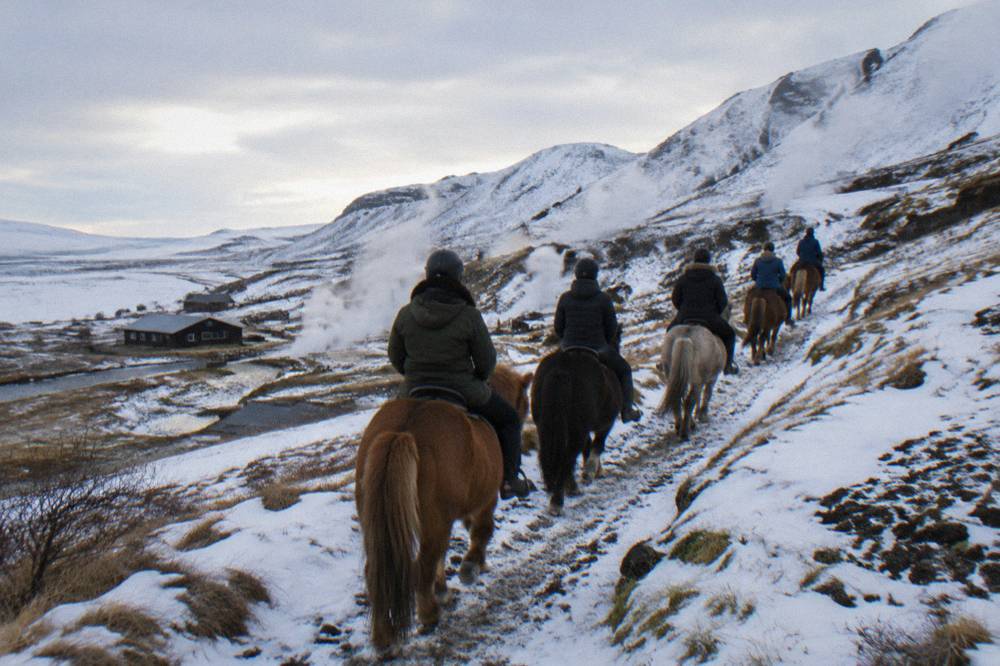
For a broader comparison of stables, pickup logistics and the trade-offs between farms, the Reykjavik stables and pickup guide breaks down each operator's meeting points in detail.
How Short Are Winter Days And What Does That Change?
Around the solstice, Reykjavik gets about 4 hours of full daylight, roughly 4 hours 12 minutes on 15 December, and Akureyri even less at about 3 hours 11 minutes. Eldhestar's own FAQ puts effective mid-winter daylight at around 4 to 5 hours. That means winter departures cluster late morning to early afternoon, and evening rides, a summer staple, mostly disappear from the calendar until spring.
The daylight math is the single biggest difference between a winter booking and a summer one. Viking Horses, for instance, runs morning, afternoon and evening departures in summer, but evening slots make no sense in December when the light is gone by mid-afternoon. When you book a winter ride, expect the operator to place you in the middle of the day and expect the whole experience to feel briskly scheduled rather than lingering.
| Month | Reykjavik daylight (15th) | Reykjavik high / low | Akureyri daylight (15th) | Akureyri high / low |
|---|---|---|---|---|
| November | 6h 30m | 4.7 / -0.1 °C | 6h 00m | 3.6 / -2.1 °C |
| December | 4h 12m | 3.3 / -1.6 °C | 3h 11m | 2.6 / -3.6 °C |
| January | 5h 25m | 3.2 / -1.7 °C | 4h 43m | 2.7 / -3.5 °C |
| February | 8h 38m | 3.3 / -1.9 °C | 8h 22m | 2.6 / -3.6 °C |
| March | 11h 42m | 4.2 / -1.3 °C | 11h 40m | 3.5 / -2.6 °C |
Two things follow from this table. First, February and March are the sweet spot for winter riding: daylight rebounds past 8 and then 11 hours while temperatures stay firmly winter, and the snow cover usually holds. Second, a December or January ride is a short-day commitment, so plan it as the anchor of that day rather than squeezing it between other stops.
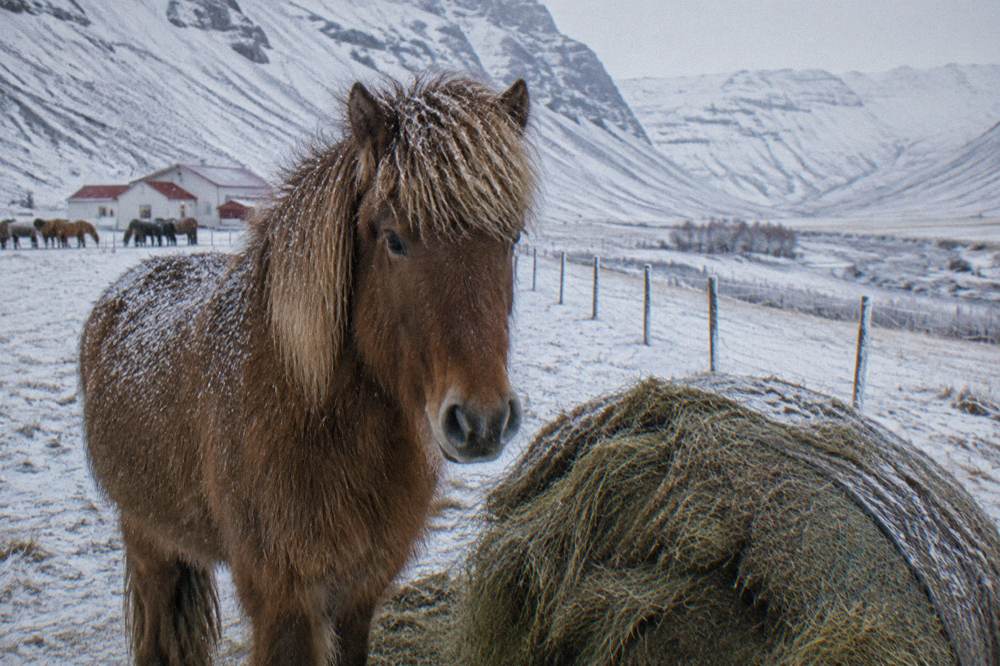
The one upside of short days is that darkness itself becomes an activity. The northern lights season runs from September through April, and a late-afternoon ride that ends in the dark leaves your evening free for aurora hunting. The northern lights riding guide covers the operators that build rides around that window.
How Cold Does It Actually Feel On A Winter Ride?
Air temperatures are milder than most visitors expect, with winter highs of 2 to 5 °C in Reykjavik and lows a few degrees below freezing, but the felt temperature on horseback is a different matter. Wind, damp and the stillness of sitting in a saddle drop the effective cold well below the thermometer, and Vik on the south coast is both warmer and far wetter, with over 200 mm of rain in most winter months.
The numbers surprise people. Iceland's winter is maritime, not continental: Reykjavik averages a December high of 3.3 °C, which is warmer than a January day in much of central Europe or North America. The catch is that the same ocean climate delivers wind and moisture constantly, and a wet wind at 3 °C chills faster than dry cold at -10 °C. On a horse you are also stationary, generating less body heat than when hiking, and the rides that cross open lava fields or beaches offer no shelter at all.
Operators deal with this by supplying gear. Ishestar lends a helmet, a warm overall or rain coat, rain pants and rubber boots on its tours. Laxnes supplies boots, helmets and rain gear or overall snowsuits. Viking Horses provides high-quality saddles, helmets, gloves and rain clothes. That means the farm covers the outer layer; your job is the layers underneath, which the winter riding clothing guide details piece by piece.
The Sólhestar red lava ride, 2.5 hours from $140 and rated 4.8 across 2,789 reviews, is a good case study in winter exposure. Its route crosses open red lava fields east of the city where wind has nothing to break it, so the operator's supplied overalls and your own thermal base layers carry most of the work. Riders report that the first twenty minutes feel crisp and pleasant and the last twenty are when good gloves earn their place in your daypack.
What Should You Wear For A Winter Ride?
Wear three layers: a thermal base layer, an insulating mid layer such as fleece or light down, and a wind-and-waterproof shell, plus warm socks, gloves and a hat that fits under the supplied helmet. Most operators lend the outer shell, overalls and rubber boots, so what you bring is really the base and mid layers, and any used riding gear from abroad must be washed or disinfected first.
That last point is not optional courtesy, it is the law. The Icelandic Food and Veterinary Authority prohibits importing used riding equipment and used riding gloves outright, and requires that used riding clothes and boots be machine washed or dry cleaned before entering the country; items that cannot be washed must be rinsed, dried, sprayed with 2% VirkonS and stored for at least five days before contact with horses. The reason is that Icelandic horses are not vaccinated and are susceptible to infectious agents from abroad, a biosecurity stance the whole industry takes seriously. The MAST guidance on riding equipment spells out the full rules.
| Item | Who usually supplies it | What to bring yourself |
|---|---|---|
| Helmet | Every operator | Nothing, though a thin hat helps |
| Waterproof shell or overall | Ishestar, Laxnes, Eldhestar, Viking Horses | Base and mid layers |
| Rubber boots | Ishestar, Laxnes | Warm socks, ideally wool |
| Gloves | Viking Horses | Your own insulated pair otherwise |
| Thermal base layer | Not supplied | Merino or synthetic, long sleeve and legs |
One practical note on boots: rubber boots supplied by farms are waterproof but not warm, so thick socks are the fix. And if you own riding boots or chaps at home, leave them there: used leather riding gear cannot be brought into Iceland at all, so the farm-supplied boots are your only real option anyway.
Which Winter Rides Suit Beginners And Nervous Riders?
The gentlest winter options are the short, flat, farm-based rides: the one-hour Eldhestar countryside ride from $95, the 50-minute Ishestar comfort ride from $128, and the Laxnes farm ride from $166, which Laxnes describes as suited to all levels. All three keep you close to the stable, on soft ground, with easy turn-back options, which is exactly what a first-time winter rider wants when the wind picks up.
Beginner suitability in winter is mostly about exposure management. A nervous rider in July can manage a three-hour beach ride; the same rider in a February crosswind may want the ride to end after an hour.
The Laxnes farm ride deserves special mention for winter beginners. Laxnes describes its tours as suited for all levels, supplies boots, helmets and overall snowsuits, and sets a maximum rider weight of 120 kg, the most generous limit in the roster. The tour runs about 3.5 hours door to door with pickup from central Reykjavik hotels, and the farm is roughly a 20-minute drive from the city, so the whole experience is low-logistics. The minimum age is 7 on the standard tour, with exceptions possible for children with riding experience, which the riding with kids guide covers in full.
If your question is less about winter and more about whether riding suits you at all, the beginners guide to riding in Iceland walks through what a first ride actually involves, step by step from check-in to dismount.
Can You Combine A Winter Ride With Northern Lights?
Yes, and winter is the only season where the pairing works naturally, since the northern lights season runs from September through April and the rides run all year. The practical shape is an afternoon ride that ends in the dark, dinner, and then an aurora hunt in the evening; some operators also market combined riding and northern lights products, with Eldhestar listing departures on specific autumn and winter dates.
No operator can promise a sighting, and any honest planning starts there. What you can control is timing and information. The Icelandic Meteorological Office publishes a real-time aurora forecast showing cloud cover and activity levels, and it is the tool local riders check before committing an evening. A clear forecast plus a dark sky plus distance from Reykjavik's streetlights is the recipe, and a farm in Hveragerdi or a south coast stable puts you further from light pollution than a city hotel balcony.
The pairing also shapes which ride to book. Choose an afternoon departure that ends by late afternoon, keep the evening free, and pick a stable you can reach back from easily in the dark. The one-hour Eldhestar countryside ride, from $95 and rated 4.8 across 50 reviews, fits this pattern well: it is short enough to leave energy for the evening, runs from a farm about 30 minutes from Reykjavik, and offers pickup so you are not driving mountain roads at night after a long day.
What Happens If Winter Weather Cancels Your Ride?
Winter bookings carry real cancellation risk, and the policies vary sharply by operator: Viking Horses gives a full refund more than 14 days out but nothing inside 4 days, while Sólhestar refunds fully for cancellations 24 hours or more before departure and is non-refundable inside 24 hours. Read the specific policy before booking, because a storm-cancelled tour is handled under the operator's terms, not a general travel-industry norm.
The asymmetry matters. A short-notice storm is most likely to hit exactly when the strictest policies bite, so if you are travelling in the deepest winter, the operators with 24-hour windows are materially more flexible than those with 14-day windows. Note also that Viking Horses requires all cancellations in writing by email, and its sliding scale charges 20 percent at 7 to 14 days and 50 percent at 4 to 7 days before departure.
| Operator | Full refund window | Inside the window |
|---|---|---|
| Viking Horses | More than 14 days before departure | No refund under 4 days; 20% at 7 to 14 days; 50% at 4 to 7 days |
| Sólhestar | 24 hours or more before departure | Non-refundable within 24 hours |
| Sólhestar group rides | Five days or more before departure | Non-refundable inside five days |
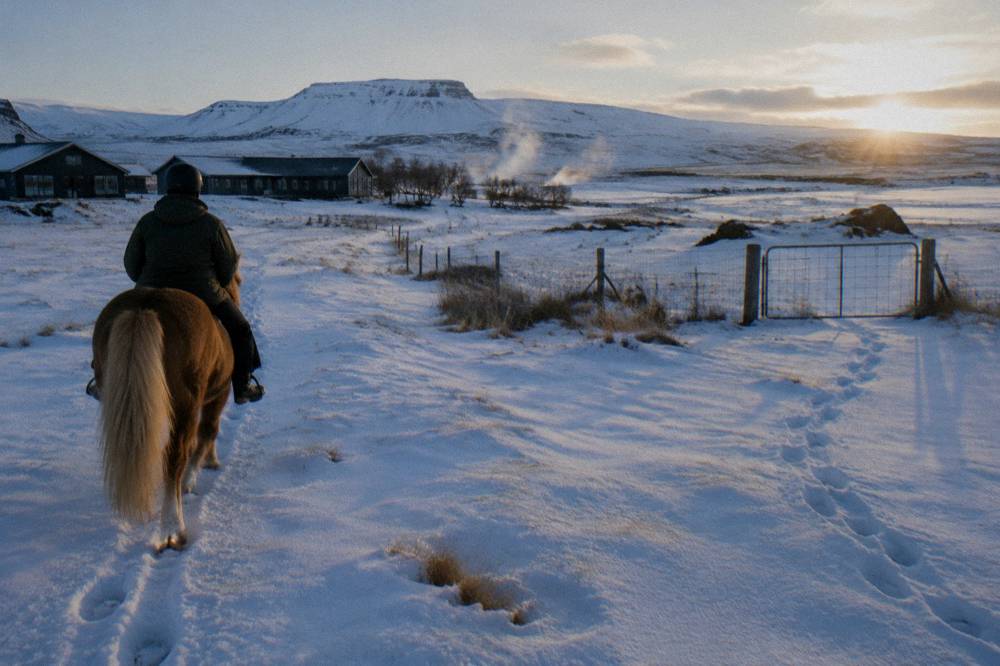
Operator-initiated cancellations, where the farm calls off the ride for weather or road conditions, are refunded as a matter of course across the industry; the policies above govern cancellations you make yourself. The safe winter pattern is to book your ride early in your trip rather than on your last day, leaving slack to rebook if a storm system moves through. Iceland's winter weather moves fast, and a ride moved forward two days is a much better outcome than a ride lost to a departure flight.
Does The Region Change The Winter Experience?
Yes, considerably: Reykjavik-area rides are mild and quick to reach, Hveragerdi rides add geothermal warmth and valley shelter, south coast rides near Vik are wetter and windier with over 200 mm of monthly rain, and north Iceland rides around Akureyri are colder but often brighter and drier, with Akureyri recording less than half of Vik's winter rainfall.
The regional spread is worth planning around rather than just accepting. Vik's winter is the harshest of the riding regions in terms of moisture, with 242 mm of rain in October and over 200 mm in most winter months, and the black sand beach there holds wind with nothing to slow it. The Vik Horse Adventure one-hour ride, from $126 and rated 4.8 across 571 reviews, is built for exactly this: it is an easy-going walking-speed ride with a five-minute safety demo, and its one-hour length is well matched to winter exposure on an open beach.
| Region | Winter character | Rides that run there |
|---|---|---|
| Reykjavik area | Mildest, most pickup options, shortest transfers | Ishestar lava field, Sólhestar red lava, Laxnes farm |
| Hveragerdi and countryside | Geothermal valleys, sheltered tracks, farm-based | Eldhestar countryside and Siggi rides, Sólhestar hot spring valley ride |
| South coast near Vik | Wettest and windiest, dramatic black sand | Vik Horse Adventure beach ride, Foss Travel black beach ride |
| North Iceland | Colder, drier, often clearer skies | Hestasport Viking ride, Deacon ride, AK Hestaferdir rides |
North Iceland is the sleeper pick for winter. Akureyri's winter rainfall runs 41 to 74 mm per month against Vik's 200-plus, and colder, drier air often means clearer skies, which matters if aurora viewing is part of the plan. The Hestasport Viking ride in Varmahlid, 1.5 hours from $118 and rated 4.9 across 223 reviews, is the standout: short, well-reviewed and based in Skagafjordur, the traditional heartland of Icelandic horse culture. The Deacon ride near Akureyri, 2 hours 15 minutes from $153 and rated 4.9 across 51 reviews, includes coffee and light refreshments, a detail that reads very differently in December than in July.
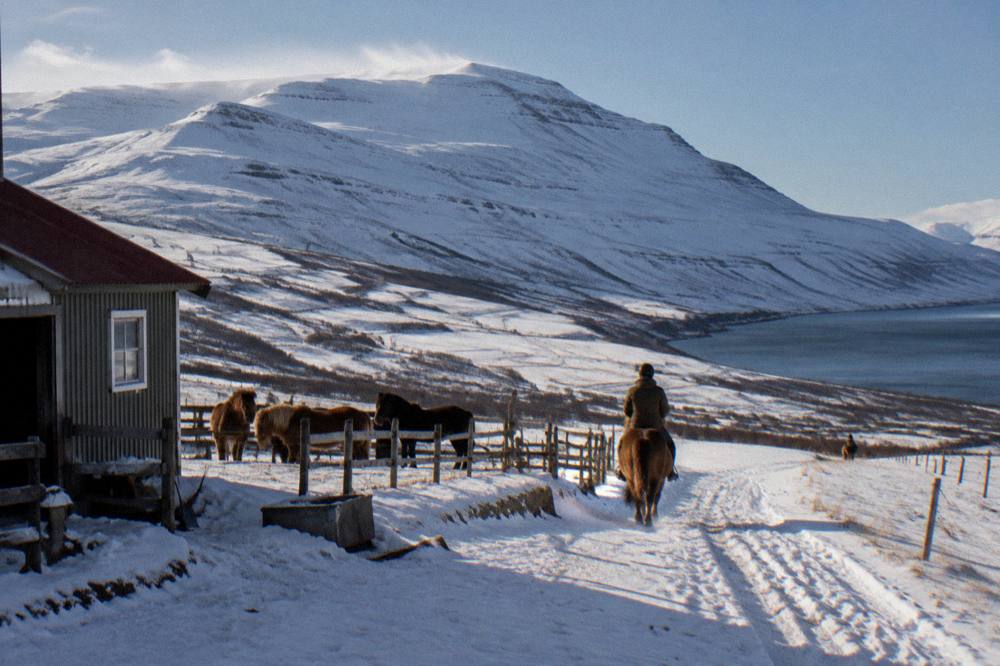
The Sturlureykir Viking ride from Reykholt, 1.5 to 2.5 hours from $129 with a 100 kg rider limit, gives another countryside winter option, pairing a farm visit with a ride through sheltered inland terrain that holds snow beautifully. For anyone weighing the full regional decision, the how to choose a ride guide frames the trade-offs in one place.
If there is a single organizing principle across this whole site, it is that the right winter ride is the shortest one that still excites you. Iceland Horse Tours exists to make that match, and the trio below spans the three winter shapes worth considering: a one-hour farm ride, a countryside Viking ride and the classic lava field ride.
Common Questions About Winter Horse Riding In Iceland
Can you go horseback riding in winter?
Yes. Riding tours in Iceland operate in all twelve months of the year. Year-round options near Reykjavik include the Ishestar lava field ride from $129, the Sólhestar red lava ride from $140, the Eldhestar countryside ride from $95 and the Laxnes farm ride from $166, most with hotel pickup.
How cold is it on a winter horse ride in Iceland?
Winter highs in Reykjavik run 2 to 5 °C with lows a few degrees below freezing, but wind and damp make it feel colder in the saddle. Operators lend overalls, rain gear, helmets and rubber boots, so your own job is warm base layers, thick socks and insulated gloves.
How many hours of daylight are there in Iceland in winter?
Reykjavik gets about 4 hours of daylight in mid-December and Akureyri about 3 hours. By mid-February Reykjavik is back above 8 hours and by mid-March above 11, so February and March offer winter conditions with far more usable day.
Do winter rides get cancelled for weather?
Sometimes. Operator policies differ: Sólhestar refunds fully up to 24 hours before departure, while Viking Horses charges 20 percent at 7 to 14 days and gives no refund inside 4 days. Book early in your trip so a storm can be rebooked rather than lost.
Can you see northern lights on a winter horse ride?
The northern lights season runs September to April, so the pairing is possible, but no operator can promise a sighting. Check the Icelandic Meteorological Office aurora forecast for cloud cover and activity, and keep your evening flexible rather than booking a lights-specific plan.
What is the best winter ride for a beginner?
The one-hour Eldhestar countryside ride from $95 and the 50-minute Ishestar comfort ride from $128 are the shortest, gentlest options, both described as suited to all levels. The Laxnes farm ride from $166 also takes all levels and supplies snowsuits, boots and helmets.