What Do Icelanders Do With All The Horses?
Iceland registers over 300,000 Icelandic horses worldwide, with roughly 40 percent of them in the country. Here is what the horses actually do: breeding, sport, farm work, tourism and export.
What Do Icelanders Do With All The Horses?
Almost none of Iceland's horses sit idle. They are bred for sport and showing, worked on farms, gathered in autumn roundups, and ridden for pleasure by locals, while many are hired out to visitors or exported in the hundreds each year to Europe and North America. With over 300,000 registered horses worldwide, roughly 40 percent of them in Iceland, nearly every one has a job on a farm, a breeding record, or a place in the tourism economy.
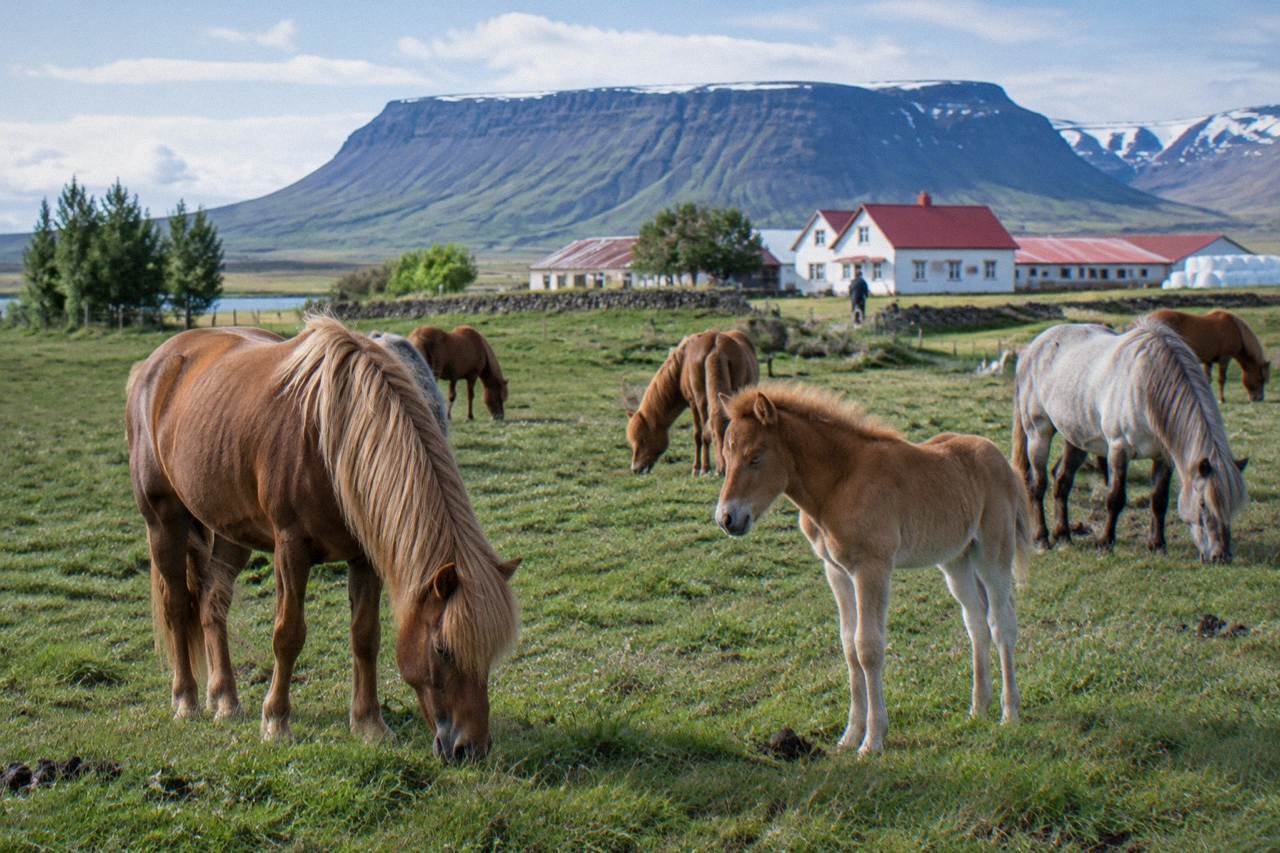
The question usually comes from the passenger seat of a rental car. The fields around Reykjavik, Mosfellsbaer and Hveragerdi hold horse after horse, and the numbers feel absurd for an island this size. They are not. Horse breeding has been a pillar of Icelandic rural life since the settlement era, and the animals Icelanders keep today descend from stock isolated on the island for more than a thousand years, as the breed association Horses of Iceland documents.
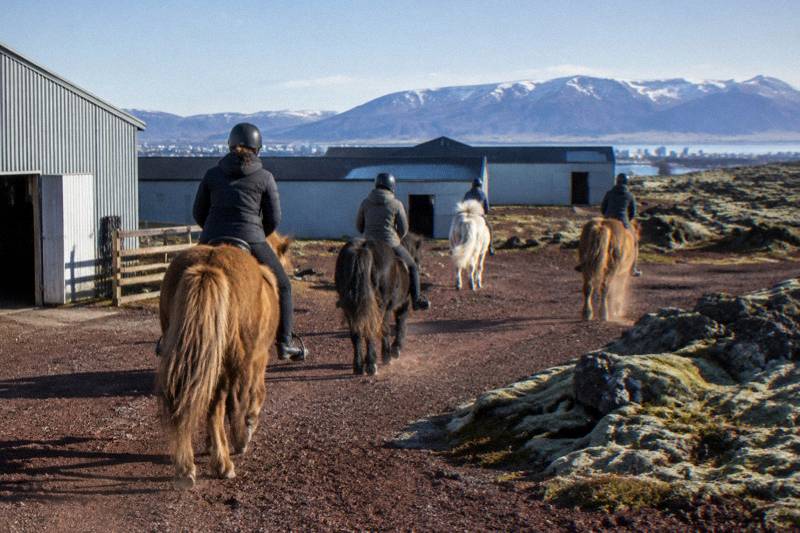
What has changed is the mix of jobs. A century ago a horse was transport, a plough partner and a sheep-herding tool. Today the same bloodlines are show animals, breeding stock and the backbone of one of the country's most visible tourist activities. A visitor who books the Laxnes farm ride with pickup is not riding a retired pet; that horse is part of a working farm whose business model depends on breeding, training and hiring out exactly the kind of animal filling every roadside paddock.
The scale is easier to grasp once you know the animals are counted. Iceland keeps a national studbook, WorldFengur, and the registration numbers are the reason the roadside herds look endless: breeders are producing horses deliberately, for buyers at home and abroad, on farms that have done it for generations.
How Many Icelandic Horses Are There?
The breed association counts over 300,000 registered Icelandic horses worldwide as of 2024, and approximately 40 percent of them stand in Iceland itself. Every one is registered, most are traceable to named parents in the WorldFengur studbook, and the domestic population is spread across hundreds of small breeding farms rather than a few large operations. The count is a census of a managed breeding population, not a wild herd.
That last point deserves emphasis, because visitors often assume the roadside horses are semi-feral, like the Highland ponies of Scotland. They are not. Each animal belongs to a farm, carries a registered lineage, and spends part of the year grazing open land precisely because that is how Icelanders raise horses: summer pasture on mountain and lowland ranges, then home to the farm for winter.
The size explains part of the abundance. An Icelandic horse is small, averaging 142 cm at the withers in breeding evaluation according to the association's breeding pages, which is pony territory by measurement. The registries insist on calling it a horse, and Icelandic breeders always have, so the site follows their usage. A small horse eats less than a large one, and Iceland can support more of them per hectare than a visitor might expect.
| Measure | Figure | Source basis |
|---|---|---|
| Registered horses worldwide | Over 300,000 | Horses of Iceland, 2024 |
| Share living in Iceland | About 40 percent | Horses of Iceland, 2024 |
| Average withers height | 142 cm | Breeding evaluation average |
| Height range | About 130 to over 150 cm | Horses of Iceland |
| Recognised colours | Over 40, up to 100 variations | Horses of Iceland |
| Gaits | Five in most horses | Horses of Iceland |
For context on how the population is distributed, our guide to the best horse riding in Iceland maps where the riding farms actually cluster: the Reykjavik area, the south coast, and Skagafjordur in the north, which is the historic heartland of Icelandic horse breeding.
Why Does Iceland Breed So Many Horses?
Icelanders breed horses for sport, showing and export, and the breeding culture rewards specific measurable traits: clean gaits, especially the tölt, a willing temperament, and colour. Breeding evaluation scores horses against a national standard, and a high-scoring stallion can be worth a great deal to its owner. The result is a deliberate, competitive industry that produces more horses than leisure riding alone could ever absorb.
The engine of the whole system is the gait. The tölt, the four-beat lateral gait the breed is best known for, has no suspension phase, which means the rider sits nearly still while the horse moves quickly. Breeders select hard for it. A horse with an exceptional tölt is a show horse, a breeding animal and a sales prospect all at once, and the gait competitions that judge it are a genuine spectator sport in rural Iceland. Our explainer on the tölt and the Icelandic horse's gaits covers the mechanics in detail.
Temperament matters just as much. A horse that is calm with strangers, tolerant of beginners and safe in wind and rain is worth more to a farm that runs tours than a flashy but difficult one. That is why the horses visitors meet at the Laxnes farm ride or on a Sólhestar tour are so quiet: generations of selection produced animals that accept a nervous first-time rider without drama.
Colour is the third lever. With over 40 colours and up to 100 variations in the breed, Icelanders have a rich vocabulary for coats, and unusual colour can raise a horse's profile in showing and breeding. The variety is one of the reasons the roadside herds look so striking; a single field can hold a silver dapple, a blue dun and a palomino side by side.
None of this is new. The breed has been isolated since the settlement period of 874 to 930, with no genetic input from other breeds for over a thousand years, as the international federation for the breed records. What is new is that the market for these horses is now global.
What Are Réttir, The Autumn Roundups?
Each September, farmers across Iceland ride into the highland summer pastures, gather the horses that have grazed loose there since June, and herd them down to a sorting corral, a rétt, where each animal is identified and returned to its owner. These roundups, réttir, are working events, social occasions and a living link to the way horse management was done for centuries. They are also why so many horses seem to appear from nowhere in autumn.
The mechanics are simple and old. Horses are turned out onto communal or leased grazing land for the summer, often in large mixed herds. When the weather turns, the farmers ride out, sometimes over several days, drive the herds down from the hills, and sort them in the rétt by the earmarks and brands each farm uses. Children ride along. Neighbours help neighbours. The sorting is fast, physical and, to an outsider, completely unintelligible, because the identification system is local knowledge passed down rather than paperwork held up to a scanner.
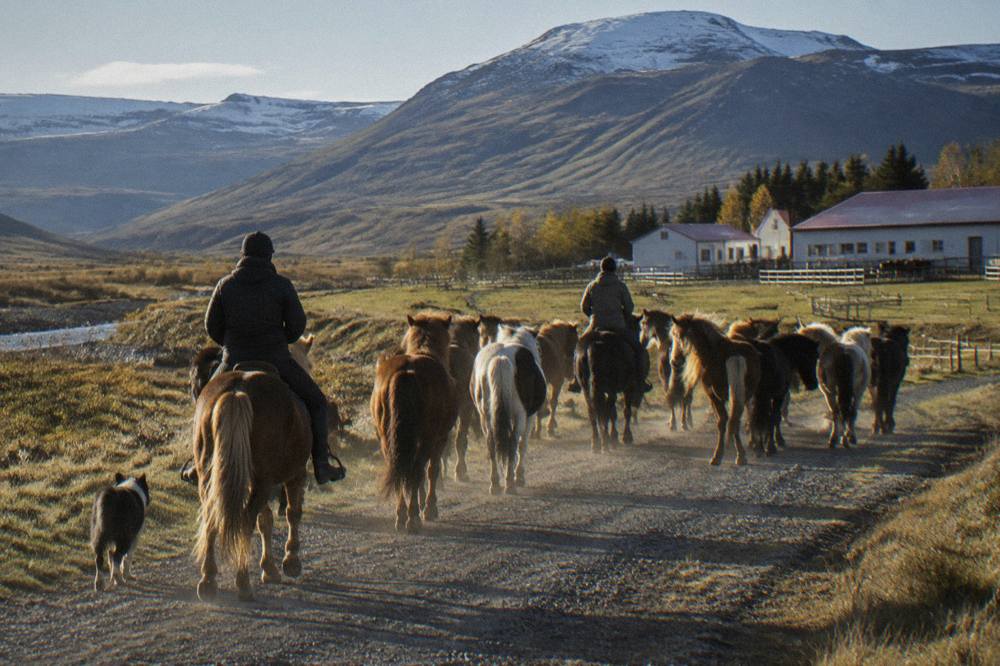
Skagafjordur, in the north, is the region most associated with this culture, and it is no coincidence that it is also the densest area of horse breeding in the country. Our guide to horse riding in Skagafjordur covers the farms there that welcome visitors, including Hestasport in Varmahlid, whose Viking ride runs about 1.5 hours from $118 per person and is rated 4.9 across 223 reviews.
Visitors cannot join a working roundup as a spectator product on any listing in our roster, and the site does not present them as bookable events. They happen on working farms, on working schedules. But the roundup culture shapes everything a visitor does experience: the horses are handled constantly from foalhood, sorted, trailered and moved in groups, which is exactly why a horse that meets a tourist at a stable is already accustomed to commotion.
Where Do The Horses Live Through Winter?
Most Icelandic horses winter at the home farm, in barns or open paddocks with hay fed daily, though the hardiness of the breed means many stay outside in all weather. Farmers grow and store grass hay through the short summer specifically to feed horses and sheep through the long winter, and the shaggy winter coat the breed grows is thick enough that snow settling on a horse's back is a sign it is losing little body heat.
The winter coat is the visible clue. An Icelandic horse in January looks like a different animal from the same horse in July: dense, often to the point of changing apparent colour, with a beard under the jaw and feathering at the fetlocks. That coat evolved for survival outdoors in a climate where Reykjavik's January average high sits around 3 degrees and the daylight on the fifteenth of the month is barely over five hours, per Met Office normals.
Feeding is the real constraint. A horse eats hay daily from first snow to green grass, and a farm keeping fifty animals is managing a serious hay operation. This is another reason the population is concentrated on real farms rather than spread across hobby paddocks: the economics of winter feed demand scale and machinery.
Riding continues through winter, and the tourism listings run in every month of the year. Farms supply riders with warm overalls, helmets and rubber boots, which is standard practice across the operators in our roster, from Ishestar to Eldhestar. Our guide to horse riding in Iceland in winter goes into what a cold-weather ride actually feels like and what to bring.
Do Icelanders Still Ride For Everyday Transport?
No, and the last working horses left the roads decades ago. What remains is recreational and competitive riding, and a tourism industry that employs the same horses. Icelanders ride for sport, for fitness, for roundup work in autumn, and for the sheer pleasure of it on weekends, while the daily transport job the breed once did has gone to cars, exactly as it has everywhere else.
The transition left a large population of horses with a shrinking list of traditional jobs, and the country's answer was to build new ones. Showing and gait competition absorbed the performance animals. Breeding for export absorbed the production side. And tourism absorbed an enormous share of the rest: the horses a visitor books through Iceland Horse Tours and its listings are often the same animals their owners ride competitively in the off-season.
The scale of the tourism side is easy to underestimate. The Sólhestar red lava ride near Reykjavik alone carries a rating of 4.8 across 2,789 reviews, from $140 per person, and it is one of dozens of listings in the roster. Ishestar's flexible lava field ride, from $129 per person, is rated 4.8 across 1,989 reviews. Those review counts represent many thousands of ridden hours, and each hour sits on top of the same national horse population.
Locals ride too, differently. A weekend trail ride with friends, a young horse being schooled at the farm, a child's first lesson in an arena: these are the everyday realities of horse ownership in Iceland, and they are invisible from a tour bus. The farms that run tours are usually family operations where the tourism income supports a breeding and training program that existed long before visitors arrived.
| Listing | Operator | Duration | Price | Rating and reviews |
|---|---|---|---|---|
| Lava field ride, pickup option | Ishestar | 2 to 4.5 hours | From $129 per person | 4.8 across 1,989 reviews |
| Red lava ride | Sólhestar | About 2.5 hours | From $140 per person | 4.8 across 2,789 reviews |
| Farm ride with pickup | Laxnes Horse Farm | About 3.5 hours | From $166 per person | 4.8 across 901 reviews |
| Countryside charm ride | Eldhestar | About 1 hour | From $95 per person | 4.8 across 50 reviews |
| Golden Circle and ride day tour | BusTravel Iceland | About 11 hours | From $223 per person | 4.7 across 80 reviews |
What Happens To Icelandic Horses That Leave Iceland?
Iceland exports hundreds of horses every year, mostly to countries in the EU, under a veterinary law that permits export only and never re-entry. The Icelandic Food and Veterinary Authority runs the export regime, and the breed association states the consequence plainly: once a horse leaves Iceland it can never return, because no horse or other equine may enter the country at all. Export is therefore a one-way door, and buyers abroad know it.
The rule protects a disease-free population. Icelandic horses are not vaccinated, as the veterinary authority notes, and are susceptible to infectious agents from abroad. The country's isolation, reinforced by an 1882 law prohibiting horse imports that the farmers' association documents, has kept strains of strangles, equine influenza and equine herpes virus type 1 from ever reaching the island. Letting any horse back in would risk all of it.
| Export rule | Detail | Authority |
|---|---|---|
| Annual volume | Hundreds of horses, mostly to EU countries | MAST export page |
| Legal basis | Law 27/2011 | MAST export page |
| Age window for exported horses | 4 months to 15 years | MAST export page |
| Re-entry | Prohibited; no equine may enter Iceland | Horses of Iceland |
| Import ban | In force since 1882 | Farmers' association |
The export market is where much of the breeding effort ends up. German, Scandinavian, Austrian and American riders prize the breed's gaits and temperament, and a trained, evaluated horse can command strong prices abroad. Our article on why Icelandic horses cannot return to Iceland covers the biosecurity side, including the strict rules on used riding gear that follow from the same logic: used saddles, bridles and gloves are prohibited imports, and used riding clothes and boots must be machine washed or dry cleaned before entry, as the veterinary authority's equipment rules state.
Can Visitors Ride The Same Horses Icelanders Breed?
Yes, and that is the honest pitch of the whole riding economy. The horses on tour rosters are working farm animals, bred and trained by the same families who show them and ride them recreationally. A visitor who books a Laxnes farm ride is riding a horse from a real breeding farm about 20 minutes from Reykjavik, with pickup from the city, and the fee pays for the animal's keep through the winter.
This is the part of the answer that matters to a traveller. The horses are not a display herd maintained for photos; they are the productive core of rural farms, and tourism is one revenue stream among several. The Laxnes farm ride, about 3 hours 30 minutes door to door, rated 4.8 across 901 reviews and from $166 per person, is a good example: the farm sits on land the family has worked for generations, and the ride crosses the same fields the horses winter on. See the Laxnes farm ride listing for dates and live pricing, or Check availability if the calendar matters to your dates.
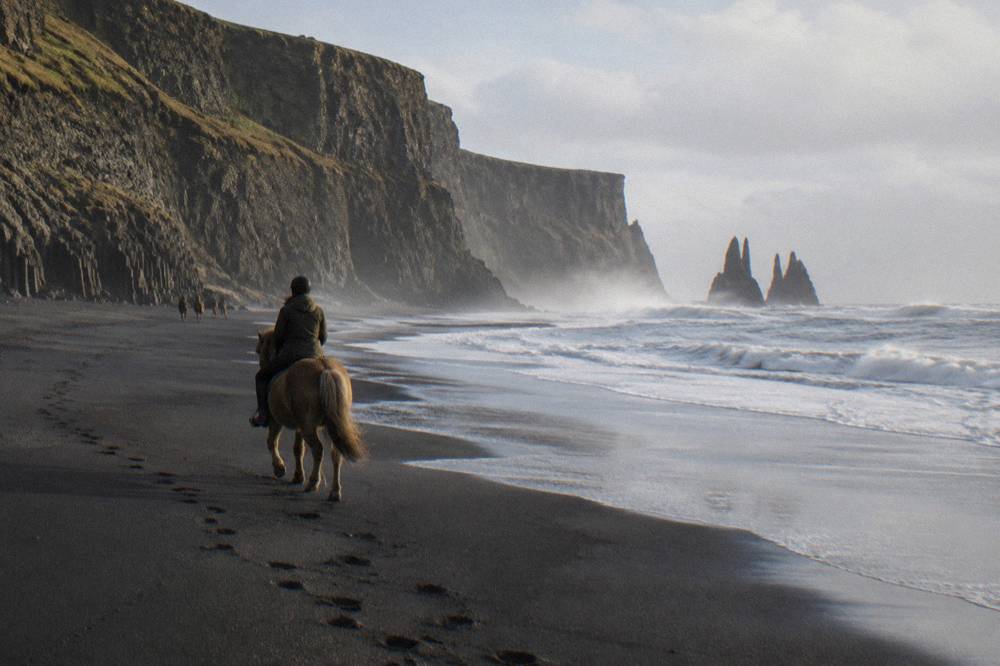
The same pattern holds across the country. On the south coast, the Vik Horse Adventure one-hour black sand beach ride, from $126 per person and rated 4.8 across 571 reviews, uses horses from a stable in Vik that serves the local community as much as the tourist trade. In the north, the Deacon ride near Akureyri, from $153 per person and rated 4.9 across 51 reviews, runs on farm horses between village riding routes.
Choosing a ride is therefore also choosing a farm, and our comparison of Icelandic horse riding tours breaks the roster down by region, duration and price. If the cultural story is the draw, the Viking Horses Mjölnir afternoon ride near Reykjavik, from $179 per person, rated 4.2 across 33 reviews, runs in small groups on a farm that breeds its own horses, and the Golden Circle and horse riding day tour from BusTravel Iceland, about 11 hours and from $223 per person, rated 4.7 across 80 reviews, pairs a heritage farm ride with the classic sightseeing loop.
Common Questions About Icelandic Horses
What do Icelanders do with all the horses?
Icelanders breed them for sport and showing, work them on farms, gather them in autumn roundups, ride them recreationally, hire them out to tourists, and export hundreds each year, mostly within the EU. Roughly 40 percent of the world's registered Icelandic horses, over 300,000 in total, live in Iceland, and nearly all belong to working breeding farms.
Are the roadside horses in Iceland wild?
No. Every Icelandic horse belongs to a farm and is registered in the WorldFengur studbook. The herds seen grazing open land in summer are turned out on leased or communal pasture and are gathered home in the autumn roundups.
Why are there so many Icelandic horses for such a small country?
Because breeding is a deliberate industry. Horse breeding is a pillar of rural Icelandic life, the animals are small and economical to keep, and there are export markets in Europe and North America that buy evaluated horses. The population reflects production for those markets, not accidental multiplication.
Can tourists ride the horses Icelanders breed?
Yes. Tour rosters use the same working farm horses that locals ride and show. The Laxnes farm ride from Reykjavik, the Sólhestar red lava ride and the Vik black sand beach ride all run on horses from working farms, with prices from $126 to $166 per person across those examples.
What do icelanders do with all the horses?
They breed, show, ride, farm, roundup and export them. The horses a visitor sees in every paddock are registered working animals whose jobs span gait competition, autumn roundups, recreational riding and the tourism economy, with hundreds more sold abroad each year under a one-way export rule.